25/ September
Sphere LED Displays for Immersive Spaces: Pixel Pitch, Content Mapping, and Maintenance Guide
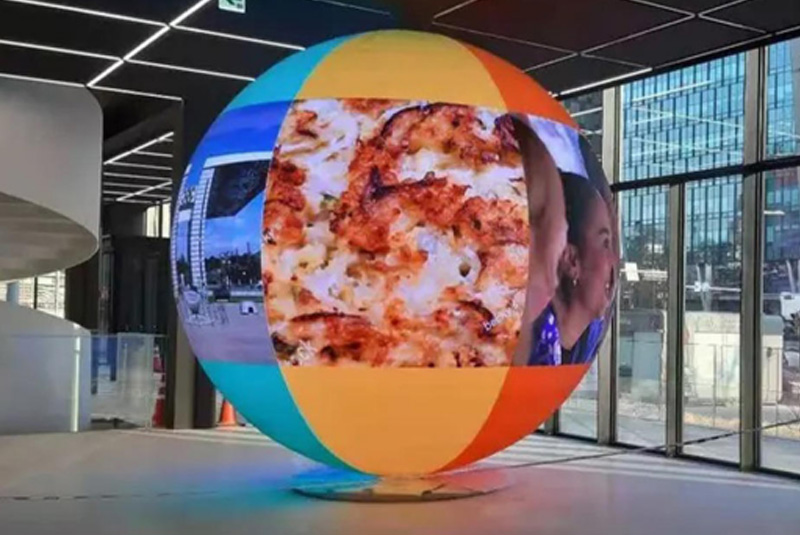
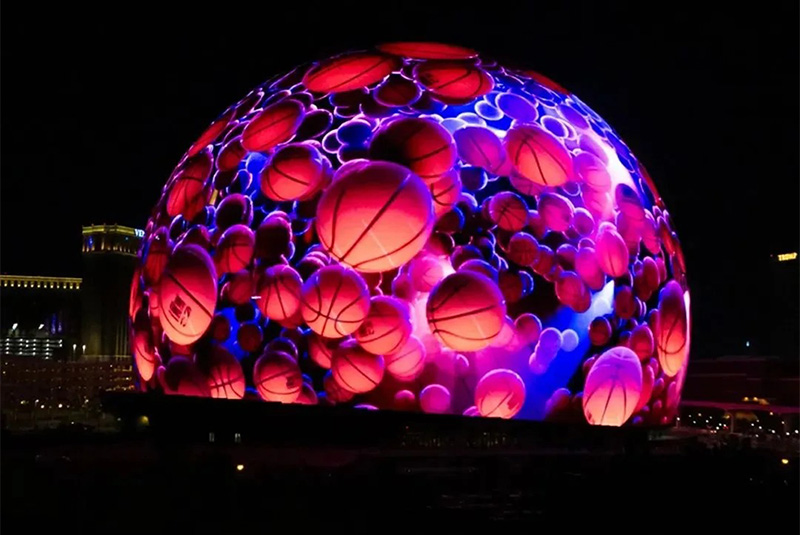
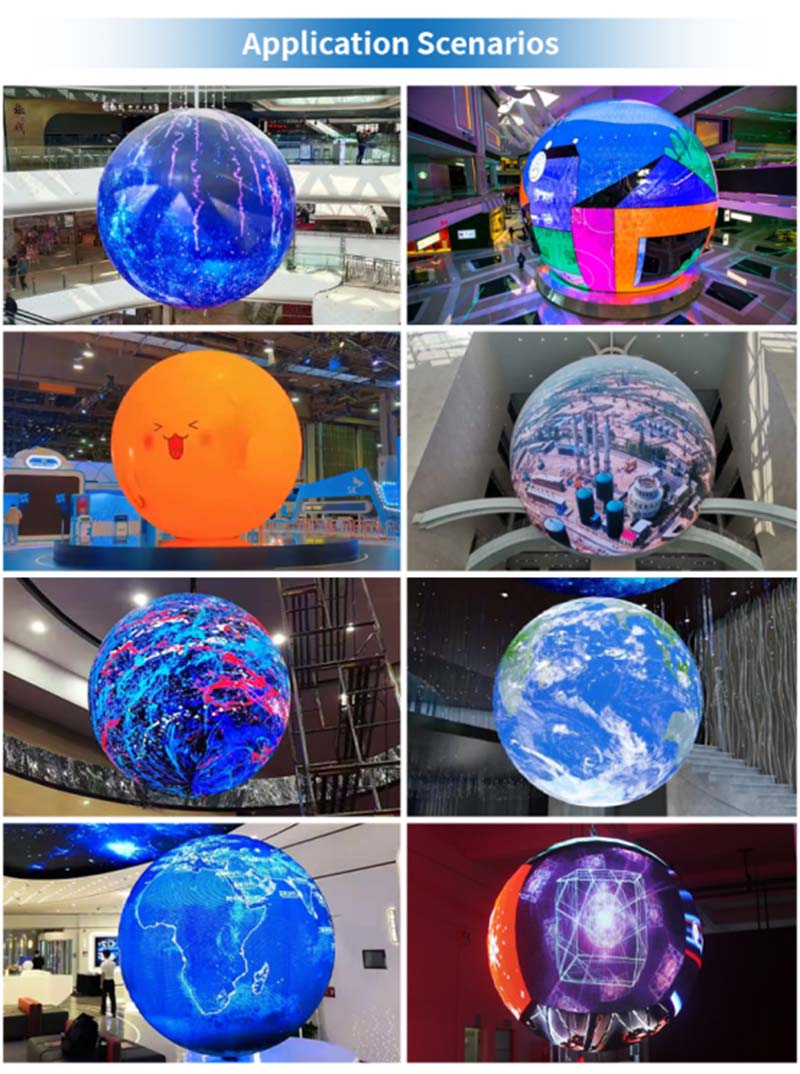
A sphere LED display has no single front edge or rectangular canvas. Visitors can move around it while content must remain coherent across a continuously curved surface. For museums, retail atriums, exhibitions, and event centers, the key decisions are pixel pitch, sphere diameter, content mapping, structure, heat management, and service access.
Longcheng’s P2.5 LED Creative Spherical Display page lists P1.875, P2, P2.5, P3, P4, and P5 options. Published brightness is 800 cd/m² across the listed models; refresh rate is 3840 Hz for P1.875 and P2, and 1920 Hz for P2.5 through P5. These values help frame the selection, but the final design still depends on sphere diameter, viewing distance, camera use, and the support structure.
Why Is a Sphere LED Display Harder to Plan Than a Flat Screen?
A flat screen can be described by width and height. A sphere needs diameter, curvature, support geometry, and a surface-mapping strategy. Pixels near the equator and poles behave differently, so a normal rectangular video cannot simply be stretched over the surface without distortion.
What Should Be Defined Before the Sphere Is Designed?
Start with the intended viewing zone, sphere diameter, mounting height, whether people can walk all the way around it, and whether cameras will record it. Also define whether the content is decorative, informational, live video, or branded animation. These choices affect both pixel pitch and the complexity of the mapping system.
How Should Pixel Pitch Be Selected for a Sphere LED Display?
Pixel pitch should be matched to the closest meaningful viewing distance and the smallest content detail. Fine pitches can support close viewing, but they raise total pixel count and control-system load. Larger pitches reduce cost and processing demand when the sphere is viewed from farther away.
Pitch
Published Pixel Density
Refresh Rate
Typical Direction
P1.875
284,444 px/m²
3840 Hz
Very close indoor viewing
P2
250,000 px/m²
3840 Hz
Close viewing / camera-sensitive use
P2.5
160,000 px/m²
1920 Hz
Balanced indoor immersive display
P3-P4
111,111-62,500 px/m²
1920 Hz
Larger sphere or longer viewing distance
What Does Sphere Diameter Do to Pixel Count?
Diameter changes the amount of surface that must be covered and the number of pixels that the controller has to map. As a rough geometric check, a 1.5 m diameter sphere has an equatorial circumference of about 4.71 m. At P2.5, that circumference corresponds to roughly 1,884 pixel intervals around the equator; at P4, it is about 1,178. This is only an early estimate because the actual module geometry, pole treatment, and mapping layout determine the final canvas.
How Should Content Be Mapped Across a Spherical Surface?
Sphere content should be prepared as a mapped surface rather than a normal flat rectangle. A 3D preview or UV-style mapping workflow lets the content team see how graphics wrap around the equator, converge toward the poles, and cross module boundaries.
Which Content Types Work Best?
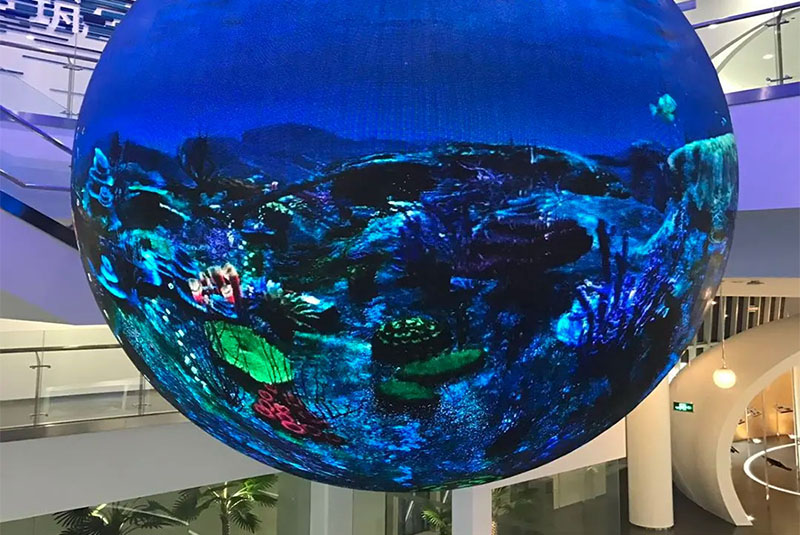
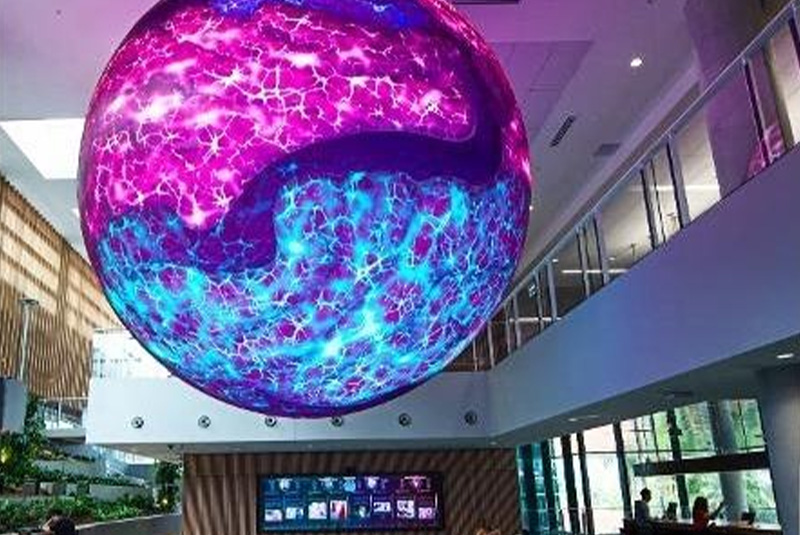
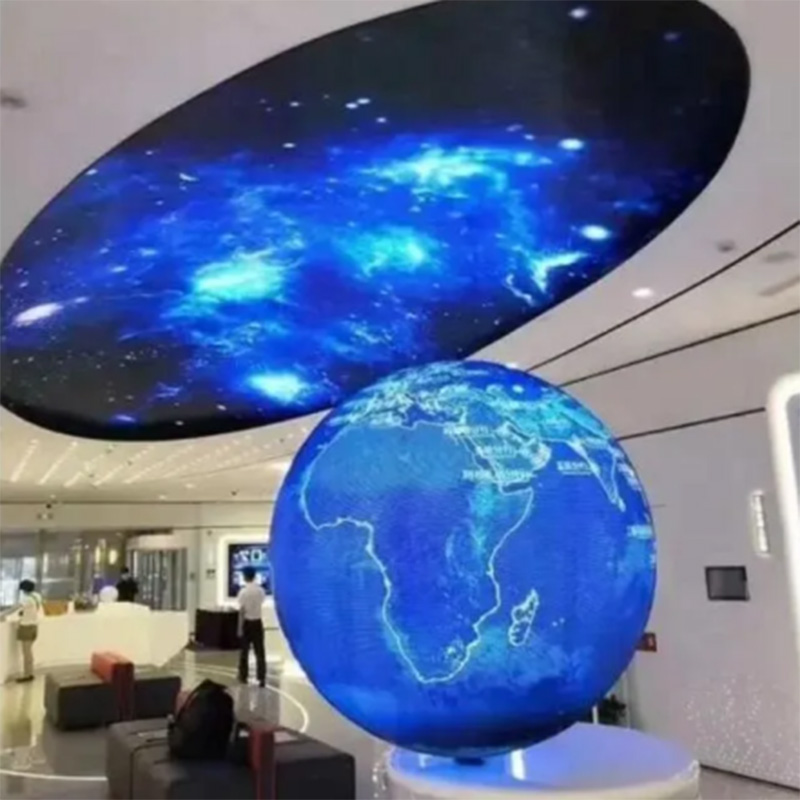
Large moving textures, planetary imagery, abstract motion, and short brand elements usually adapt well because they tolerate distortion. Small text, long headlines, faces, and QR codes are less forgiving. If text is necessary, place it in controlled viewing zones.
Where Should Seams and Poles Be Tested?
The poles and any main service seam deserve special attention because distortion and module geometry are most visible there. Run a full loop on the assembled sphere and walk around it at the intended audience distance. This is more useful than approving content on a monitor alone.
What Maintenance Problems Are Easy to Miss?
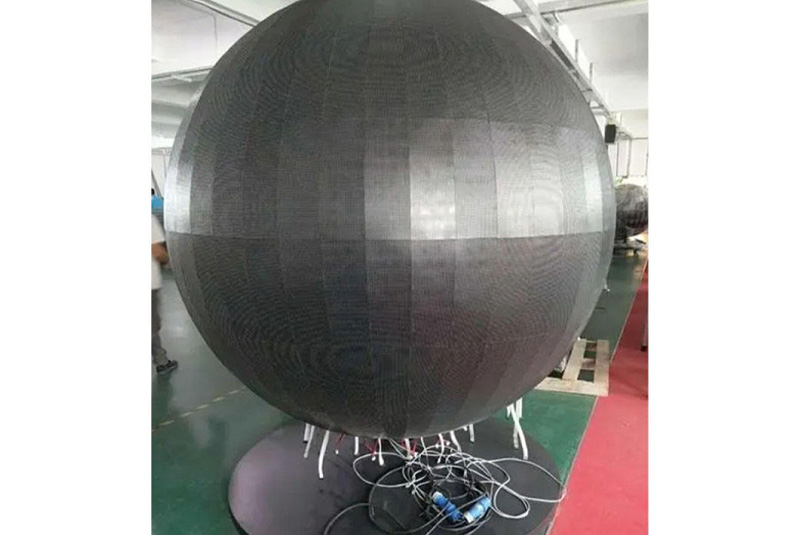
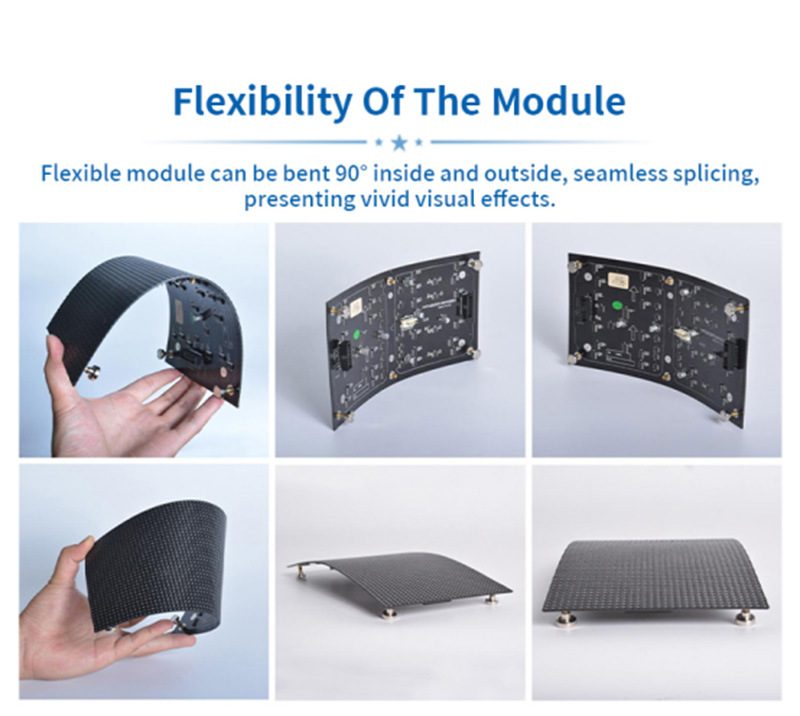
A sphere can look seamless but still be difficult to service. Internal frames, power supplies, receiving cards, ventilation, and cable paths all need access. The flexible soft-board construction still requires a defined removal path and safe bending limits for the exact module used.
Replacement modules should be kept from the original production batch when possible. Color and brightness differences are more obvious on a continuous curved surface, especially when a new module sits beside older calibrated modules. The maintenance plan should also state how technicians reach the upper and lower sections without damaging neighboring tiles.
What Should Be Tested Before Handover?
A factory or pre-installation test should cover color consistency, seam visibility, refresh behavior on camera, content synchronization, temperature, and the replacement of at least one serviceable module. If the sphere is suspended, confirm the complete structural load and the safety method before shipment.
Longcheng’s related article on creative LED configurations describes spherical displays as useful for omnidirectional attractions where people circulate around the object. That makes a 360° walkaround test especially important: the image should remain coherent from multiple approaches, not only from one preferred camera angle.
How Should Buyers Compare Sphere LED Display Quotes?
Compare more than the module price. A complete quote should define sphere diameter, pixel pitch, surface coverage, processor capacity, internal frame, power distribution, installation, content mapping, spare modules, and service access. Quotes are not comparable if one includes mapping and structural work while another covers only LED modules.
For a project based on the creative LED display range, ask for a drawing that shows module layout and service access before production. Shenzhen Longcheng Photoelectric Technology Co., Ltd. publishes the available spherical display pitches, but the final diameter, support frame, and content workflow should be confirmed for the actual site.
Conclusion
A sphere LED display succeeds when geometry, pixel pitch, content mapping, and maintenance are planned as one system. Choose the pitch from real viewing distance, estimate the pixel load from the sphere diameter, build content for a mapped 3D surface, and test seams, poles, camera behavior, and service access before handover. These steps reduce visual distortion, avoid control-system surprises, and make the installation easier to maintain over its operating life.
FAQs
Is P2.5 a Good Pixel Pitch for an Indoor Sphere LED Display?
It can be a balanced choice for many indoor projects, especially when viewers are relatively close but the content does not require the density of P1.875 or P2. The final choice should still be checked against sphere diameter and viewing distance.
Can Normal 16:9 Videos Be Used on a Sphere LED Display?
They can be used as source material, but they normally need to be reformatted or mapped for the spherical canvas. Without mapping, important content may stretch, converge at the poles, or cross seams poorly.
How Should Spare Modules Be Planned for a Spherical LED Screen?
Keep compatible spares from the original order and record their model, batch, and calibration information. The quantity should reflect sphere size, service access, supplier lead time, and the cost of downtime.
Title:
Sphere LED Displays for Immersive Spaces: Pixel Pitch, Content Mapping, and Maintenance Guide
Meta Description:
Plan a sphere LED display by matching pixel pitch, sphere diameter, content mapping, maintenance access, and viewing distance for immersive spaces.
Keywords:
sphere LED display, sphere LED display for immersive spaces, sphere LED display content mapping
Read More