
Nullam dignissim, ante scelerisque the is euismod fermentum odio sem semper the is erat, a feugiat leo urna eget eros. Duis Aenean a imperdiet risus.
Nullam dignissim, ante scelerisque the is euismod fermentum odio sem semper the is erat, a feugiat leo urna eget eros. Duis Aenean a imperdiet risus.
 author
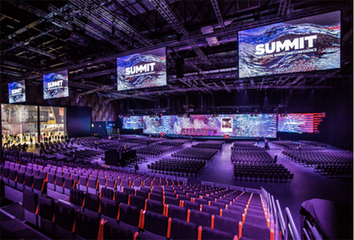
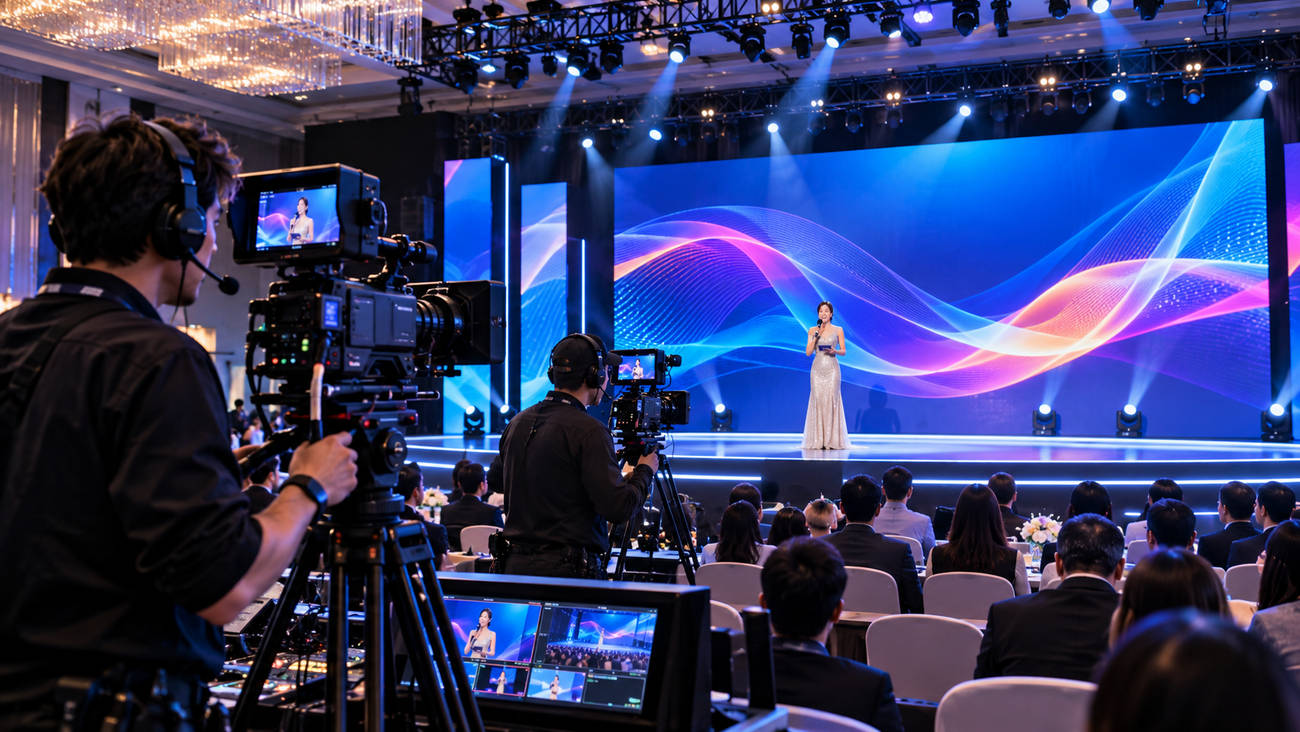
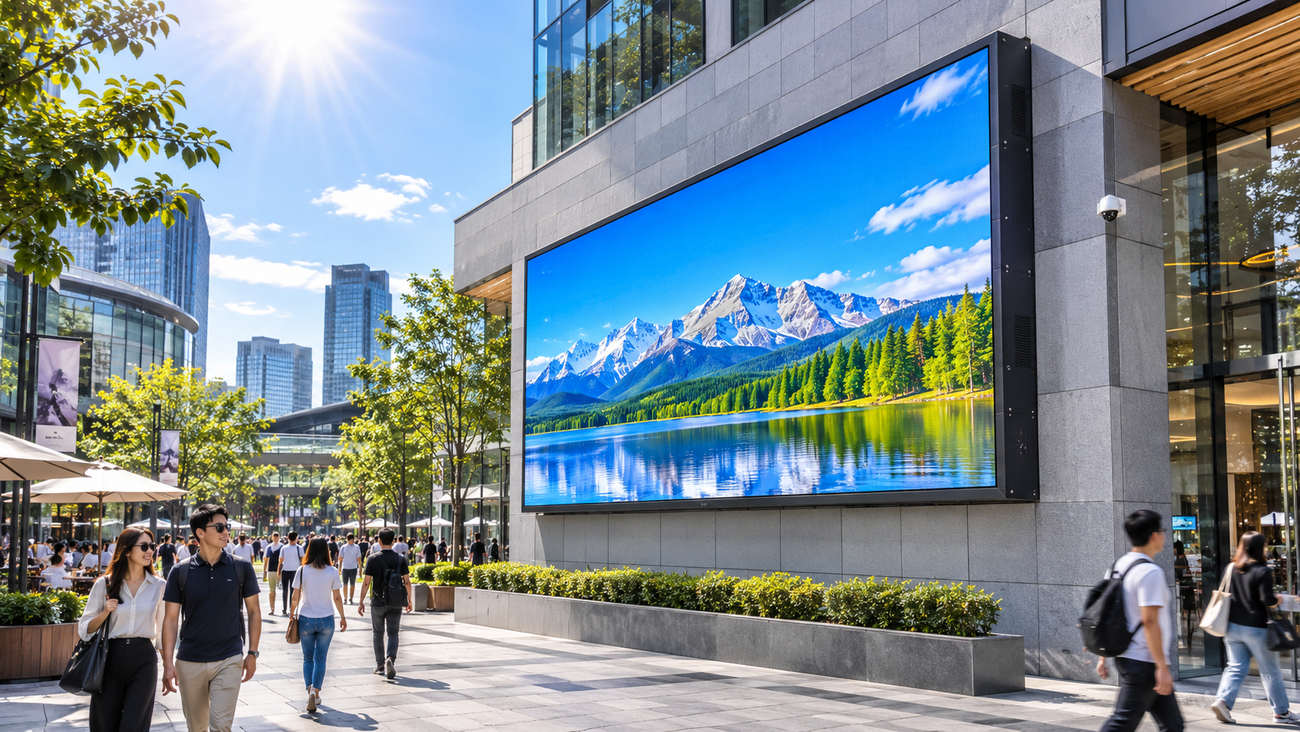
Rental LED screens installed in a conference venue.
“Five meters wide, three meters high” describes an outline, not an event-ready LED wall. It tells the scenic designer roughly how much stage to reserve. It tells the supplier almost nothing about the nearest viewer, video canvas, hanging method, loading route or crew schedule. Those omissions are where apparently cheap rental quotes become difficult to use.
Consider a hypothetical 5 × 3 m wall for a filmed conference. There are four decisions to make before its price means much.
The nearest audience seat is one input. So are the smallest sponsor name, the camera close-up and the playback resolution. Longcheng’s stage rental LED display page lists P2.604, P2.97, P3.91 and P4.81. It gives approximate minimum viewing distances of 2.7 m, 3 m, 4 m and 4.8 m for those options. At a 4 m nearest seat, several of those numbers may enter the discussion. The content sample is what makes the discussion useful.
Send one still frame at its intended size, plus the camera plan. A proposal for P3.91, for example, should include the native resolution of the whole wall and a reason that the small text works at the actual viewing points. A finer pitch may be justified; it may also add cost without helping an audience that is much farther back. This choice cannot be made from the pitch list alone.
For a 5 × 3 m wall, cabinet size changes the piece count before anything else. Longcheng lists 500 × 500 mm and 500 × 1,000 mm cabinets for this rental range. Here is what each layout looks like from the front:
Square units: 10 across × 6 high = 60 cabinets.
Tall units, standing vertically: 10 across × 3 high = 30 cabinets.
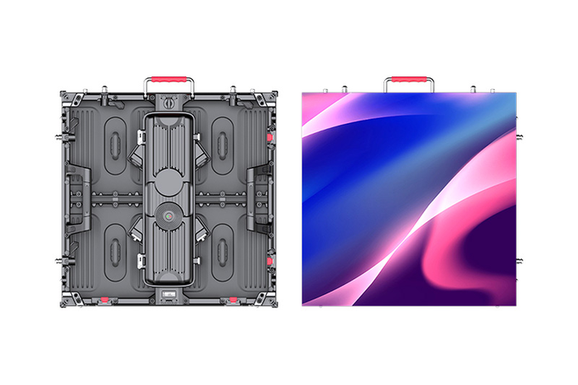
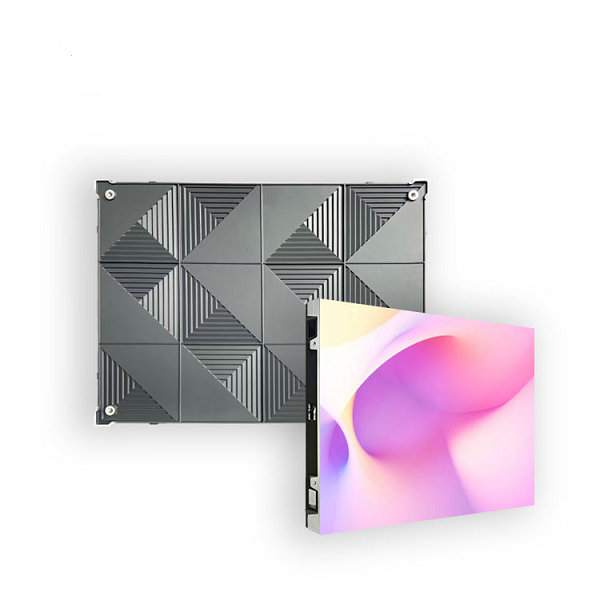
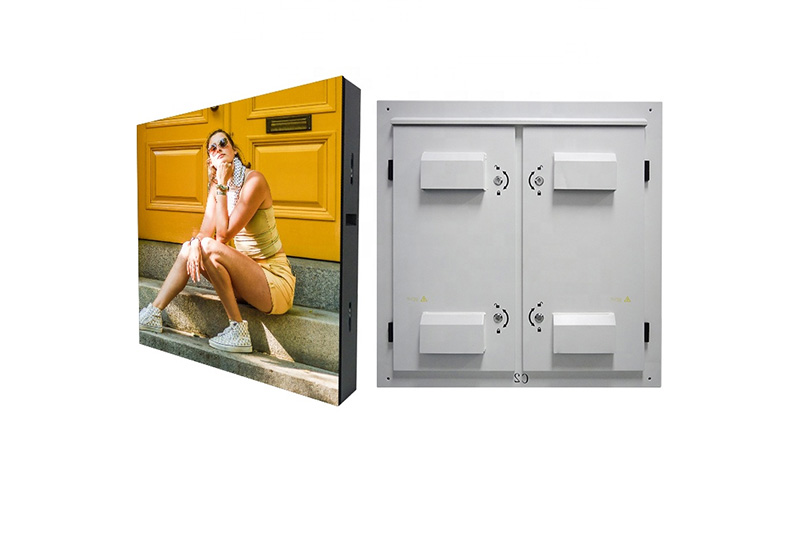
Front and rear views of a 500 × 500 mm rental LED cabinet.
These counts are layout arithmetic, not a choice of stock or compatible locking hardware. Show the production team both sketches. One doubles the number of pieces to lift, but the other may change handling, case packing or support details. The supplier’s chosen drawing must give assembled weight, active dimensions, pixel canvas, processor map and a complete equipment count. It is the drawing the crew can use; the area figure alone is not.
The wall is 5:3, but the video feed may be 16:9. Fit that picture to the 5 m width and it reaches only about 2.81 m high. Fill the full 3 m height instead and it would need about 5.33 m of width. Cabinet sizes change in 0.5 m steps, so there is no exact match. The media team must choose between empty bands, cropping or a different wall layout before exporting the artwork.
Draw the cases and cable paths around the wall too. The 5 × 3 m rectangle may fit between scenic elements while a case stack blocks a door, or the route to an upper module vanishes once the backdrop is installed. The corrected drawing, rather than the original area figure, should become the reference for the final offer.
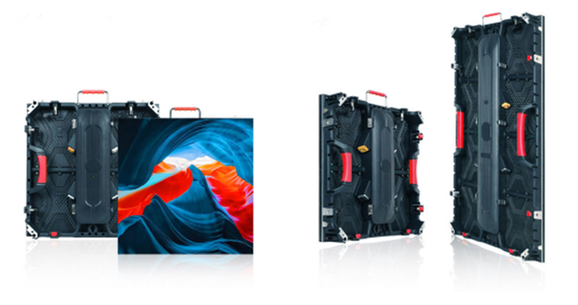
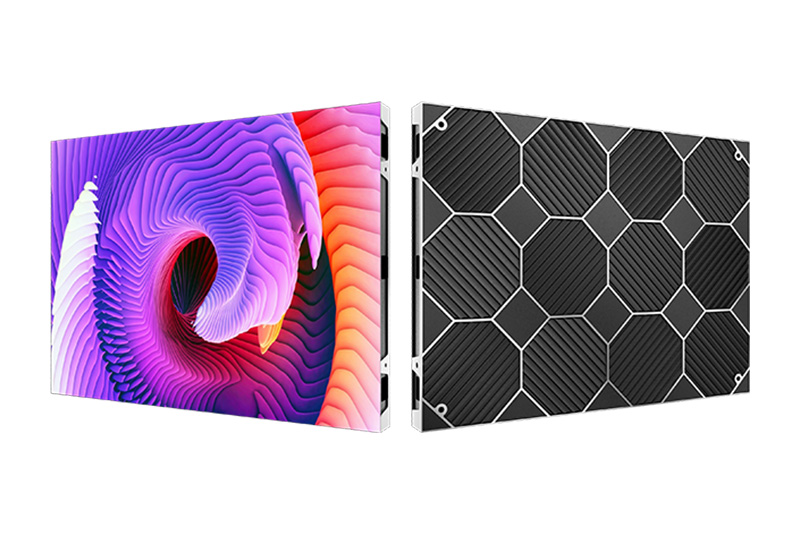
Rental LED cabinet formats and side profiles for handling checks.
Longcheng’s table lists 600 W/m² maximum and 300 W/m² average display power, with AC 110 V/220 V ±10% input. For 15 m², the published values calculate to 9 kW maximum and 4.5 kW average. Those are useful starting figures, with different purposes. The electrician designs for a maximum case; the average is relevant to an operating estimate under stated conditions. Neither replaces a model-specific electrical schedule.
The supplier’s response should identify the selected cabinet’s load, distribution equipment and connector requirements. The venue then checks circuits and cable routes. A processor and any other equipment on the same supply belong on the electrical list as separate items. If two bids use different boundaries for “screen power,” their wattage lines cannot be compared honestly.
The camera test is worth doing with the actual playback file, not a demo reel. Longcheng gives 1,920–3,840 Hz for refresh rate and 600–5,000 nits for brightness across its rental options. Neither range tells the crew what the quoted wall will be running on show day. Use the intended camera, shutter and frame rate under the show lighting, and keep the test footage with the quote.
Imagine a 19:00 show with rehearsal still running at 17:30. There is little value in a spare module if it is at a warehouse or if scenery blocks access to the failed position. The proposed build should mark the service route. The quotation should identify the on-site spare, the technician and who can authorize a safe repair before doors open. This is an illustrative schedule, but the real event’s load-in, rehearsal, show and strike times belong in the RFQ.
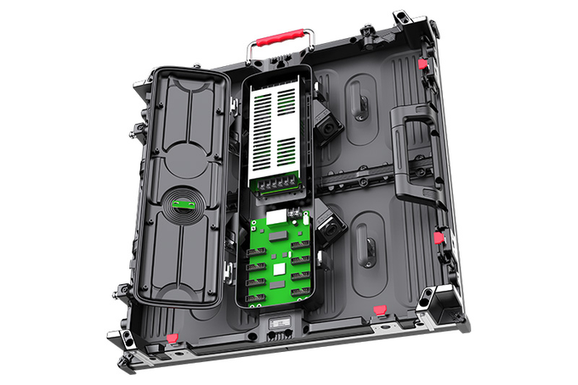
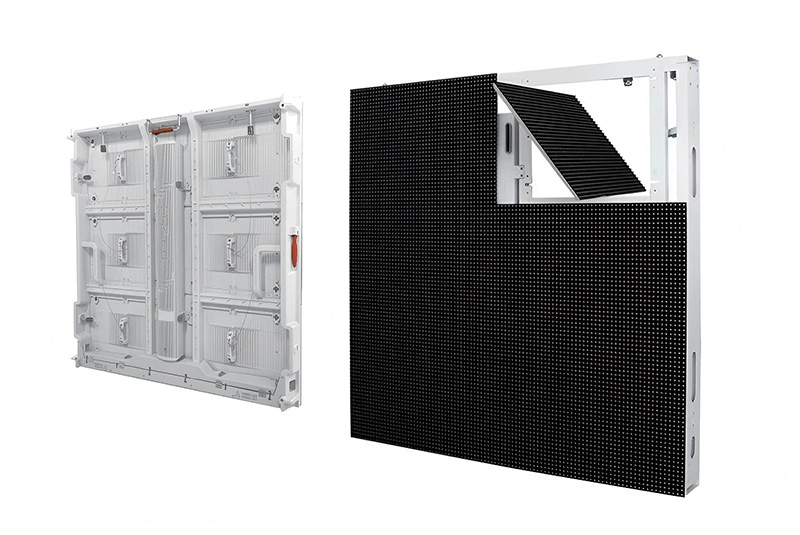
Rear service access and internal components of a rental LED cabinet.
The equipment list also has a physical footprint. Flight cases have to pass the loading door and any lifts before the cabinets reach the stage. Processors, support hardware, power and signal cables, spares and test equipment travel too. The rigging or ground-support plan needs an identified approver. If the load-in window is short, cabinet count alone will not tell the crew how long the build will take.
Longcheng’s service page lists event-site support, installation, commissioning, training, remote technical help and spare-parts repair. Put the relevant service items on the offer with the venue, dates and hours covered. If the event is outdoors, the offer should identify the particular rental cabinet and its protection and installation conditions. The product page offers indoor and outdoor options, so “rental cabinet” alone is not a sufficient outdoor specification.
Send the stage plan, run sheet and sample content through Longcheng’s contact page. In the email, request a marked front elevation and a packing list; these should settle the cabinet mix, active size, pixel canvas, weight, processors, cases, support, cables and spares. Request a separate electrical sheet with model-specific maximum and average loads and stated assumptions. Add the exact refresh-rate and brightness settings, a camera-test plan, the service route, crew coverage and exclusions.
Put the marked front elevations side by side when the offers come back. Thirty tall cabinets and sixty square ones may cover the same area but arrive in different cases and need different support arrangements. Compare the equipment lists against the same pixel canvas, loading route and repair access. If the venue survey changes the grid or support method, revise the drawing and packing list together before dispatch.
Longcheng lists both sizes for use alone or together. Before approving a mixed layout, check the exact cabinet series, locking hardware, pixel pitch and control mapping with the supplier.
No. In this 15 m² example, the published figures give 9 kW maximum and 4.5 kW average display power. Request model-specific electrical details and account for processors and other connected equipment separately.
Not necessarily. The quotation should specify the hours covered, which spares are on site, who can approve repairs and whether support extends through rehearsals, the show and strike.











Leave a comments