
Nullam dignissim, ante scelerisque the is euismod fermentum odio sem semper the is erat, a feugiat leo urna eget eros. Duis Aenean a imperdiet risus.
Nullam dignissim, ante scelerisque the is euismod fermentum odio sem semper the is erat, a feugiat leo urna eget eros. Duis Aenean a imperdiet risus.
 author
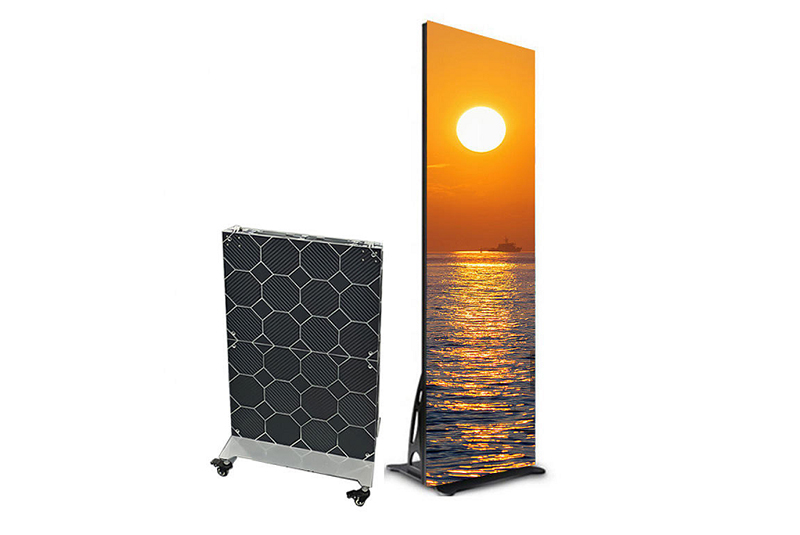
Poster LED displays are being increasingly used for digital advertising, retail promotions as well as for event communications. When it comes to assessing the technical parameters that affect the functionality of an LED display, the pixel pitch is one of the most important. The choice of the right pixel pitch for a poster LED display is a matter of finding the optimal ratio between the required visual quality and the environment in which the display is to be installed, and the budget available. In this article we will take a closer look at the right pixel pitch for individual applications and provide you with some information on the technical and economic aspects which need to be taken into account when choosing the optimal pixel pitch.
Before choosing a display specification for LED cubes it is worth while taking a closer look at what pixel pitch means for the visual output of such display systems.
Pixel pitch is the distance from the center of one pixel to the center of the next pixel on an LED module. It is expressed in millimeters, e.g. P1.8, P2.5, P3. The lower the pixel pitch, the higher the pixel density and thus the better the resolution and also the finer details are reproduced. When it comes to poster displays, the pixel pitch is an important feature because it determines whether an image appears to be smooth or granular and this effect can be noticed from different viewing distances.
Fine pitch displays deliver sharper images for nearer viewing distances. Large pitches are often more cost-effective but deteriorate at close viewing distances due to the clearly visible pixel gaps. The optimum pitch is influenced by several criteria, including the type of content displayed (text or video), required screen brightness and overall screen size. For example, a high-end fashion retailer may require fine pitch displays in order to show off fine details of textures etc. whereas airports, for example, would require larger pitch displays in order to reach people at a distance.
When choosing a poster LED display’s pixel pitch, one of the most practical determinants is the viewing distance.
A common rule of thumb for viewing distance is to use the ratio of one meter to one millimeter of pixel pitch. This means for example a P2 display would typically be best viewed from a distance of around two meters. However for shorter viewing distances a finer pitch is required to avoid the visibility of individual pixels and thus reduce the impact on image clarity that they can have. For indoor poster display applications such as in-store retail or exhibition spaces where the audience will typically be viewing from a short distance away, a range of P1.8 to P2.5 is generally suitable without excessive cost for excessive resolution.
In addition to the modified formula for viewing distance, there are several environmental factors that need to be taken into account. For instance, the height at which a screen is installed and the angle at which it is canted will affect how far in front of the screen sharpness will be perceived. This is because a viewer sitting at the bottom of an installation will be viewing the screen from below, and therefore will be able to get away with a coarser pitch than a viewer sitting directly in front of the screen. Other environmental factors that need to be taken into account are the patterns of movement of the audience, and the ambient lighting. For example, a venue with a high turnover of users such as an airport, does not need to specify an extremely fine resolution as users are not likely to be sitting close to the screen for long. On the other hand, a very bright ambient lighting environment will require a slightly tighter pitch or greater screen brightness in order to provide sufficient contrast.
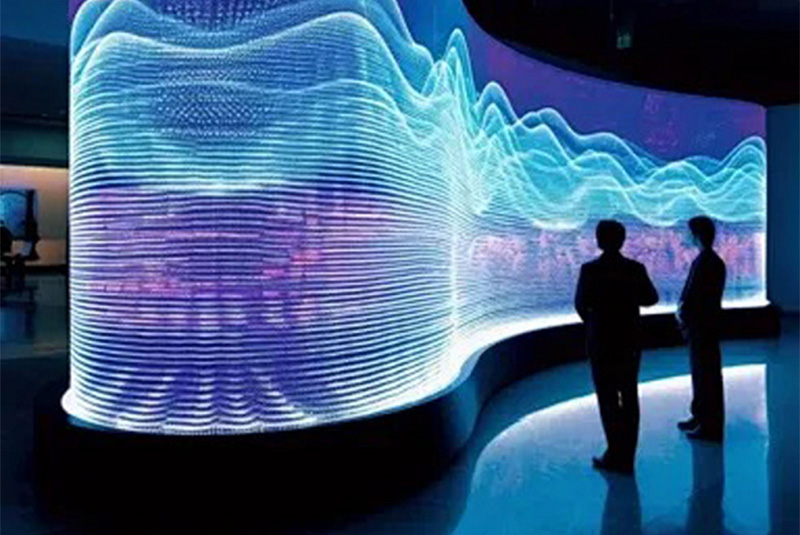
Pixel pitch affects not just the visual quality of your display, but the scale of your investment and the operational costs going forward.
Increased fineness of the pitch increases manufacturing complexity. More LEDs per square meter and more complex fine-tuning in production are examples of this. The cost of production and thus the total cost of a project increases with the fineness of the pitch. In addition, a finer pitch requires more driver ICs and control circuitry per panel area, thus increasing the cost. A coarser pitch has lower production costs at first, but it has less flexibility for future content with higher resolution or more detailed graphics.
Higher pixel density means higher power consumption, because more LEDs are fitted onto a module surface. This leads to higher heat generation, which in turn requires more effective cooling, such as increased air flow or the use of special materials. Also, the higher pitch of the array makes it more sensitive to dust, as well as to very small changes in the electrical characteristics of the LEDs. As a result, tighter pitches require more frequent maintenance, but with higher uniformity. An optimal trade-off between these two criteria is necessary in order to achieve reliable display operation while keeping both power consumption and maintenance frequency within acceptable limits.
Return on investment (ROI) for the different applications can vary. For the premium retail branding and corporate lobbies where visual impact and the first impression of the brand are critical to creating the right experience, investing in the fine-pitch displays will provide the greatest long-term value through higher engagement with customers and creation of customer loyalty. For information boards and for temporary installations, a moderate resolution such as P2–P3 is sufficient and provides the greatest ROI while still providing sufficient image quality.
Market availability of standardized ranges of products for different areas of activity.
Fine-Pitch Series (P1.2–P1.8)
There are display solutions on the market which are designed for use in high-end retail environments and museums. These require display solutions capable of displaying high definition images at short distance, displaying detailed textures and small text accurately.
Medium-Pitch Series (P2–P2.5)
This range is our most popular for general indoor advertising posters. It offers the best balance between sharp printing and affordable price. In shopping malls, exhibitions and other indoor display areas, this range offers the user the best value for money.
Large-Pitch Series (P3–P4)
Larger-pitch screens are best for semi-indoor installations, such as transport hubs or large public spaces with seating in long rows. Due to their high brightness efficiency, they deliver adequate readability in such extended areas.
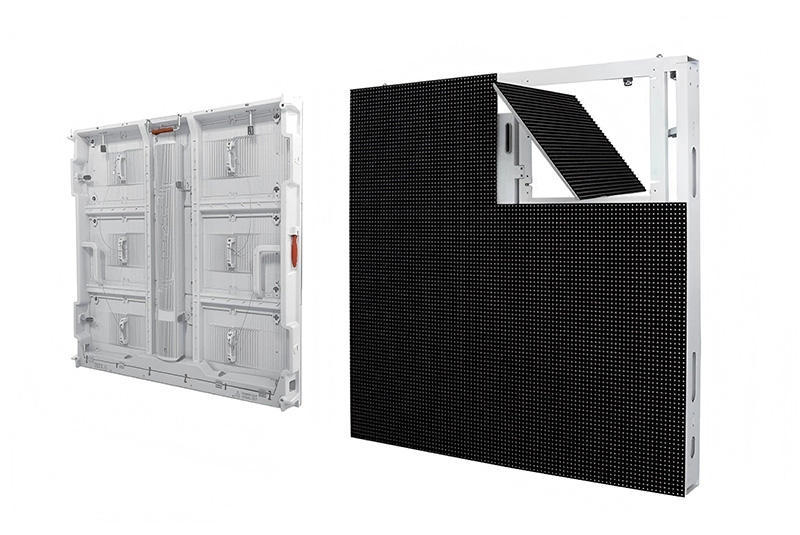
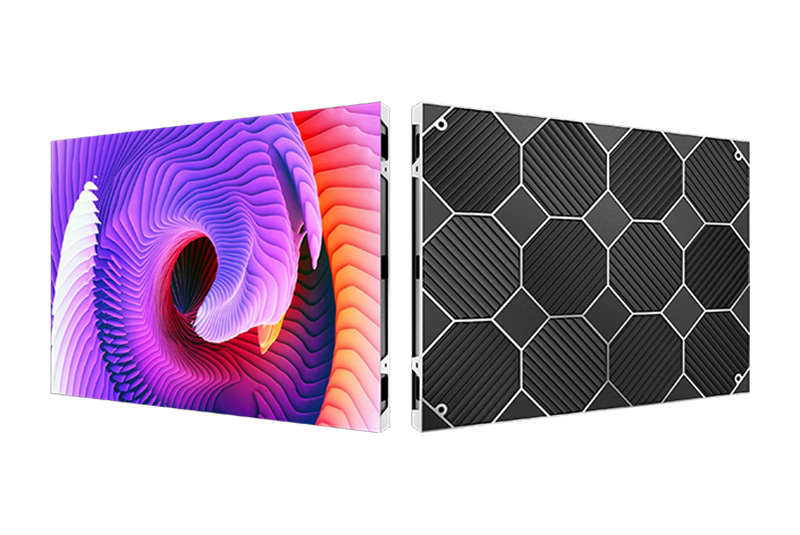
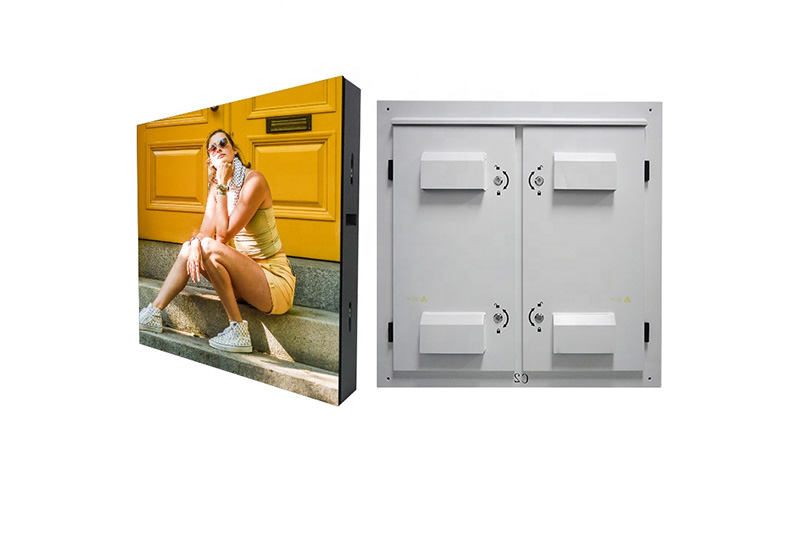
Our advances in miniLED technology mean that finer pixel spacing is now possible without compromising on brightness and the durability you expect from an SMD. In addition, our cabinet designs are modular allowing for a variety of configurations. Most poster displays can be joined together to form a large video wall, all running at the same resolution with perfect alignment of the pixels between each display.
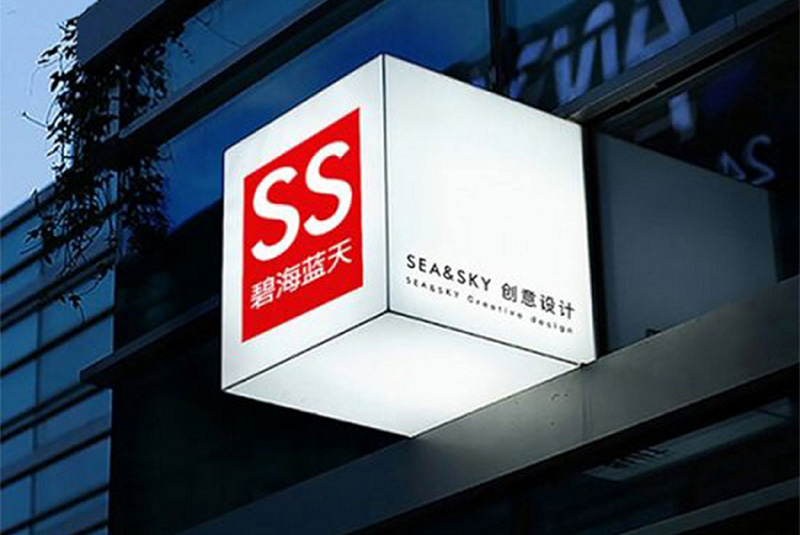
While numerical characteristics allow us to make a choice of a poster LED display, a number of factors will influence our final decision.
Dynamic video-based campaigns require more precise pitches as motion in video is more noticeable than in static images. On the other hand, text-based campaigns can be designed with coarser pitches, as long as the font size is sufficient to be read at the required distance. When designing campaigns that will be displayed on screens, it is important to match the aspect ratio of the native content resolution (e.g. 1080p) to the screen configuration to avoid distortion and maintain a professional appearance.
Ambient light intensity within indoor locations influences perceived contrast ratios significantly; brighter spaces may require higher luminance capability combined with suitable pitch selection for optimal visibility under varying daylight conditions. Structural parameters such as wall thicknesses or available mounting brackets might restrict module depth compatibility affecting feasible model choices during planning stages.
Compatibility between modules’ control systems and current infrastructure can prevent future expenses of retrofits. Choosing a scalable solution on a consistent pitch allows for simple expansion of a display network at all times in the future, using identical specifications to those currently installed at other sites, ensuring uniform look and feel.
Shenzhen Longcheng Photoelectric Technology Co., LTD. is a manufacturer of LED display solutions. We are an experienced producer of poster LED displays, complete in custom production. We design installations based on a detailed analysis of the given environment to achieve the best possible results in conjunction with our clients’ objectives. In terms of quality we are implementing a strict quality control and are offering a comprehensive service of after-sales-maintenance in order to guarantee the long-term functionality of our solutions worldwide. We are also offering an expert advice in terms of choosing the right pixel pitch for the various applications as well as a professional installation service in order to optimize the use and the efficient deployment of our solutions worldwide by means of a good logistics.
Choosing the correct pixel pitch for a poster LED display requires a number of technical parameters to be balanced against a number of factors that are specific to how you intend to use your display. These factors would include the typical viewing distance that people will be from the display, the budget you have available to spend on the display, how much energy the display is likely to consume and the ROI that you expect to receive from the display throughout its lifespan. Careful consideration of these factors is crucial to ensure that the images are of the best quality possible and that you are not spending more than your budget will allow. Ultimately, the display must be able to meet the objectives of the user in a variety of commercial situations and achieve both great looking images and a great return on investment.
1. How do I calculate the ideal pixel pitch for my installation space?
Multiply your minimum expected viewing distance (in meters) by 1 mm per meter—for instance if your audience stands about two meters away then a P2 configuration would generally be suitable ensuring clear visuals without unnecessary cost escalation
2. Can different pixel pitches be combined within one poster display system?
While modular integration of different pixel pitches is possible, all panels should have the same density to maintain uniform brightness. All panels then will render equally well to provide a good visual experience.
3. What are some maintenance methods to extend the life of a fine pitch poster LED display?
leaning of fine pitch displays on a regular basis with non-abrasive material, stable supply voltage and regulation, monitoring of ambient temperature as well as implementation of periodic calibration cycles. These methods maintain constant color accuracy and ensure operationally reliable displays for extended periods of time.












Leave a comments