
Nullam dignissim, ante scelerisque the is euismod fermentum odio sem semper the is erat, a feugiat leo urna eget eros. Duis Aenean a imperdiet risus.
Nullam dignissim, ante scelerisque the is euismod fermentum odio sem semper the is erat, a feugiat leo urna eget eros. Duis Aenean a imperdiet risus.
 author
When people plan an LED display project, they mostly look at pixel pitch and brightness. They also check cabinet size, refresh rate, and total screen cost. Spare LED display modules get ignored a lot. This happens until something breaks after installation. A tiny module failure can cause obvious visual flaws. It can also lead to expensive downtime. This is very true for commercial displays. Rental screens, outdoor billboards, and stadium displays fall into this group. These revenue-generating systems need to stay active.
For most projects, holding 2% to 5% spare LED display modules makes a good starting point. The final amount relies on a few details, though. You must look at your screen size and operating environment. Maintenance access matters too. You should also think about supplier lead time and the true cost of downtime.
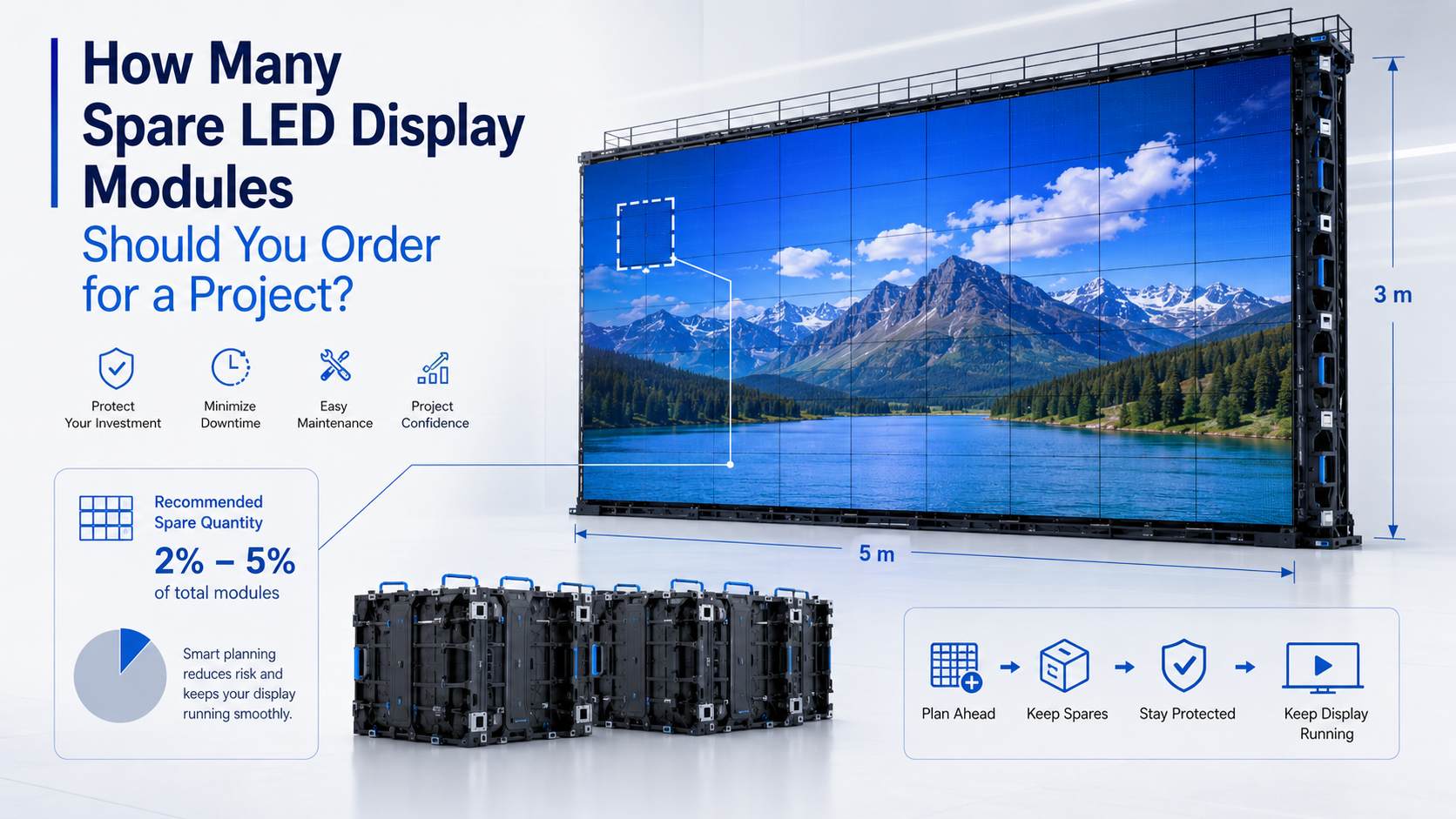
You will not find one perfect percentage for every LED screen. A small indoor conference display carries a very low operating risk. Meanwhile, a rental screen travels a lot. An outdoor display faces heat, rain, and heavy humidity. These tough environments raise the risk of damage.
For plenty of fixed LED installations, 2% to 5% works as a helpful guide. You do not have to treat it as a strict rule.
Let us say a screen holds 500 modules. A 2% reserve gives you 10 spare modules. A 5% reserve gives you 25 modules. The gap in upfront cost stays quite small compared to the whole project value. That extra stock becomes highly valuable later. It saves you when replacement parts take weeks to arrive.
The best quantity must reflect your chances of hardware failure. It must also match the financial impact of screen downtime.
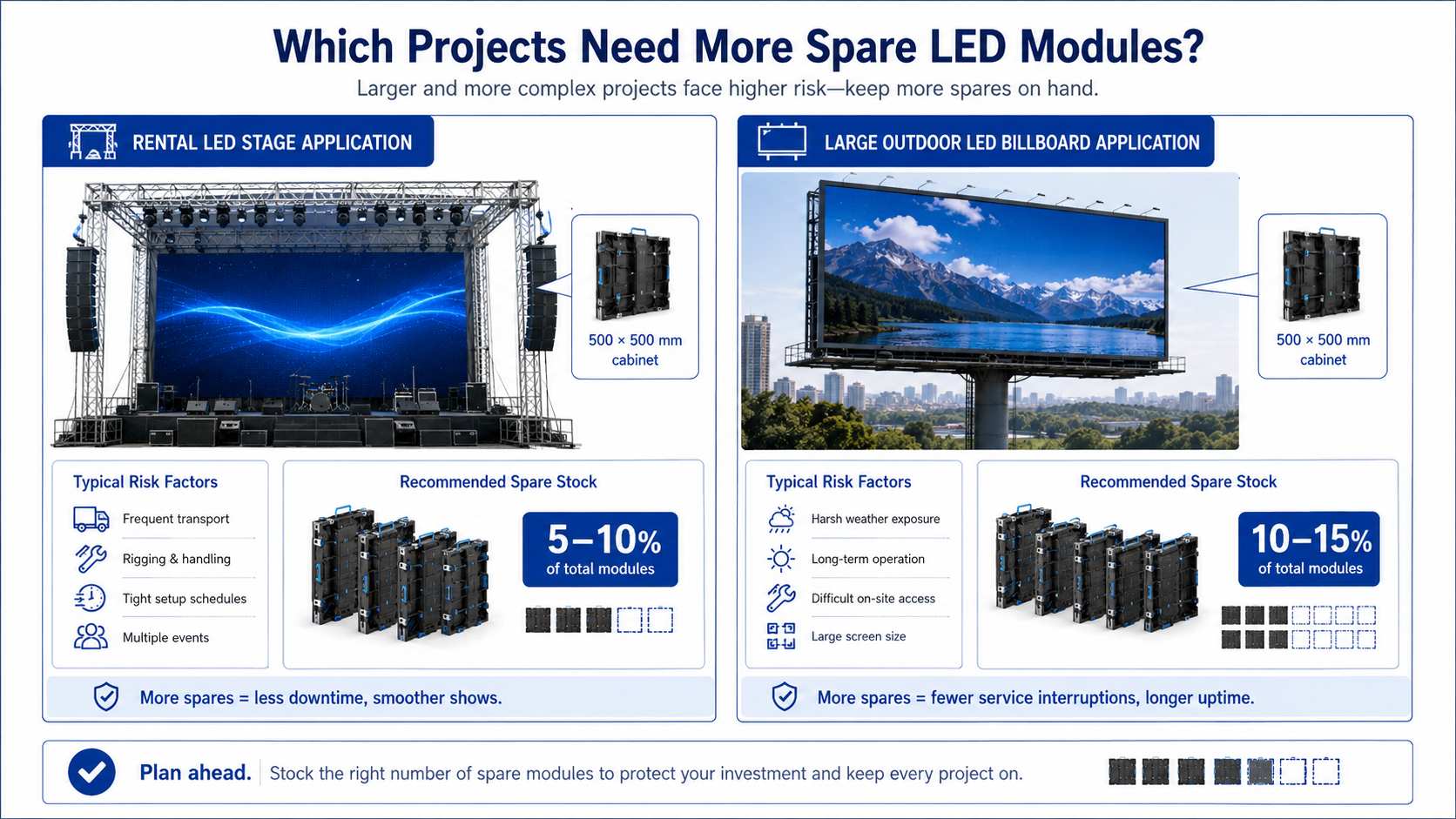
The project type drives your spare-parts planning. Some screens face frequent handling or harsh environments. Others deal with tough maintenance conditions or slow replacement lead times. These setups always demand a bigger reserve.
Workers constantly assemble and take down rental LED screens. They transport and install them over and over. This heavy action raises the chance of breaking things. LEDs, connectors, masks, and modules take a lot of abuse.
For rental companies, a broken module costs more than just buying a new part. Sometimes the screen stays broken before the next big event. The operator loses precious rental income. They might also pay for emergency shipping and extra technician labor.
Because of this, busy rental inventory needs extra spare modules. A fixed indoor installation just needs fewer parts.
Outdoor LED displays fight rain, dust, and deep humidity. They also handle wild temperature swings and long working hours. These rough conditions push up maintenance needs over the years.
Getting to the screen matters a lot. A giant outdoor billboard might sit high up on a tall building. You might need special lifting gear and expert technicians to reach it. Waiting for late replacement parts extends your downtime. It drives up your repair bills too.
Some buyers delay buying spare modules. They just want to lower their early project budget. Buying replacements years down the road causes trouble, though. You will likely face weird compatibility and ugly color-matching issues.
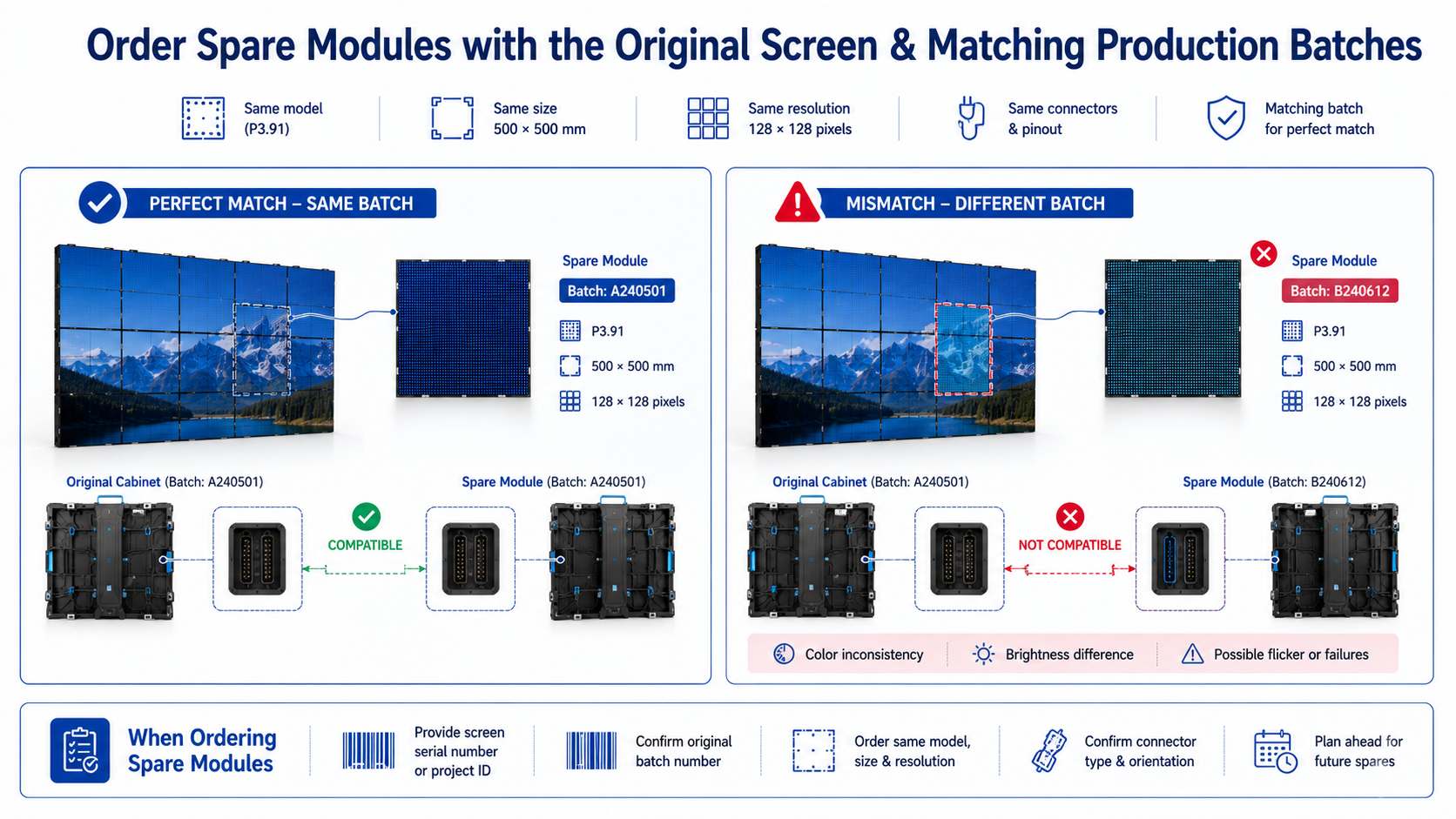
An LED module with the exact same pixel pitch and size is rarely a perfect match later. Factories change things over time. LED lamp batches, driver ICs, and PCB designs shift. Scan modes, connectors, and basic production settings evolve too.
A new replacement might work perfectly on an electrical level. However, tiny shifts in brightness or color cause visual issues. The fresh module will look odd next to the older surrounding screen.
Buyers must write down the exact module model and dimensions. They should track the resolution, LED package, and driver IC. Scan mode, voltage, and connector layout need tracking too. Buying your spare modules along with the original display remains the smartest move. It gives you the best chance of a flawless match.
Extra modules surely raise the initial purchase cost. You must weigh this against the painful cost of screen downtime.
The true cost of a module failure adds up fast. You might pay for emergency international shipping and expensive technician labor. You also need to rent access equipment. You suffer from lost advertising exposure and missed rental income.
A short outage hurts paid campaigns on a commercial advertising screen. For a rental business, one damaged cabinet causes headaches. It directly shrinks the equipment pool ready for the next big event.
Your main goal is not holding the absolute smallest inventory. You want to keep enough stock to drop your operational risk. You just want to do this without locking up too much cash.
Modules are not the only parts that stop an LED screen from working.
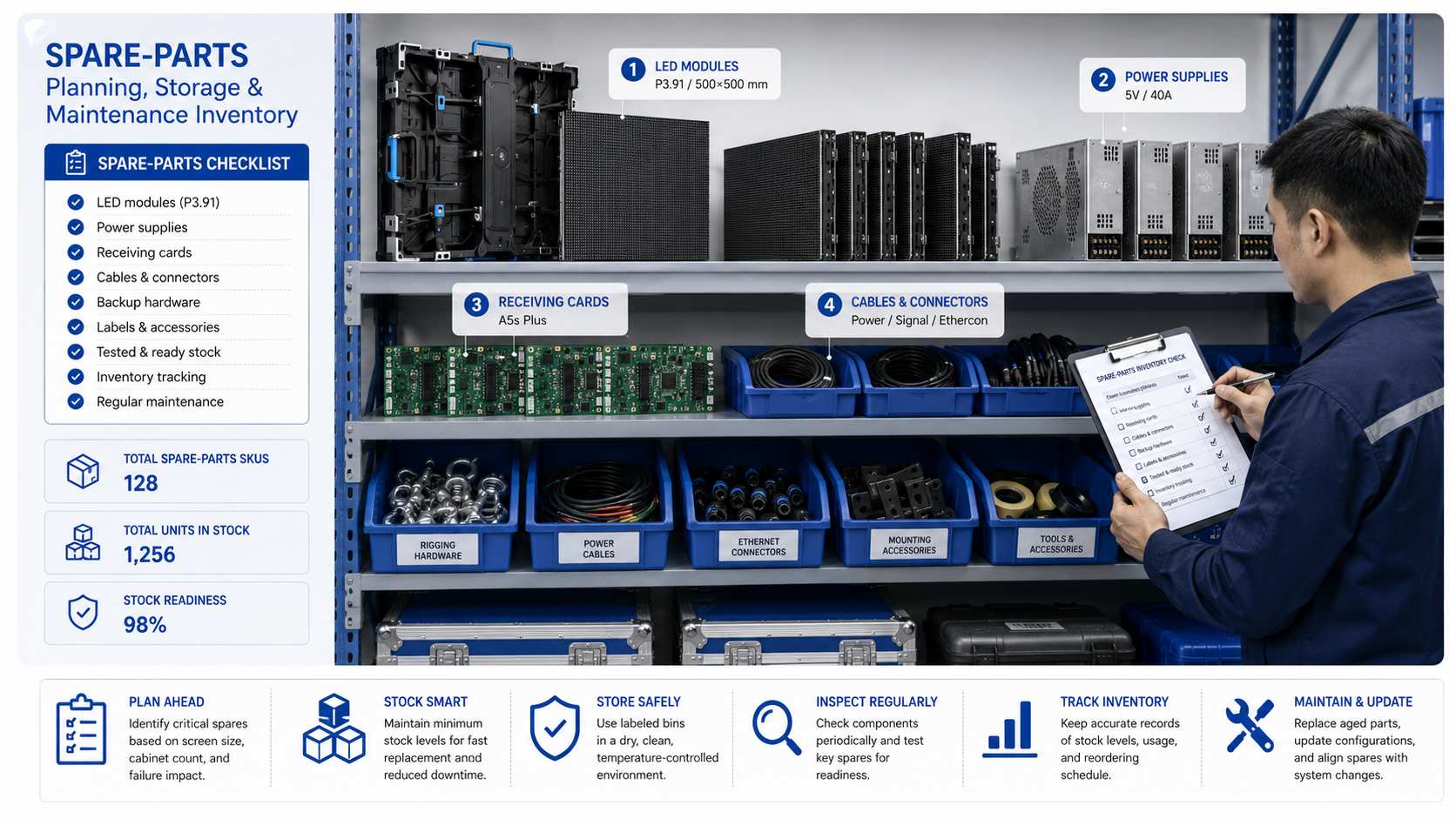
Based on the project, buyers hold onto other parts too. They keep spare power supplies and receiving cards. They store data cables, connectors, and HUB boards. Module masks and tiny hardware pieces help as well.
A cheap receiving card or power supply deserves a spot on your spare stock shelf. If it fails, a huge section of your screen goes dark. Spare-parts planning must focus on real operational impact. It should never focus on just the component price alone.
A risk-based approach works much better. Applying the exact same percentage to every single project fails in the real world.
Look at your total number of modules first. Next, think about your daily operating conditions and maintenance access. You must also check your replacement lead time and downtime cost.
An indoor fixed installation enjoys fast local technical support. It can safely stay near the lower end of the 2% to 5% range. A stadium screen or outdoor billboard faces tougher lives. Remote installations and rental fleets need more protection. These setups easily justify a much higher reserve.
Buyers need to verify how many modules go into each cabinet. This step makes calculating spare inventory much easier. You look at the full screen configuration. You avoid guessing based only on the total screen area.
Spare modules must stay easy to identify. They must remain fully usable during the entire service life of the display.
You must link each spare module to its specific project. Record the pixel pitch, module model, and cabinet type. Note the production batch and purchase date as well. Keep the modules in a dry and safe room. Handle them carefully with proper electrostatic precautions.
Testing several spare modules during the early commissioning phase helps a lot. You catch annoying compatibility problems right away. You fix them before the screen starts its long-term operation.
For most commercial LED display projects, 2% to 5% spare LED display modules forms a solid starting range. Your final quantity must match your actual project risk.
Indoor screens boast easy maintenance and quick supplier support. They demand fewer spares. Rental displays and outdoor installations face harder conditions. Stadium screens and revenue-critical LED walls need a bigger reserve. For these setups, downtime costs way too much money.
The smartest plan involves ordering compatible modules early on. You should document the original screen configuration in detail. Store your spares the right way. Finally, add critical components like power supplies and receiving cards into your daily maintenance plan.
If you use a 2% to 5% planning range, 20 to 50 spare modules makes sense. The final number changes based on your maintenance conditions. It also depends on your replacement lead time.
Yes, you can. Finding an exact match gets much harder later, though. Factories update LED batches and driver ICs. They change PCB designs, brightness levels, and connectors over the years.
Yes, you do for most commercial LED display projects. Keeping compatible power supplies and receiving cards on hand helps a lot. It cuts down your repair time. It also stops unnecessary screen downtime from hurting your business.
Title:
How Many Spare LED Display Modules Should You Order for a Project?
Meta Description:
Learn how many spare LED display modules to order, with 2%-5% planning guidance, downtime risks, storage, and maintenance tips.
Keywords:
spare LED display modules, how many spare LED display modules to order, spare LED modules for LED screen projects












Leave a comments