
Nullam dignissim, ante scelerisque the is euismod fermentum odio sem semper the is erat, a feugiat leo urna eget eros. Duis Aenean a imperdiet risus.
Nullam dignissim, ante scelerisque the is euismod fermentum odio sem semper the is erat, a feugiat leo urna eget eros. Duis Aenean a imperdiet risus.
 author
Picking a P2.6, P2.9, or P3.9 indoor LED screen goes beyond just checking the resolution. Your choice impacts the viewing distance and the total project cost. It also changes how clear your content looks. Furthermore, this decision affects installation methods, maintenance access, camera performance, and your long-term return on investment. Many buyers compare an indoor LED display screen for retail stores, exhibition booths, and shopping malls. Others need screens for hotels, conference halls, or event stages. In all these cases, the right pixel pitch must match the viewer’s distance. You must also consider the content type and how often you will move the screen. Finally, you need to set a budget for installation and service. Experts valued the global digital signage market at USD 31.1 billion in 2025. They expect it to reach USD 58.4 billion by 2033. This growth shows that buying a digital display is a major business decision. It is never just a simple decoration choice.
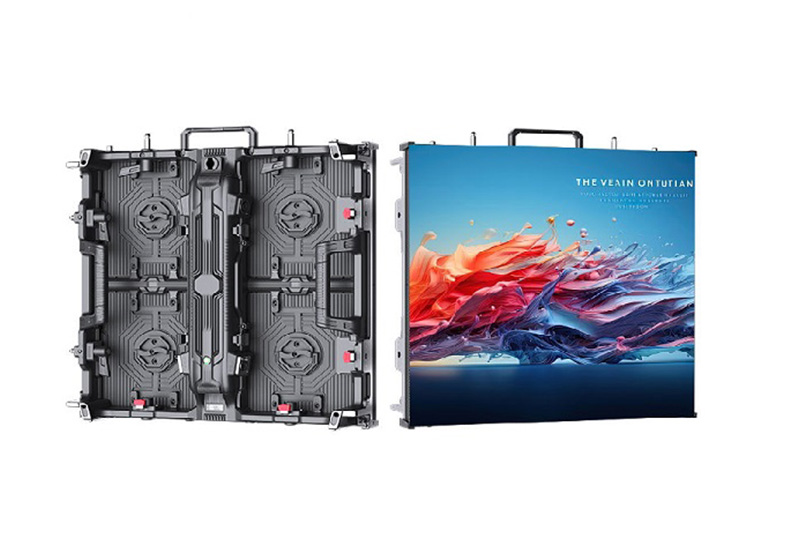
Pixel pitch refers to the center-to-center gap between two neighboring LED pixels. A smaller pitch gives you higher pixel density and very sharp image details. However, this smaller gap also raises manufacturing costs and control complexity. Sometimes, it increases your maintenance expenses as well.
Audiences might stand very close to your LED screen display indoor installation. In this situation, you should pick a smaller pixel pitch. Planar’s direct-view LED viewing distance guide offers a simple rule. A finer pixel pitch allows people to stand much closer to the screen. On the other hand, a larger pitch works perfectly when viewers stay further back.
You can follow a very basic rule for indoor advertising projects. The pixel pitch in millimeters shows the minimum comfortable viewing distance in meters. Longcheng’s HD full-color indoor LED advertising display shares exact optimum viewing distances. These distances are about 2.6 m for P2.604, 3 m for P2.976, 4 m for P3.91, and 5 m for P4.81.
| Pixel Pitch | Approx. Pixel Density | Best-Fit Viewing Distance | Common Use |
| P2.6 / P2.604 | 147,456 pixels/m² | Around 2.6 m+ | Premium retail, close exhibition booths, product demos |
| P2.9 / P2.976 | 112,896 pixels/m² | Around 3 m+ | Retail stores, event backdrops, meeting spaces |
| P3.9 / P3.91 | 65,536 pixels/m² | Around 4 m+ | Stage rental, exhibition halls, hotel events, medium-distance viewing |
Among the three options here, P2.6 has the finest pitch. It works best when visitors stand very close to the display. These viewers expect to read clear text, see sharp product images, and watch high-definition video.
P2.6 serves as a great option for luxury retail stores and cosmetic counters. It also fits jewelry displays, electronics showrooms, and boutique storefronts. You will often see it in close-viewing product launch areas. In these places, customers might stand just two or three meters away from the screen. A large pixel pitch would cause problems here. Shoppers would easily spot pixelation in small text, facial close-ups, and fine textures.
A brand store might place an indoor advertising LED display screen near the front door. Here, P2.6 makes product pictures look smooth and highly professional. This pitch proves especially helpful for close-up product photos and skin tones. It also displays packaging details, QR codes, short slogans, and campaign videos perfectly.
Cost is the main trade-off. P2.6 packs more LEDs per square meter than P2.9 or P3.9. Therefore, the starting hardware price is usually higher. You should select this pitch when sharp image quality directly boosts your brand value or sales.
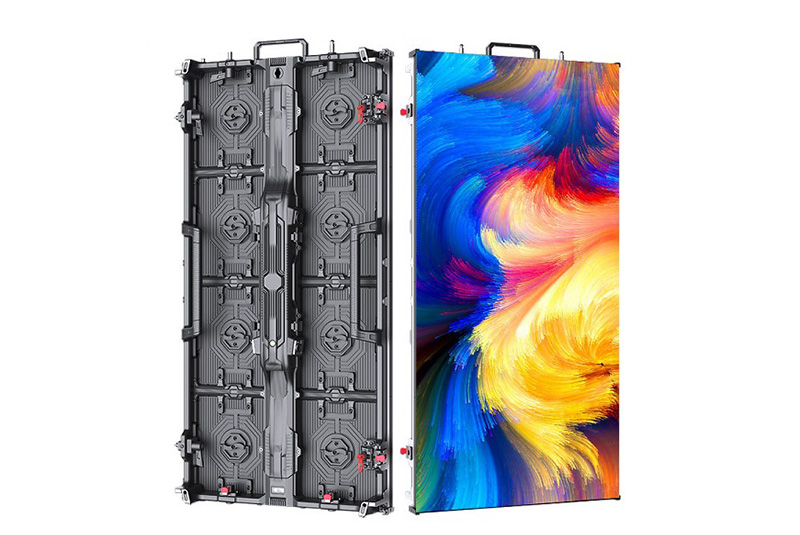
P2.9 acts as an excellent middle ground. It balances high image clarity with strict cost control. This pitch looks sharper than P3.9. At the same time, it remains much more budget-friendly than P2.6.
You can use P2.9 for shopping mall promotional screens and brand pop-up stores. It also fits indoor rental LED display screen projects, hotel ballrooms, and corporate events. Furthermore, it works great for product presentations and exhibition booths. In these locations, most people stand at least three meters away from the screen.
Many buyers find that P2.9 offers the best overall balance. It provides clean visuals for videos, logos, and medium-sized text. You also save money because you avoid the high resolution costs of P2.6. If your audience stays a few meters back, the slight visual difference between P2.6 and P2.9 does not justify spending extra money.
B2B buyers, like event rental companies and display integrators, love P2.9. They can easily standardize this pitch across many different projects. It offers great flexibility for indoor advertising, conference backdrops, live presentations, and short-term campaigns.
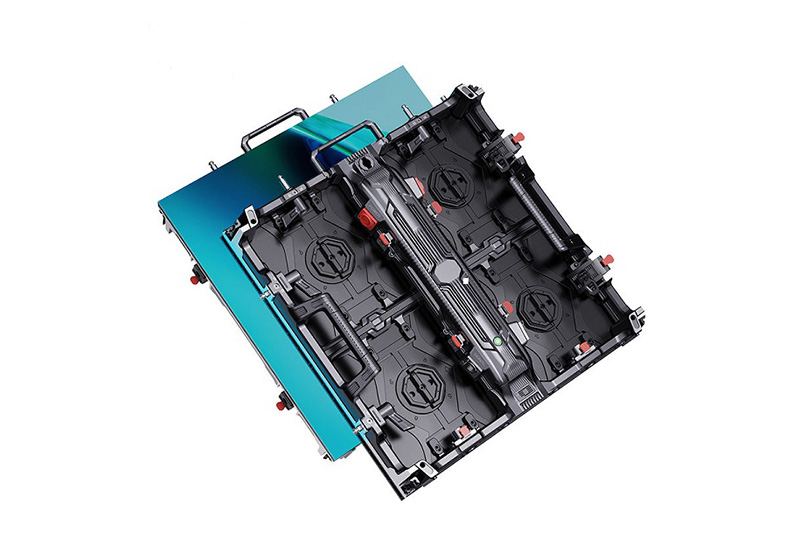
You should never view P3.9 as a low-quality option. Instead, it becomes a very smart investment when audiences stand further away. It also helps buyers who want a large screen on a strict budget.
People widely use P3.9 indoor LED screen panels for stage backgrounds and medium-sized exhibition halls. These screens also appear at hotel events, church stages, indoor concerts, school auditoriums, and conference venues. In these large spaces, viewers normally stand four meters or more away from the display.
P3.9 handles large-format visuals, sponsor logos, and speaker backgrounds perfectly. It also shows animation loops and event branding with plenty of clarity. You get this good performance without paying the high LED density cost of P2.6. Because of this, rental companies prefer P3.9 to keep their equipment busy and protect their profits.
If a client asks about the indoor LED display screen price, P3.9 usually offers a better ROI for huge screens. A large P3.9 display creates a massive visual impact. It beats a smaller P2.6 display at the exact same budget, especially when the crowd stands far back.
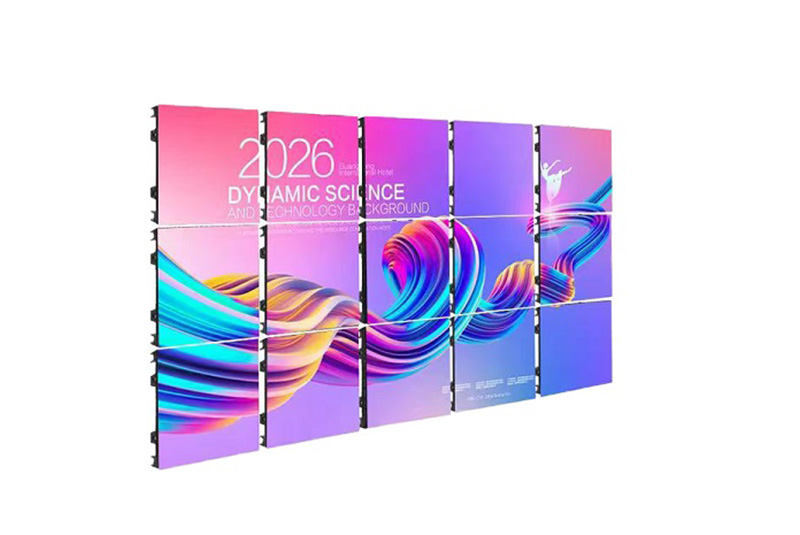
Pixel pitch changes much more than just image clarity. It directly impacts your cabinet quantity, spare modules, and power load. It also affects receiving cards, calibration work, and daily maintenance plans.
A full budget needs to cover the LED display panels, control system, sending card, and video processor. You must also pay for the support structure, installation labor, spare modules, and cables. Do not forget to include packaging, logistics, maintenance access, and future content update costs.
| Cost Factor | P2.6 | P2.9 | P3.9 |
| Hardware cost | Highest | Medium | Lower |
| Close-view image detail | Best | Strong | Moderate |
| Best screen size for budget | Smaller | Medium | Larger |
| Suitable for text-heavy content | Strong | Good | Better for larger text |
| Rental durability focus | Medium | Good | Good |
| ROI advantage | Premium brand impact | Balanced | Large-area cost efficiency |
In the retail world, ROI comes from quick content updates and lower printing costs. You also get better promotion visibility and reusable campaign assets. Digital signage draws attention because you can update promotions instantly. You never have to reprint posters for a new campaign. Retail signage providers point out that digital displays support dynamic ads. They lower your regular print costs and provide measurable customer engagement.
Pixel pitch is a big deal, but you should not ignore other features. A screen might have the perfect pixel pitch but a terrible refresh rate. Weak cabinet designs and hard maintenance access will also ruin real projects.
Longcheng’s HD full-color indoor advertising display offers great specs. It supports a 1920Hz or 3840Hz refresh rate and reaches 600–1000 nits of brightness. The screens feature front and back service access. They use die-casting aluminum cabinets. You can buy these cabinets in 500×500 mm or 500×1000 mm sizes.
A high refresh rate is vital for exhibitions, product launches, live streaming, and event filming. It stops visible flicker and ugly scan lines when cameras point at the LED screen. LED display technical experts agree on this point. High refresh rates, like 3840Hz, keep fast motion stable. A 3840Hz refresh rate can significantly reduce visible flicker and scan lines in most filming and live-streaming scenarios..
Brightness holds equal importance. Indoor LED display screen projects happen in malls, hotels, conference halls, and exhibitions. For these places, 600–1000 nits works perfectly. This brightness level keeps images bright under normal indoor lights. It avoids the harsh glare that outdoor LED billboards produce.
Real-world cases prove a very important point. The best pitch relies on viewer behavior, content type, and site conditions. You cannot rely on the pitch number alone.
Longcheng’s published indoor LED poster article highlights three great application cases. First, an electronics brand used P2 LED posters at a global expo to play looping product videos. Second, a retail chain installed foldable LED screens in their stores to run daily sales ads. Third, several hotels removed static roll-up banners. They installed digital agendas for weddings and corporate seminars instead.
These cases teach us three valuable lessons. First, exhibitions demand fast-moving visuals. Visitors walk past many booths in a very short time. Second, retail campaigns require rapid content updates. Store promotions change almost every day. Third, hotels and conference centers need reusable digital signage. Every new event needs a totally different welcome message.
If you have a small expo booth, P2.6 or P2.9 works best. If you need a hotel ballroom display or a stage backdrop, P3.9 saves you money. In those large rooms, viewers stay far away from the screen.
Your choice must begin with the viewing distance. After that, look at content detail, installation methods, maintenance access, and your final budget.
Pick P2.6 when your viewers stand nearby. Use it if your content features tiny text or premium product photos. This pitch perfectly supports high-value retail and brand presentations.
Pick P2.9 when you need a fair balance between image clarity and project budget. It fits retail advertising, pop-up stores, exhibitions, and events. People also use it for conference rooms and indoor rental projects.
Pick P3.9 when you plan to build a massive screen. Use it when the audience stands far away. Here, overall visual impact matters much more than tiny details. It perfectly suits stage backgrounds, exhibition halls, hotel events, and medium-distance indoor advertising.
You can use this simple decision formula:
Best Pixel Pitch = Viewing Distance + Content Detail + Screen Size + Budget + Maintenance Plan
When you pick a supplier, look at engineering fit, product stability, clear documentation, and after-sales support. Do not just hunt for the absolute lowest price.
Shenzhen Longcheng Photoelectrictechnology Co., LTD. builds LED display solutions for both indoor and outdoor spaces. Their lineup includes rental LED displays, small-pitch LED displays, fixed LED displays, and poster LED displays. They also make sports stadium LED displays, LED display modules, and related accessories. The company holds CE, RoHS, FCC, KC, and UL certifications. Their official website shows over 12 years of industry experience and more than 350 products. They sell to over 120 countries and regions. Furthermore, they provide service to more than 900 enterprises and institutions.
Buyers often compare P2.6, P2.9, and P3.9 indoor LED screen display options. Longcheng’s wide product range easily meets different project demands. They supply everything from close-view retail displays to portable rental screens and massive event video walls.
P2.6, P2.9, and P3.9 indoor LED screens all serve a clear purpose. P2.6 wins for close-view, premium, and highly detailed applications. P2.9 provides the best balance for most retail, exhibition, and event setups. P3.9 stands out as the top investment for huge screens and medium-distance viewing. In those cases, cost efficiency is the main goal.
The smallest pitch is not always your best decision. Buyers must review viewing distance, screen size, and content type. They also need to check installation methods, maintenance modes, refresh rates, brightness, and total ownership costs. When your chosen pitch fits the real site conditions, your indoor LED display screen performs perfectly. It delivers huge visual impact, total content flexibility, and a highly practical long-term ROI.
No. P2.6 offers higher pixel density, but it is not always the smartest investment. If your audience stands more than three or four meters back, P2.9 or P3.9 looks just as good. They also save you a lot of money.
For small exhibition booths, P2.6 or P2.9 works best. Visitors will stand right next to the screen. For massive exhibition halls, stage backgrounds, or sponsor walls, P3.9 provides much better cost efficiency.
You need to check viewing distance, brightness, and refresh rate. Also, look at cabinet weight, front or rear maintenance, and the installation method. Finally, review the control system, spare modules, warranty terms, and supplier support. These extra details impact your long-term project success much more than the pixel pitch alone.












Leave a comments