
Nullam dignissim, ante scelerisque the is euismod fermentum odio sem semper the is erat, a feugiat leo urna eget eros. Duis Aenean a imperdiet risus.
Nullam dignissim, ante scelerisque the is euismod fermentum odio sem semper the is erat, a feugiat leo urna eget eros. Duis Aenean a imperdiet risus.
 author
A P2.5 mirror LED screen serves as an effective option for shopping malls, retail stores, and brand pop-up spaces. It also works well in hotel lobbies, exhibitions, and indoor digital signage projects where people stand near the display. Static posters require reprinting. However, a digital display can instantly refresh promotions, product videos, seasonal campaigns, and event messages. When buyers evaluate an indoor LED display screen, they should look beyond simple image sharpness. A more important consideration is whether the screen suits the viewing distance, content type, and installation method. Buyers must also review the content management workflow, maintenance plan, and expected return on investment. In 2025, the global digital signage market reached a value of USD 31.1 billion. Experts project this figure will hit USD 58.4 billion by 2033. This growth indicates that digital signage now plays a major role in commercial communication and retail advertising strategy.
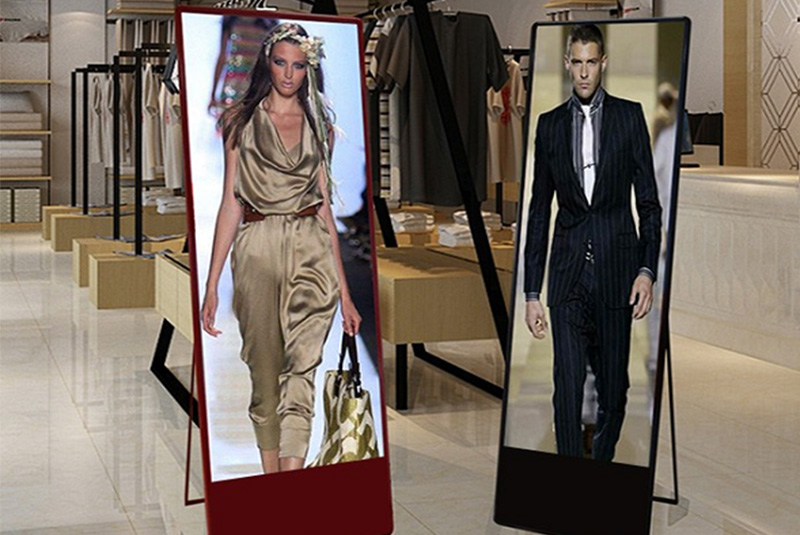
Shopping malls require displays that capture the attention of passers-by instantly. This need is especially strong in busy areas like entrances, escalators, corridors, atriums, and storefronts. A P2.5 mirror LED screen excels in this setting. It merges excellent close-view clarity with a sleek, poster-style design.
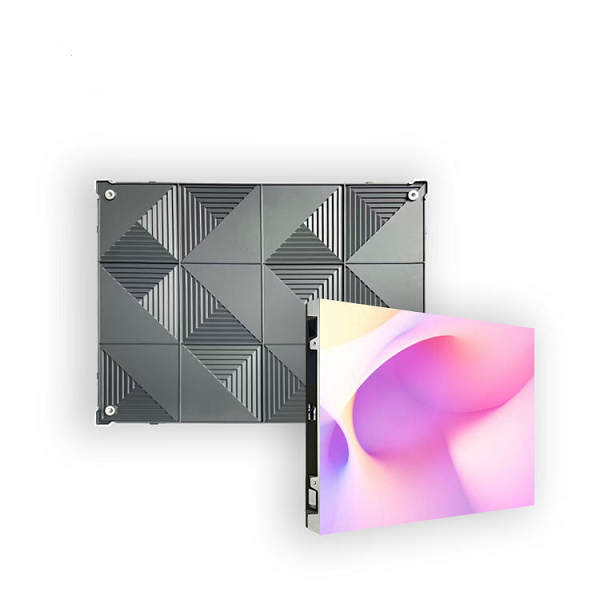
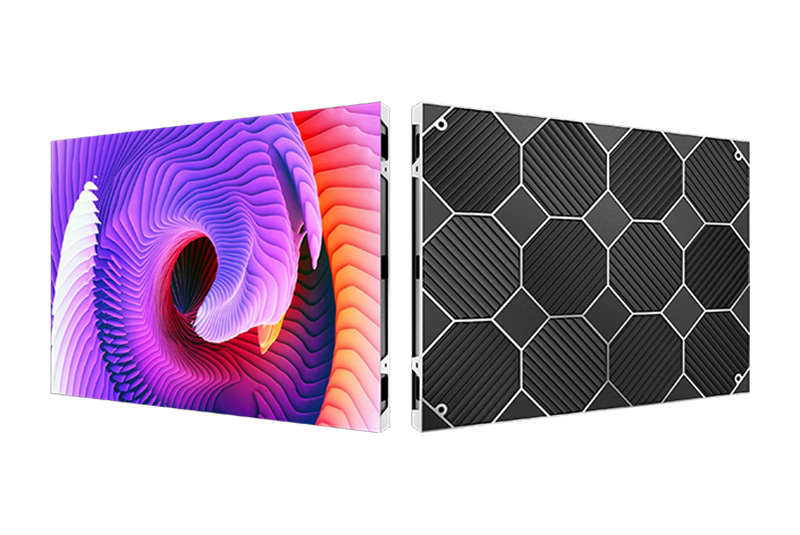
Pixel pitch refers to the gap between the centers of two neighboring LED pixels. A 2.5 mm pixel pitch provides the screen with sufficient pixel density for close-range viewing inside retail environments. The Longcheng Indoor P2.5 Mirror LED Screen product page details P2, P2.5, and P3 options. Specifically, the P2.5 version features a 2.5 mm pixel pitch and a 160,000 dots/m² pixel density.
This detail is vital for shopping malls because customers often stand just 2–5 meters away from the screen. If the pixel pitch is too wide, small text, product images, QR codes, facial close-ups, and promotion specifics will appear blurry. Conversely, if the pitch is too fine for the location, the buyer might spend extra money on resolution that viewers cannot actually notice.
| Application Area | Typical Viewing Distance | Suggested Display Logic |
|---|---|---|
| Luxury retail entrance | 2–3 m | P2.5 supports close-view product detail |
| Cosmetic or jewelry counter | 2–4 m | Fine pitch helps show texture, skin tone, and packaging |
| Mall corridor advertising | 3–6 m | P2.5 can keep text and video sharp |
| Hotel lobby signage | 3–8 m | P2.5 works for agenda, welcome message, and branding |
| Pop-up retail booth | 2–5 m | Portable poster-style screen improves flexibility |
A careful buyer needs to evaluate more than just the initial price. A screen that is cheap initially but hard to control, relocate, or fix will likely cost more in the long run.
The Longcheng product page provides various important specifications for the Indoor P2.5 Mirror LED Screen. These include 800 cd/m² brightness and a 320 × 160 mm module size. Buyers can select between 1600 × 640 mm / 1760 × 640 mm panel size options. The product features a steel body material and a 1/32 scan mode. Furthermore, it holds CE, RoHS, and FCC certificates. The company offers a 2-year warranty and notes a 100,000-hour listed lifespan.
For shopping malls, an 800 cd/m² brightness level generally suits indoor ambient-light conditions. The screen remains clear without producing the intense glare typical of outdoor LED billboards. Before buying an indoor LED screen display, purchasers should also verify the refresh rate, grayscale, and cabinet weight. They must review heat dissipation, the module replacement process, content input methods, and the exact warranty terms.
| Specification | Why It Matters for Retail Advertising |
|---|---|
| Pixel pitch | Controls close-view clarity and screen price |
| Brightness | Affects visibility under mall lighting |
| Pixel density | Determines image detail and text sharpness |
| Refresh rate | Reduces camera flicker for events and livestreaming |
| Module size | Affects spare parts and repair convenience |
| Control method | Determines how fast staff can update campaigns |
| Warranty | Reduces buyer risk after installation |
| Certificates | Helps distributors and importers meet market requirements |
Retail advertising screens must offer more than just a modern appearance. They need to help stores share information faster and test various promotions easily. They also reduce the daily hassle associated with swapping out printed signs.
Academic and industry studies show that digital screens impact retail shopping habits. However, this effect relies heavily on the store layout, screen position, displayed content, and specific product category. A 2016 study in the Journal of Retailing, based on real-world experiments, discovered that digital displays boosted sales in large hypermarkets. In contrast, the impact was minimal or occasionally negative in smaller retail shops. Another study published in the Journal of Retailing in 2024 involved two grocery-store experiments with 7,009 shoppers. It revealed that digital screens showing discounts successfully increased spending on discounted items located further away from the displays.
The takeaway for shopping malls is quite clear. A led display screen for advertising indoor spaces requires careful placement and thoughtful programming. A screen situated near the entrance easily catches the eye. Yet, the content must direct customers to take specific actions. These actions include entering the store, scanning a QR code, visiting a special promotion area, comparing items, or participating in a campaign.
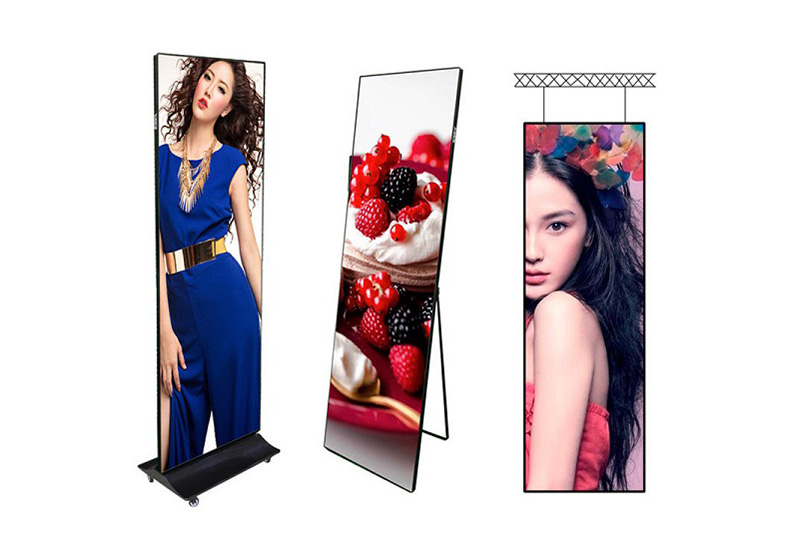
Numerous buyers search for the indoor LED display screen price first. However, the purchase price forms only a single element of the final decision. A much better metric to evaluate is the total cost of ownership.
A comprehensive shopping mall display project budget must cover several items. These include the screen body, control system, content player, shipping fees, and installation charges. The budget should also account for spare modules, electricity usage, maintenance labor, and future content creation costs. For portable poster-style screens, buyers need to evaluate another factor. They must consider how frequently the display will shift between store entrances, exhibition booths, product launch events, and seasonal campaign zones.
| Cost Item | Why It Matters |
|---|---|
| Hardware price | Main upfront investment |
| Shipping and packaging | Important for cross-border buyers |
| Installation labor | Lower when the display is portable and easy to assemble |
| Content updates | Digital content reduces repeated printing |
| Maintenance access | Affects downtime and repair cost |
| Spare modules | Helps restore the screen quickly after damage |
| Power use | Affects long-term operating cost |
| Campaign reuse | Improves ROI across seasons and events |
Longcheng’s product page emphasizes an ultra-thin, lightweight, and highly portable design. The page also confirms that the product is simple to install and take apart. These specific features greatly minimize setup difficulties for malls, retailers, and event organizers. They prove especially helpful for teams that require frequent repositioning or manage short-term promotional campaigns.
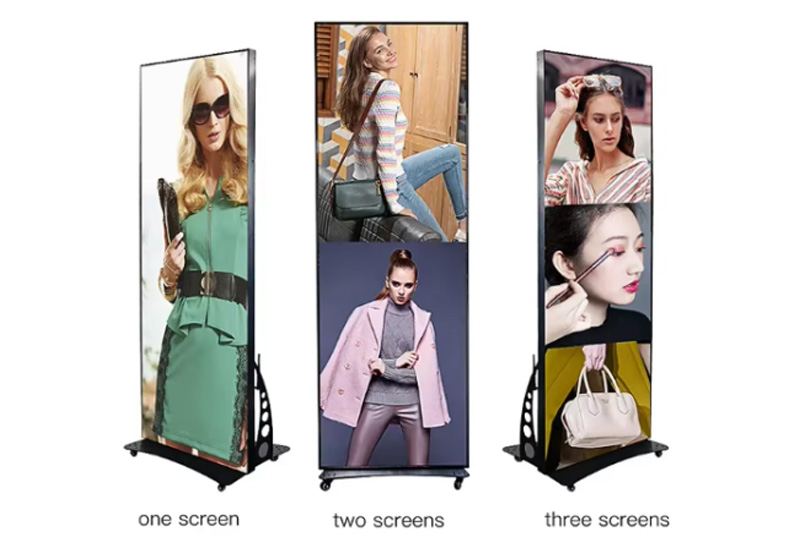
A screen delivers true value only when staff members can refresh the content smoothly. For shopping malls and large chain stores, a slow content replacement process significantly diminishes the benefits of digital signage.
The Longcheng product page explains that users can upload content via WiFi, USB, or HDMI. This setup allows for unified playback and simple control through a smart management application. This capability is crucial for retail teams. They need to modify promotions swiftly without requesting an engineer’s help every single time.
A fashion boutique might display fresh arrivals every single week. A busy restaurant could alter its lunch, dinner, and holiday menus regularly. A cosmetics brand might rotate campaigns according to different product lines. Meanwhile, a mall operator could utilize the exact same led digital display screen for advertising indoor promotions early in the day. Later, they might show event schedules in the afternoon and switch to engaging brand videos during the evening hours.
To achieve optimal results, managers should tailor the content to match typical mall traffic patterns:
| Content Type | Best Use |
|---|---|
| Short product video | Attract attention from moving shoppers |
| Large discount message | Communicate offer within 2–3 seconds |
| QR code | Connect offline display with online campaign |
| Event schedule | Guide visitors in hotel or mall lobby |
| Brand loop | Build image in high-end retail areas |
| Directional signage | Support mall navigation and pop-up events |
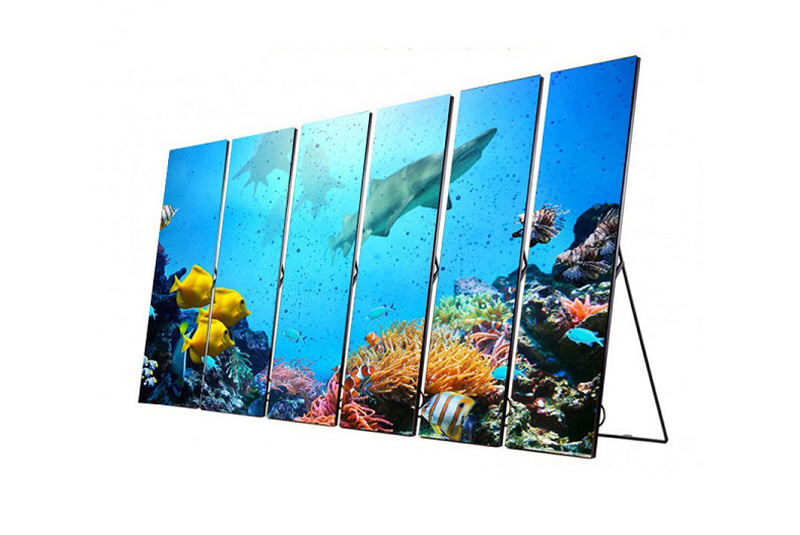
Certain projects require just one vertical poster. Other projects demand a much larger visual wall. They achieve this without mounting a permanent led wall screen display indoor system.
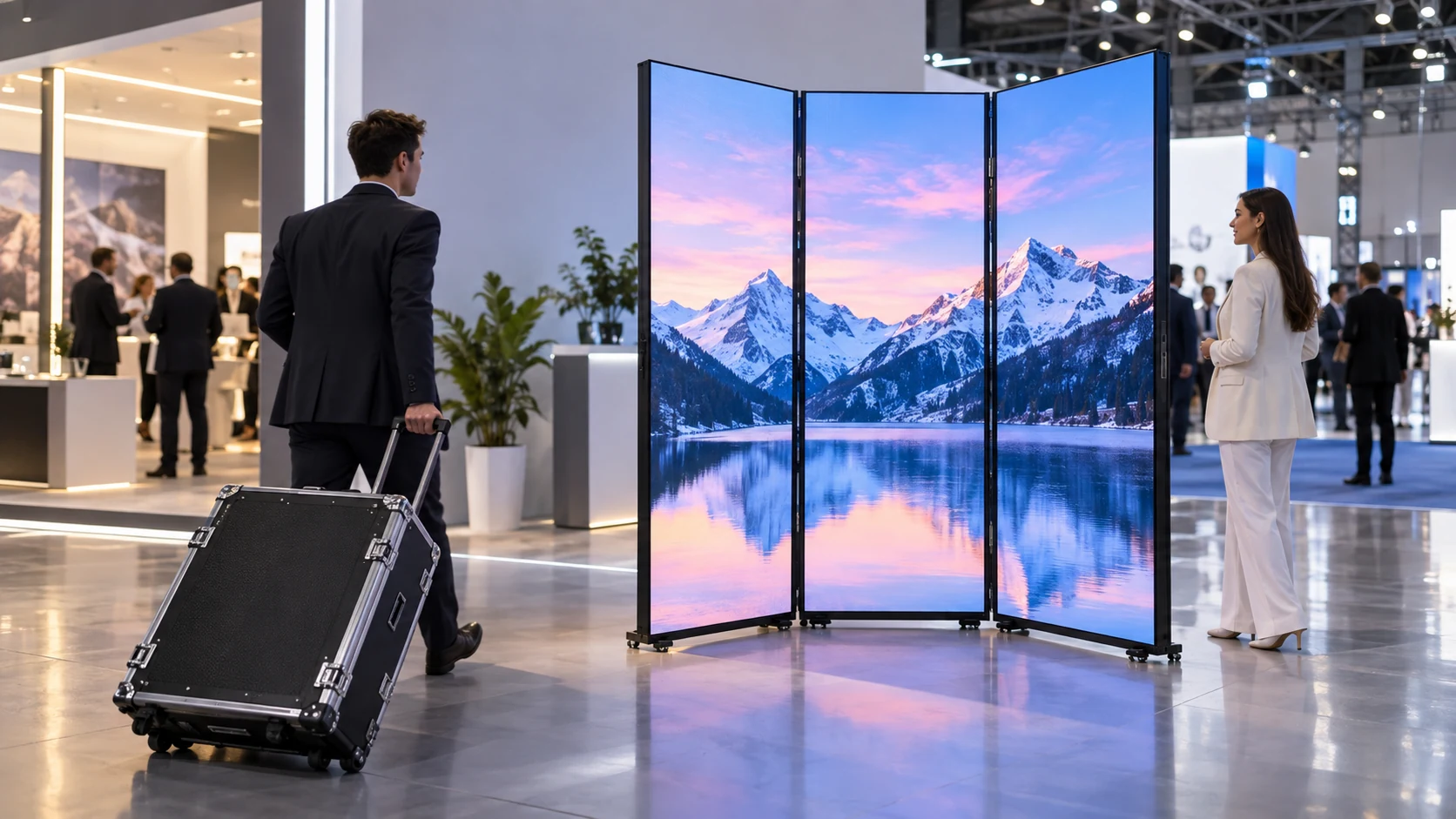
The Longcheng product page notes that users can connect 2–10 poster LED displays together. This setup allows them to project the identical image on every unit. Alternatively, they can form one massive image across all the connected displays. This feature significantly enhances the product’s adaptability for mall atriums, short-term brand campaigns, exhibition booths, and new product launch zones.
A solitary unit functions perfectly near a store entrance or a busy checkout area. Combining two or three units creates a broader campaign wall. Connecting six or more units supports a substantial mall activation event. It does this without requiring the heavy framework associated with a standard fixed indoor SMD LED display screen.
| Setup | Suitable Scenario |
|---|---|
| 1 unit | Store entrance, menu board, digital poster |
| 2–3 units | Pop-up retail wall, product launch, hotel lobby |
| 4–6 units | Mall corridor campaign, exhibition booth backdrop |
| 7–10 units | Large promotion zone, atrium branding, event wall |
Actual use cases do not always feature dramatic setups. In the retail signage sector, the true practical value usually stems from quicker updates, high reusability, and strategic placement.
The published LED poster materials from Longcheng outline several common application patterns. For instance, an electronics brand utilized P2 LED posters at a major international expo to broadcast continuous product videos. A retail chain deployed foldable screens to handle their daily promotional updates. Furthermore, hotels swapped out their traditional static roll-up banners. They used digital agendas instead for weddings and professional corporate seminars.
These practical examples highlight three important lessons for shopping mall buyers. First, engaging dynamic video content helps a booth or storefront grab attention in a busy, crowded space. Second, executing daily promotion changes becomes much simpler when staff can update content digitally. Third, employing reusable digital signage significantly cuts down on repetitive printing and setup chores. This is highly beneficial for hotels, malls, and retailers that host frequent events.
Selecting a supplier requires looking at more than just the lowest price. Buyers should evaluate product fit, engineering support, clear documentation, reliable warranty terms, and strong after-sales service.
Shenzhen Longcheng Photoelectrictechnology Co., LTD. began operations in 2013 in Shenzhen, Guangdong. The company produces various LED screen display products. These include small pixel pitch LED modules alongside comprehensive indoor and outdoor LED screen display solutions. The official company website highlights that their products serve multiple venues. These locations include stages, conference rooms, special events, live broadcast studios, sports arenas, auditoriums, classrooms, and training rooms. The site also emphasizes high definition visuals, high refresh rates, and energy-saving designs. Customers benefit from customization options, rigorous 72-hour product testing, dedicated technical support, and accessible 24-hour online service.
Many buyers compare options to find a reliable China indoor LED display screen manufacturer or a dependable indoor advertising LED display screen supplier. Longcheng offers an extensive product range to meet these needs. Their catalog features rental LED displays, small pitch LED displays, fixed LED displays, and poster LED displays. They also supply sports stadium LED displays, high-quality LED display modules, and necessary accessories.
A P2.5 mirror LED screen represents a robust choice for shopping malls and retail advertising environments. It performs exceptionally well when viewers stand nearby and content requires frequent modifications. The display maintains a sleek appearance, avoiding the bulky nature of a conventional video wall. Making the right purchasing decision involves evaluating several factors. Buyers must review the pixel pitch, brightness levels, and pixel density. They should also consider content control systems, installation methods, and cascade connection capabilities. Finally, they need to check the warranty, maintenance access, and the overall total cost of ownership.
For B2B buyers, the greatest value usually emerges from aligning the display with a specific business purpose. Typical uses include mall entrance advertising, storefront promotions, and hotel event signage. Other popular applications involve pop-up retail shops, exhibition booths, or multi-screen campaign walls. For C-end buyers, like independent store owners and event operators, the primary advantage remains highly practical. They gain access to dynamic content, simpler updates, and reusable campaigns. This provides a much more powerful visual presence compared to standard printed posters.
Yes. The P2.5 model is highly suitable for close indoor viewing. Its 2.5 mm pixel pitch delivers greater detail than displays with larger pitches. It performs excellently at retail entrances, along mall corridors, in product promotion areas, inside hotel lobbies, and at exhibition booths.
Several key factors influence the final cost. These include pixel pitch, screen dimensions, brightness capacity, refresh rate, and cabinet structure. The control system, module quality, and chosen installation method also play a role. Shipping fees, warranty coverage, and after-sales support add to the expense. Buyers should carefully compare the total cost of ownership rather than focusing solely on the initial quotation.
Yes. The Longcheng product page confirms that users can splice 2–10 poster LED displays together. This arrangement allows them to show the same image on every single unit. Alternatively, they can display one seamless image across all the connected screens. This function proves highly useful for extensive shopping mall campaigns, large exhibitions, and temporary event backdrops.












Leave a comments