
Nullam dignissim, ante scelerisque the is euismod fermentum odio sem semper the is erat, a feugiat leo urna eget eros. Duis Aenean a imperdiet risus.
Nullam dignissim, ante scelerisque the is euismod fermentum odio sem semper the is erat, a feugiat leo urna eget eros. Duis Aenean a imperdiet risus.
 author
Setting up a P3.91 LED video wall begins with three main choices. You must decide the final screen size, the cabinet quantity, and the native resolution. A simple math mistake can cause serious problems. It might lead to an incorrect price quote or wrong content dimensions. You could also face weak rigging or extra shipping fees. This guide provides a helpful method for event companies and AV integrators. Venues, churches, and production crews can also use it. It shows how to estimate a modular outdoor rental LED screen easily.
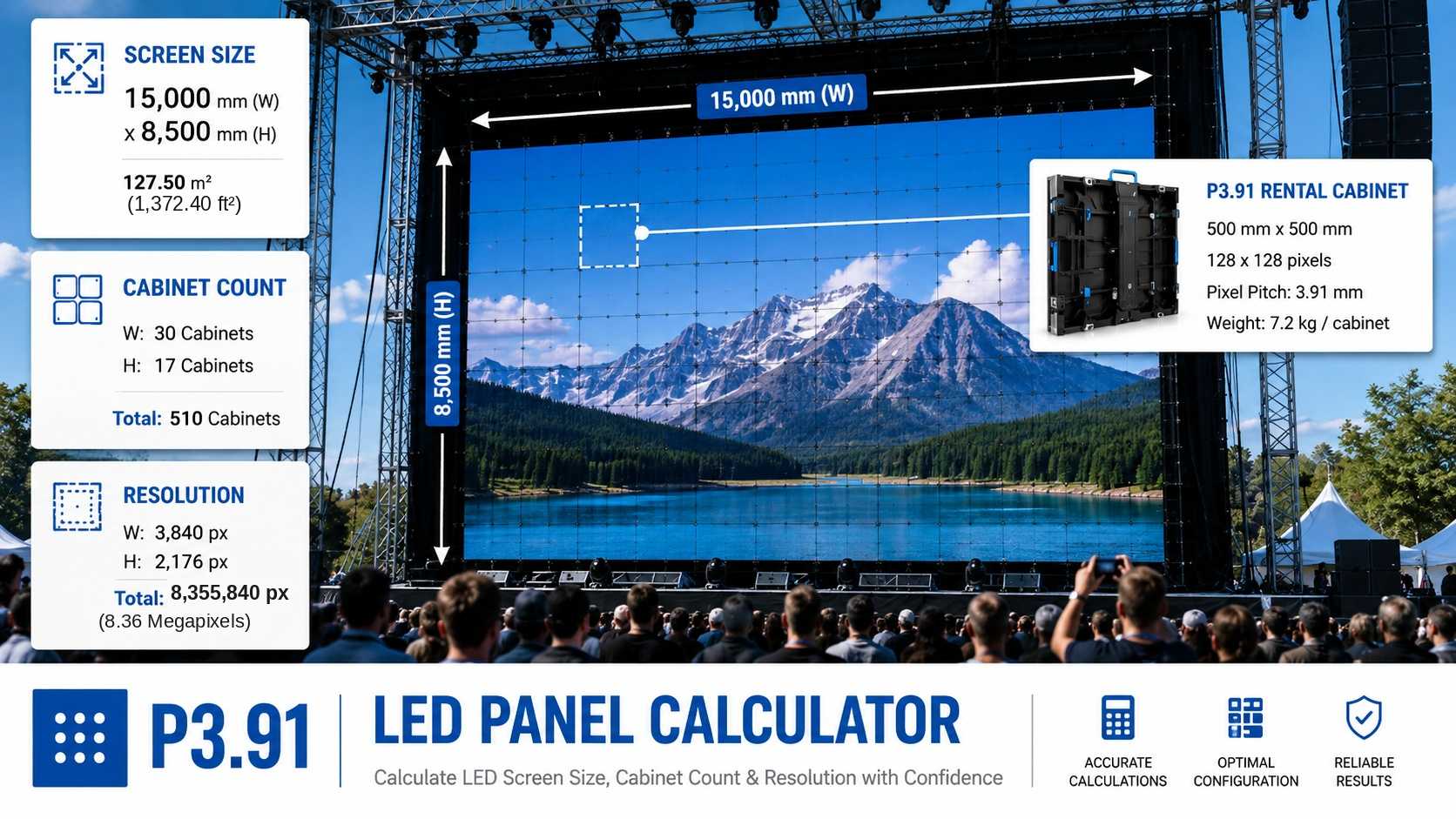
Start your work by checking the cabinet dimensions and the cabinet resolution. Do not rely on the product name alone. P3.91 rental LED panels are available in several formats. Therefore, your math must use the specific cabinet chosen for the job.
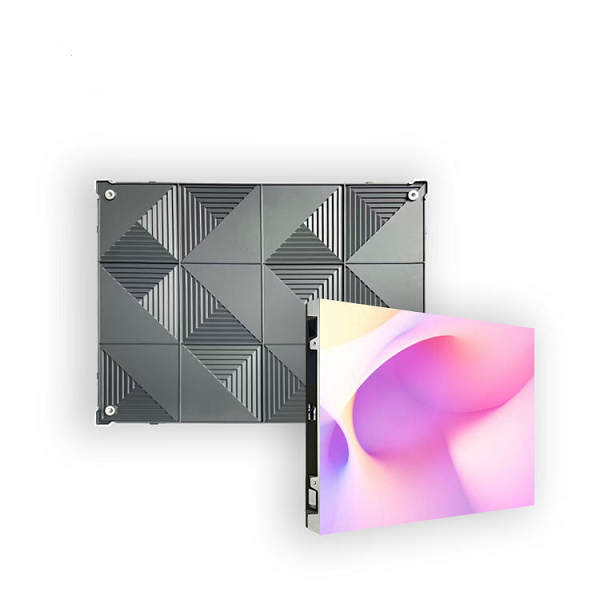
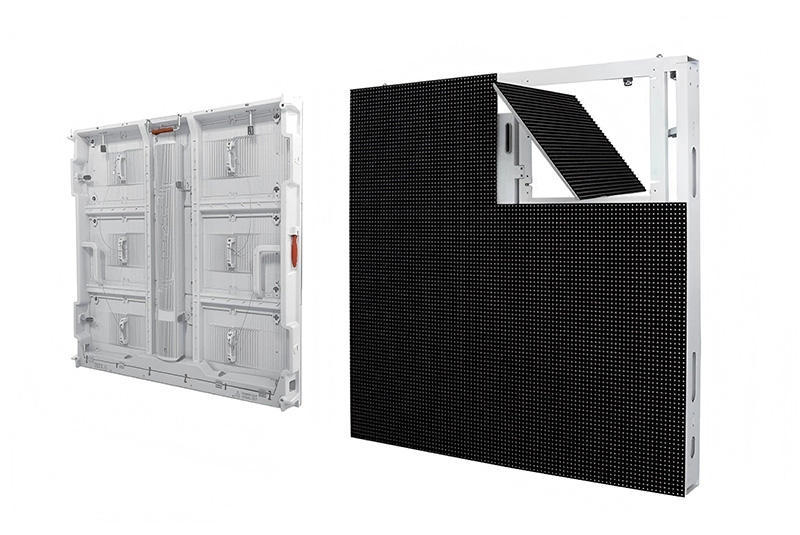
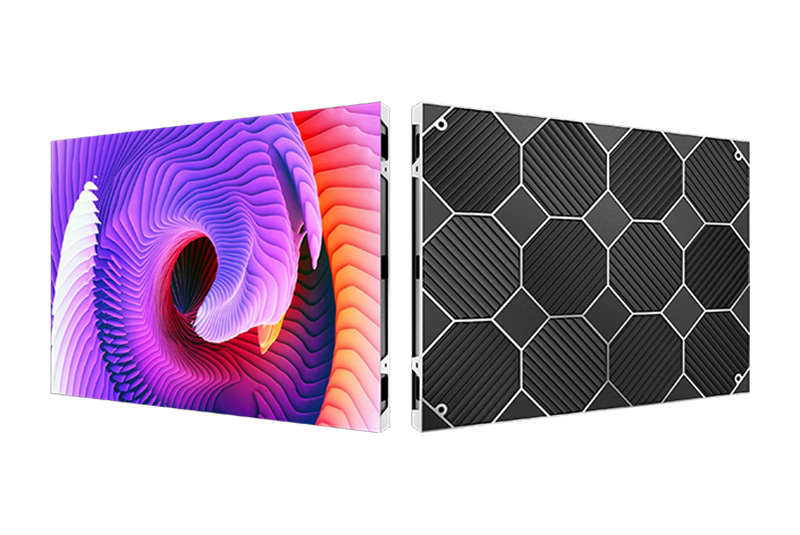
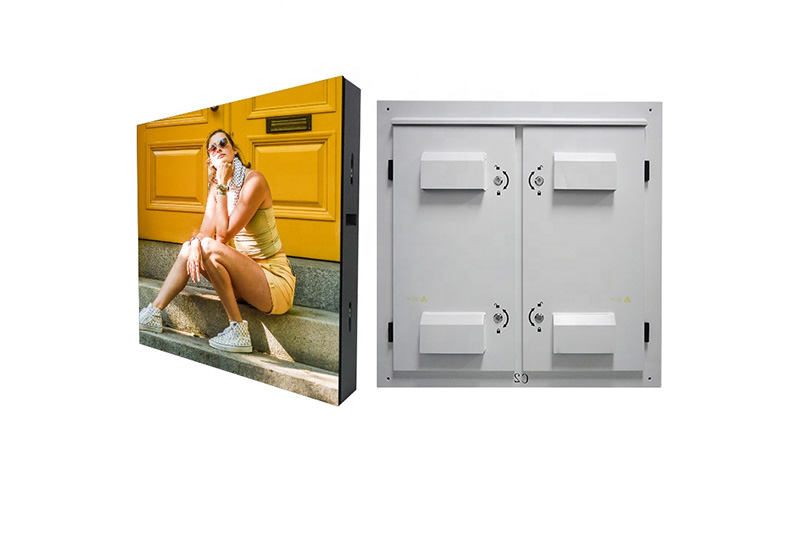
Longcheng’s P3.91 rental LED screen comes in two main options. You can pick 500 × 500 mm or 500 × 1,000 mm die-cast aluminum cabinets. A single 500 × 500 mm cabinet takes up 0.25 m² of space. It features a native resolution of 128 × 128 pixels. The spec sheet also shows 65,536 pixels per square meter. Meanwhile, a 500 × 1,000 mm cabinet covers 0.5 m². It uses the same module layout. This results in a calculated resolution of 128 × 256 pixels.
These cabinets work well for both hanging and ground-stacked setups. They are great for concerts, festivals, and trade shows. You can also use them for temporary stage displays.
Imagine you want a rectangular wall made of 500 × 500 mm cabinets. You need to divide your target width and height by 0.5 meter. Sometimes, your measurement is not a perfect multiple of 0.5. In that case, you must change the size or round up. Do this before you approve the final price quote.
You can apply these basic P3.91 LED panel calculation formulas:
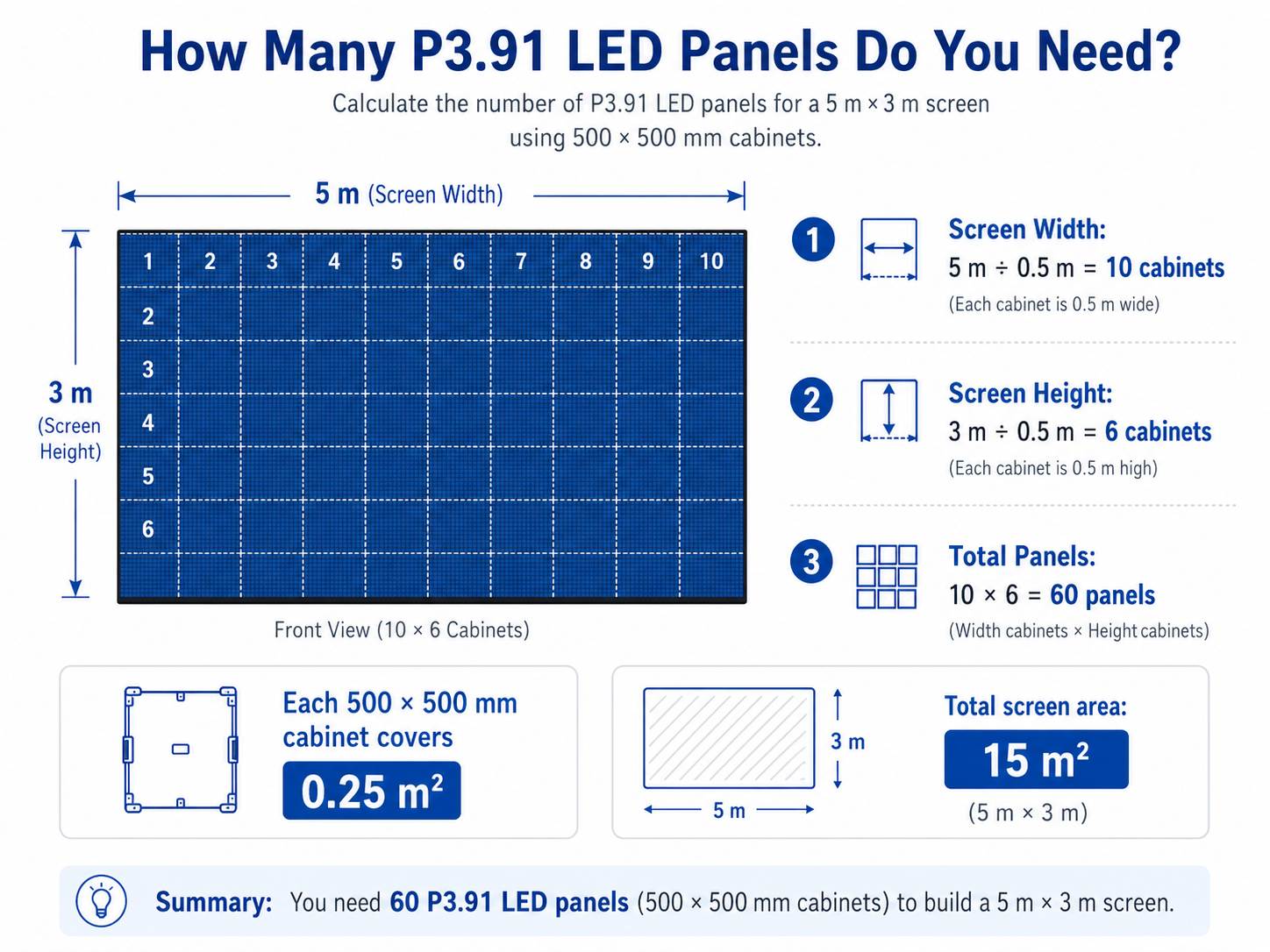
Cabinets across = screen width ÷ 0.5 m
Cabinets high = screen height ÷ 0.5 m
Total panels = cabinets across × cabinets high
Think about a 5 m × 3 m P3.91 LED wall. It requires the following setup:
The completed display spans 15 m². You will need extra parts like spare modules and power supplies. Receiving cards and backup cabinets are also important. You must add these items separately. They do not form part of the active screen area.
Sometimes, a buyer asks for a 4.2 m × 2.4 m LED wall. However, 500 mm cabinets cannot match those exact numbers. You must round up the measurements. This change creates a 4.5 m × 2.5 m screen. It takes nine cabinets across and five cabinets high. In total, you will need 45 panels.
Always talk to the client before finalizing the design. Find out if they want the closest larger size or a smaller option. They might even prefer a new stage layout. This quick check stops problems later on. It helps avoid sudden changes to video content or truss dimensions. It also protects your shipping plans, ballast needs, and installation labor.
Physical dimensions tell you the total stage area the screen covers. On the other hand, native resolution is about the details. It shows the exact number of pixels the video processor handles. This number also decides how the visual content gets mapped.
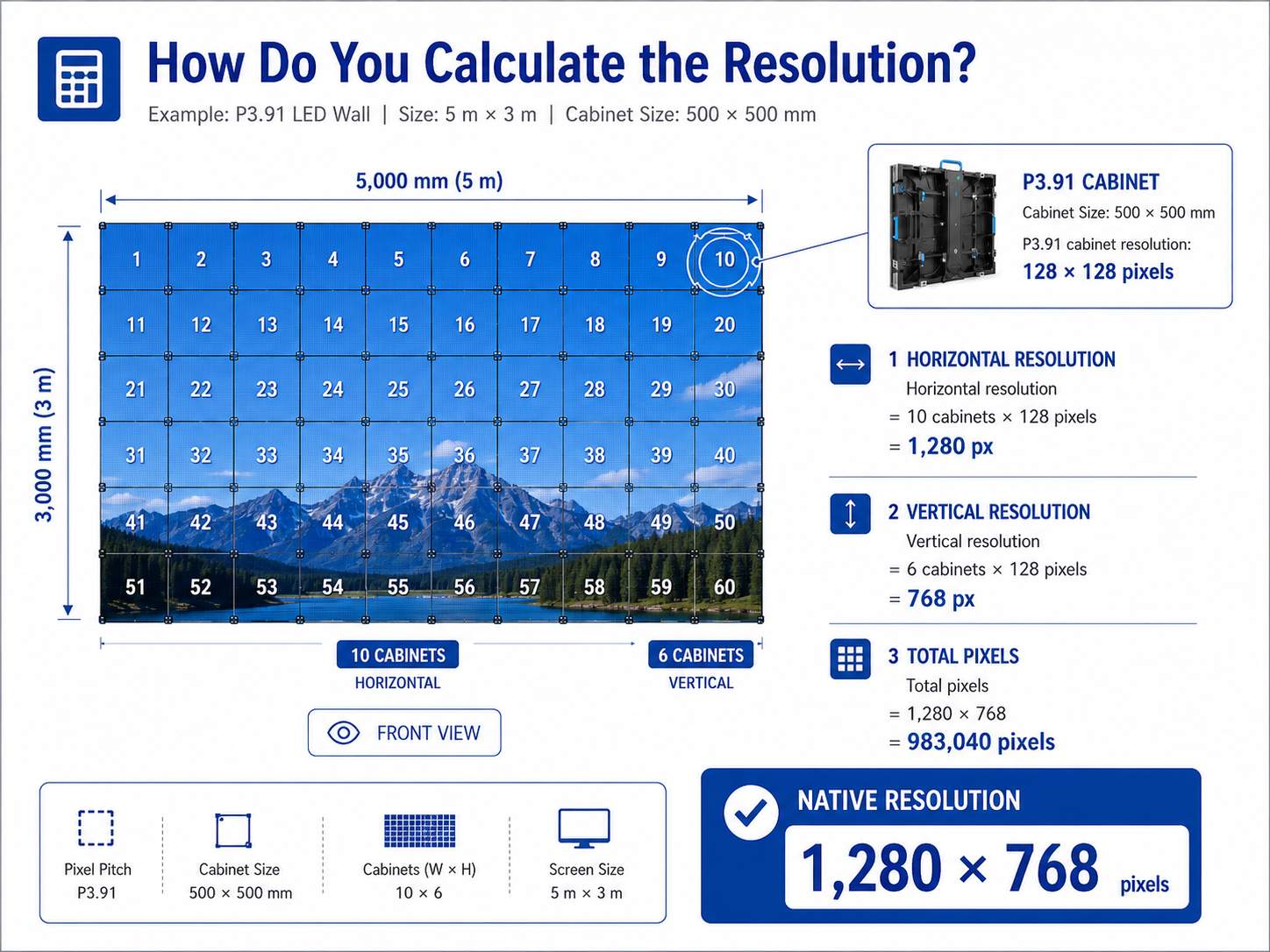
When you work with 500 × 500 mm P3.91 cabinets, follow these rules:
Horizontal resolution = cabinets across × 128 pixels
Vertical resolution = cabinets high × 128 pixels
Let us look back at the 5 m × 3 m example. It uses a 10 × 6 cabinet grid. As a result, its native resolution is:
A video processor is able to scale a standard 1920 × 1080 source to fit this LED wall. Still, custom graphics are a better choice. Designers should build them for the screen’s native aspect ratio. This approach stops bad cropping and empty black bars. It also prevents stretched or blurry text.
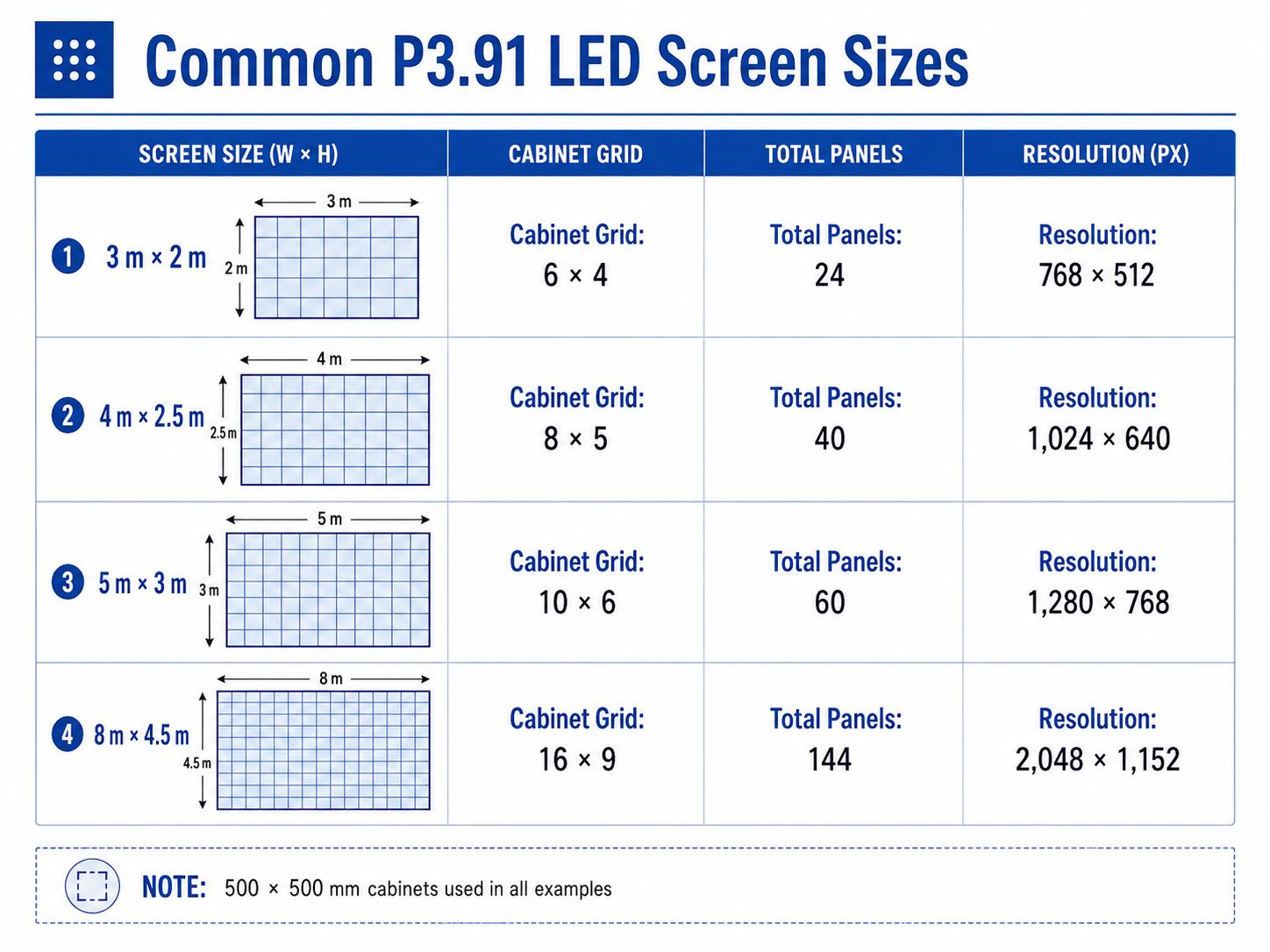
| Screen Size | Cabinet Grid | Total Panels | Native Resolution |
| 3 m × 2 m | 6 × 4 | 24 | 768 × 512 |
| 4 m × 2.5 m | 8 × 5 | 40 | 1,024 × 640 |
| 5 m × 3 m | 10 × 6 | 60 | 1,280 × 768 |
| 8 m × 4.5 m | 16 × 9 | 144 | 2,048 × 1,152 |
The 8 m × 4.5 m setup works extremely well for widescreen content. This happens because its cabinet grid matches a 16:9 ratio. Its native resolution follows that same format too.
Different screen sizes might force you to crop or scale the media. This issue is not always a dealbreaker. However, the content team needs the exact LED wall resolution early. They must have it before they make presentation slides or sponsor graphics. It is also needed for video loops and live-event backgrounds.
You should never pick your cabinet quantity based solely on the stage width. Many other factors matter. Think about audience distance and text size. Consider camera use, seating plans, and clear sightlines. The type of media being shown also affects the best screen dimensions.
Longcheng suggests about 4 m as the best viewing distance for its P3.91 configuration. Daktronics shares a standard industry rule for this. They say the ideal viewing distance in feet is roughly three times the pixel pitch in millimeters. For a P3.91 setup, this math gives about 11.7 feet, or 3.6 m. This number sits very close to the manufacturer’s own guideline.
Treat that 4 m mark as a helpful guide instead of a strict rule. Some visuals need extra care. Small text, complex charts, and sponsor logos require proper testing. Close camera shots demand attention too. Big video images seen from far away are usually much easier to handle.
You must think about the closest viewer before you finalize the cabinet order. Buying a massive wall without checking the front-row distance is risky. The audience might see the ugly pixel structure. On the flip side, picking an overly fine pixel pitch wastes money. It drives up the budget without giving any real visual upgrade.
Real-world projects show how fast your equipment list and logistics expand. The calculated panel count is just the start. You must link it to flight cases and signal cabling. It also affects power distribution and rigging capacity. Truck space and setup labor are tied to this number as well.
Longcheng’s project gallery shows a massive 200 m² P3.91 event backdrop in Inglewood, Los Angeles. This job used 500 × 500 mm cabinets. Each unit covers exactly 0.25 m². Therefore, the total area equals 800 active cabinets. The specific grid of cabinets across and high relies on the final stage shape.
That same gallery highlights a 30 m² P3.91 concert-stage video wall in Sicily, Italy. It uses the exact same cabinet size. This smaller setup takes 120 cabinets.
These two examples prove a key point. Screen area alone is never enough for solid project planning. Jumping from 30 m² to 200 m² does more than just add LED panels. It drastically increases handling time and flight-case needs. The testing workload and cable amounts go up. You will also need more power-distribution capacity and a larger spare-parts inventory. Finally, the job requires more trained technicians on site.
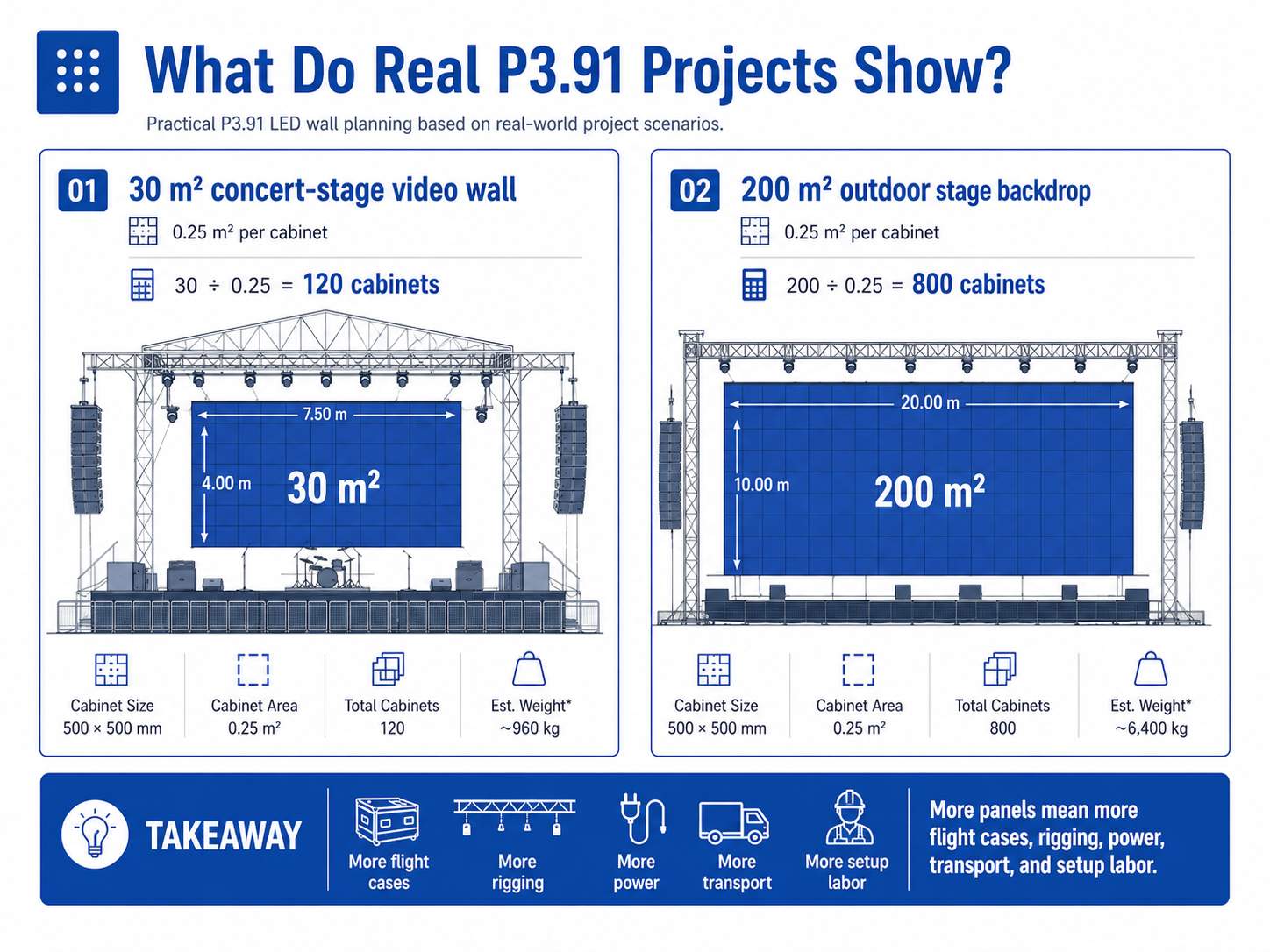
The amount of P3.91 cabinets impacts much more than just the initial purchase price. It shifts the needed processing power and structural gear. It alters truck space and overall setup time. It also changes your maintenance stock, insurance rates, and long-term running costs.
A useful P3.91 LED screen cost calculator must look at these items:
Longcheng is able to supply a full turnkey package. It includes LED panels, flight cases, beams, and cables. Control equipment, a video processor, and software come with it too. This bundled deal helps buyers see the true cost of a working system. It is much better than just looking at bare panel prices.
Rental operators need to figure out ROI based on expected usage. Think about a 60-panel P3.91 LED wall. You might use it often at corporate events, weddings, and trade shows. It will likely yield a higher profit than a huge 144-panel stock. That larger inventory might just gather dust in storage for months.
The ideal inventory size is rarely the biggest screen a business can buy. Instead, it is the cabinet quantity that fits your most common jobs. It should also allow you to split the panels up for multiple smaller events at once.
A detailed project brief helps the supplier do better math. They can accurately count the active LED panels and the needed support gear. A good brief also makes it simpler to compare price quotes from different brands.
You should share the following details:
Be sure to say if the quote needs to cover extra services. Mention things like rigging, control gear, and power distribution. Ask about flight cases, technical training, shipping, and on-site help.
Longcheng provides excellent cabinet customization and technical support. This lets buyers easily compare 500 × 500 mm and 500 × 1,000 mm options. They can even look at mixed layouts. The best choice depends on setup speed, screen shape, and inventory efficiency.
Sizing up a P3.91 rental LED screen is a step-by-step task. First, divide the wanted width and height by the cabinet dimensions. Next, multiply the cabinet grid to find your total panel quantity. Finally, multiply that same grid by the cabinet resolution. For a standard 500 × 500 mm P3.91 cabinet, every single panel adds 0.25 m². It also provides 128 × 128 pixels.
Do not buy anything until you test the math against real-world factors. Check the viewing distance, aspect ratio, and processor capacity. Think about rigging, shipping, and setup labor. Do not forget maintenance stock and expected daily usage. This careful review turns a simple cabinet count into a solid project plan. It also gives you a much safer total-cost estimate.
If you use 500 × 500 mm cabinets, the wall needs eight cabinets across. It also needs six cabinets high. The total amount is 48 panels. This gives a native resolution of 1,024 × 768 pixels. The active display area equals 12 m².
You can mix them only under strict conditions. Their modules, locking systems, and electrical connections must match exactly. The receiving-card setups and calibration data must also align. Always check this compatibility with the manufacturer. Do this before you try to design a mixed-cabinet LED wall.
There is no perfect rule for buying spare cabinets. The right amount depends on event frequency and travel distance. Your repair skills, project risks, and service deals matter too. Many rental operators focus on smaller pieces first. They stock up on spare LED modules, power supplies, and receiving cards. They secure these vital parts before buying full spare cabinets for tours or risky events.
SEO Title:How Many P3.91 LED Panels Do You Need Screen Size, Cabinet Count and Resolution Calculator
Meta Description:
Calculate how many P3.91 LED panels you need by screen size, cabinet count, and resolution, with practical formulas, examples, and project tips.
Keywords:
P3.91 LED panels, P3.91 LED panel calculator, how many P3.91 LED panels do I need












Leave a comments