
Nullam dignissim, ante scelerisque the is euismod fermentum odio sem semper the is erat, a feugiat leo urna eget eros. Duis Aenean a imperdiet risus.
Nullam dignissim, ante scelerisque the is euismod fermentum odio sem semper the is erat, a feugiat leo urna eget eros. Duis Aenean a imperdiet risus.
 author
A cube LED display is most useful when people can approach it from more than one direction. In retail atriums, exhibition halls, pop-up activations, and event concourses, the display can turn a central or overhead position into a 360° digital focal point. The planning challenge is that four visible faces create four sightlines, more pixels, more content decisions, and more service points than a flat wall. A successful project therefore starts with audience movement and content behavior, not with the cube size alone.
Longcheng’s Creative Cube LED Display is offered in P2.5, P3, P3.91, and P4 configurations, with published cube sizes from 320 × 320 × 320 mm to 512 × 512 × 512 mm. Those options are useful starting points, but the final choice still depends on viewing distance, active faces, mounting height, content detail, and maintenance access.
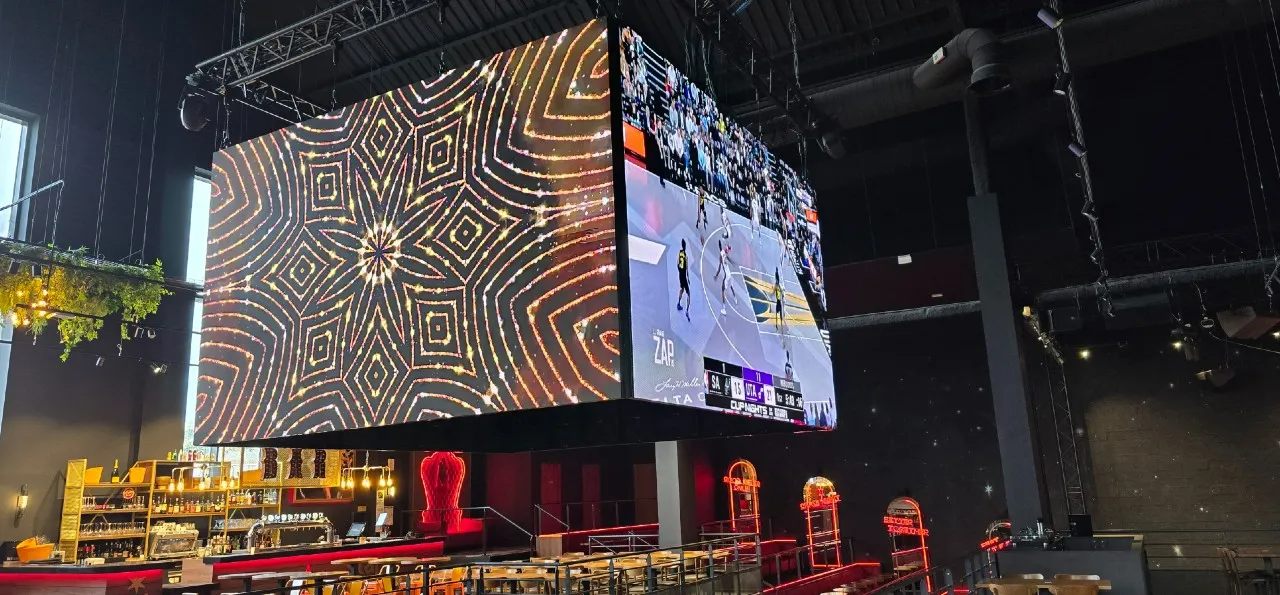
A flat LED wall has a clear front. A cube does not. Viewers may approach from four directions, stop at different distances, or see two faces at once from a corner. That changes the way the screen should be sized and the way content should be built.
Four vertical faces are usually the most practical starting point because they match the main approach directions. A top face often has little audience exposure, while a bottom face only adds value when visitors can see beneath the installation. Map pedestrian flow first, then activate only the surfaces that earn meaningful exposure.
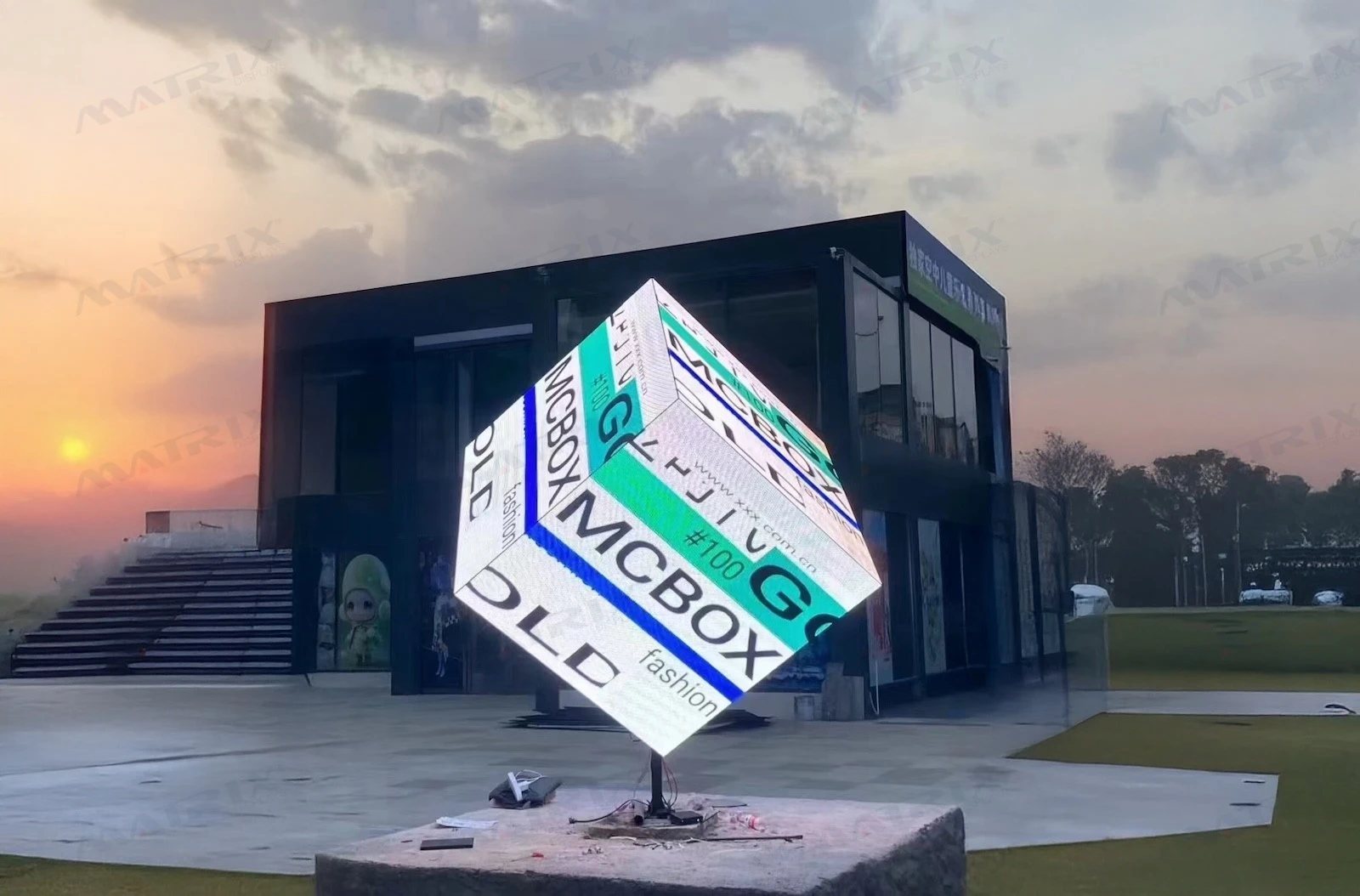
The best specification balances physical presence with the nearest realistic viewing distance. A compact retail feature may need a finer pitch because shoppers can stand close to it. A larger event cube mounted high above the floor can use a coarser pitch because the audience sees it from farther away.
| Configuration | Typical Use | Planning Effect |
| P2.5 / 320 mm | Close retail viewing, compact exhibit features | Higher pixel density; more detailed content |
| P3 / 384 mm | Indoor directional viewing | Balanced physical size and pixel load |
| P3.91 / 500 mm | Larger event or atrium feature | Longer viewing distance; larger visual object |
| P4 / 512 mm | Higher mounting or distant viewing | Lower density with lower processing demand |
Pixel pitch should not be chosen by headline resolution alone. Text size, camera use, audience distance, and the content style all matter. A high cube showing large brand graphics can look convincing with a different pitch from a low cube showing product details or directional information.
Content design determines whether the cube feels like one spatial object or four small screens joined together. The content team should receive a face-by-face pixel map before campaign production begins.
Independent faces work when each approach direction needs a different message. Mirrored content is easier when the same message must remain visible from every side. Wrapped animation creates the strongest 360° effect, but it needs careful edge alignment so logos, faces, and text do not split at corners.
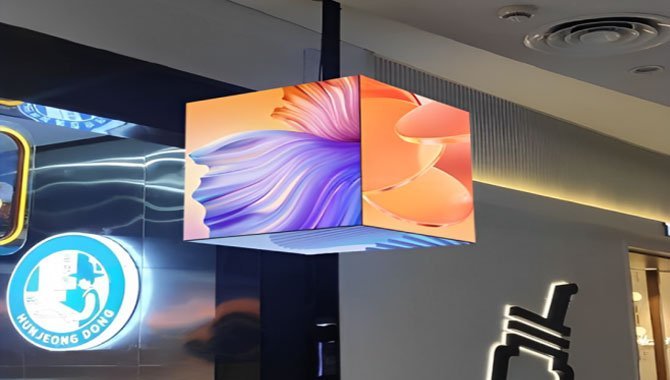
Visitors often see two faces at once, so corner seams become part of the visual experience. Keep small text away from edges, test motion direction around the cube, and review the content from real walking paths rather than only on a flat desktop preview. Repeated loops should also be checked for timing drift if several outputs or content zones are involved.
A 360° cube concentrates structure, power, data, and maintenance into a compact volume. Suspended units need structural approval for the complete load, while floor-mounted units need a stable base and protection from accidental contact.
Recent AVIXA installation guidance emphasizes that LED projects should be specified around environment, viewing distance, brightness, pixel pitch, serviceability, power, and structure before the equipment is installed. For a cube, that means the drawing should show lifting points, cable exits, ventilation paths, and how a technician will remove a failed module or power supply without dismantling the whole object.
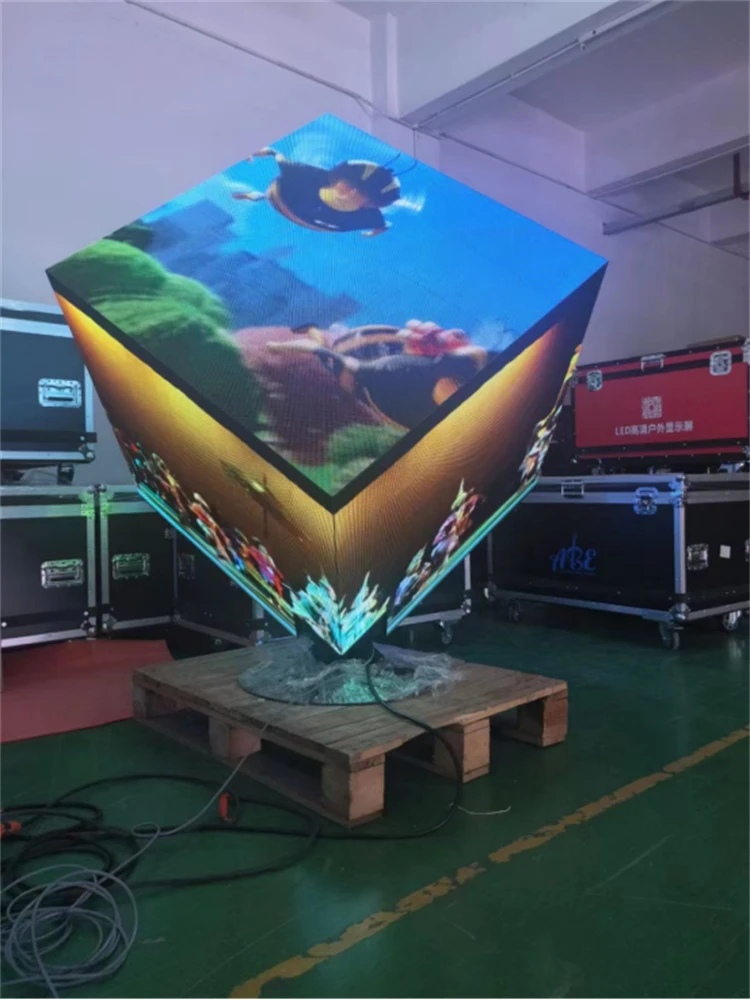
Visual novelty is not an ROI metric. Retail teams can track dwell time, store-entry rate, promotion scans, campaign sales, and content-change labor. Event teams can track sponsor exposure, photo interactions, and hardware reuse across shows.
The most useful comparison is against the alternative. A cube may justify its cost when it replaces recurring printed graphics, creates additional sponsor inventory, or improves visibility from several traffic directions at once. If the same result could be achieved with one flat screen, the extra faces may not earn their cost.
Before production, confirm cube dimensions, active faces, pixel pitch, face resolution, mounting height, support method, power demand, control-system capacity, and the service route. An assembled test is useful because corner alignment and cross-face color consistency are difficult to judge from separate panels.
For projects based on the Creative LED Display range, product-specific limits and the final service plan should be checked against the project drawing. Shenzhen Longcheng Photoelectric Technology Co., Ltd. publishes the product information, but the final bill of materials still needs to match the actual venue and operating conditions.
Planning a cube LED display for a 360° retail or event experience starts with audience routes, not the catalogue. Decide which faces people can actually see, choose size and pixel pitch from real viewing distances, build content around corner behavior, and lock the structural and maintenance plan before production. When these decisions are made together, the cube becomes a usable multi-directional media surface rather than an expensive shape that is difficult to operate.
No. A finer pitch helps with close viewing and small details, but it also raises pixel count, processing demand, and cost. Choose it only when the nearest viewers and content justify the extra density.
Yes, if the processor, mapping, and content workflow are designed for independent outputs. Mirrored content is simpler, while wrapped animation needs the most careful corner alignment and previewing.
Provide the required cube size, active faces, nearest viewing distance, mounting height, indoor or event environment, content sources, operating hours, service access, destination, and completion date.
Title:
How to Plan a Cube LED Display for 360° Retail and Event Experiences
Meta Description:
Plan a cube LED display for 360° retail and events by choosing active faces, pixel pitch, content mapping, installation, and service access.
Keywords:
cube LED display, cube LED display for retail and events, cube LED display content mapping












Leave a comments