
Nullam dignissim, ante scelerisque the is euismod fermentum odio sem semper the is erat, a feugiat leo urna eget eros. Duis Aenean a imperdiet risus.
Nullam dignissim, ante scelerisque the is euismod fermentum odio sem semper the is erat, a feugiat leo urna eget eros. Duis Aenean a imperdiet risus.
 author
Picking a fine-pitch indoor LED display involves more than just finding the smallest pixel pitch. Buyers need to match their target resolution with the available wall space. They must also consider the minimum viewing distance, content type, and cabinet dimensions. Installation costs and maintenance plans play a big role too. A P0.9 LED wall can show Full HD resolution in a fairly small area. Meanwhile, a P1.87 screen needs a much larger surface to do the same thing. However, the larger-pitch option might offer a better return on investment. This happens when viewers sit farther away and cannot really notice the extra pixel density.This LED wall resolution calculator estimates the Full HD LED wall size and 4K LED wall size required for P0.95, P1.25, P1.56, and P1.87 pixel pitches.This LED wall resolution calculator estimates the Full HD LED wall size and 4K LED wall size required for P0.95, P1.25, P1.56, and P1.87 pixel pitches.

Figuring out the right size starts with pixel pitch. This term refers to the center-to-center distance between two adjacent pixels. A smaller pitch packs more pixels into every square meter. As a result, it increases the overall resolution for any given physical size.
You can use these two basic formulas for an initial LED video wall calculation:
Horizontal pixels = screen width in millimeters ÷ pixel pitch
Vertical pixels = screen height in millimeters ÷ pixel pitch
You might want to calculate the theoretical screen size needed for a specific target resolution. To do this, simply reverse the formula:
Required width in meters = horizontal resolution × pixel pitch ÷ 1,000
Required height in meters = vertical resolution × pixel pitch ÷ 1,000
For the purpose of this guide, Full HD means 1920 × 1080 pixels. On the other hand, 4K UHD means 3840 × 2160 pixels.
The table below highlights the required active display area. You will need these numbers before adjusting your design to fit specific modules and cabinets.
| Pixel pitch | Approximate pixel density | Full HD active area | 4K UHD active area |
| P0.95 | 1,108,000 pixels/m² | 1.82 × 1.03 m | 3.65 × 2.05 m |
| P1.25 | 640,000 pixels/m² | 2.40 × 1.35 m | 4.80 × 2.70 m |
| P1.56 | 411,000 pixels/m² | 3.00 × 1.68 m | 5.99 × 3.37 m |
| P1.87 | 286,000 pixels/m² | 3.59 × 2.02 m | 7.18 × 4.04 m |
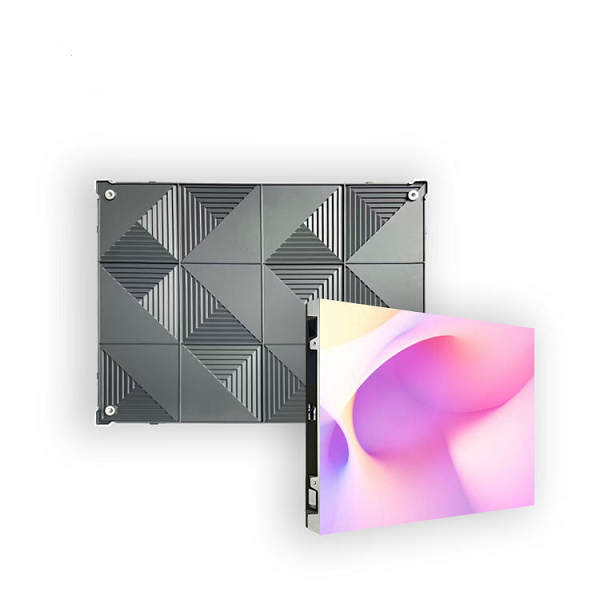
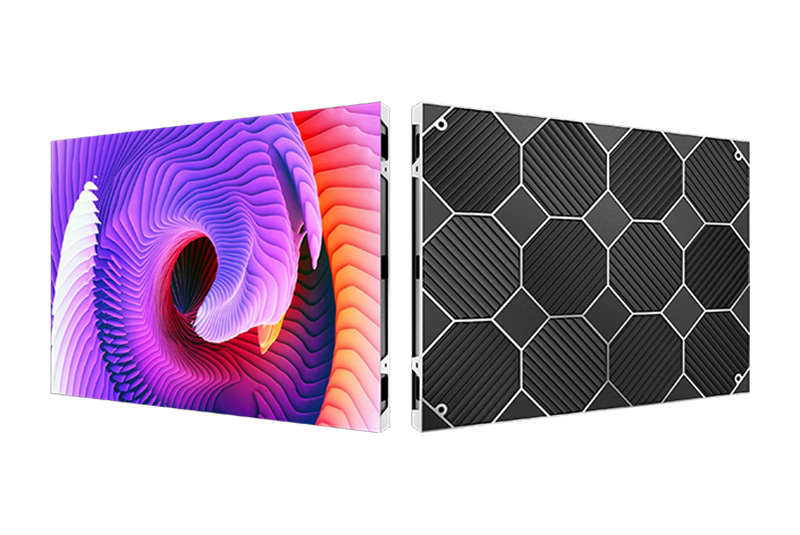
These numbers represent mathematical dimensions instead of final production sizes. Longcheng’s fine-pitch product page highlights P0.95, P1.25, P1.56, and P1.87 setups. These configurations rely on 640 × 480 mm die-cast aluminum cabinets. Therefore, you must round the finished wall dimensions to create a buildable cabinet matrix.

Target resolution makes up just one piece of the puzzle. The closest viewing position matters greatly. The type of information displayed on the screen is also very important. In fact, these practical factors often matter more than the original source file’s resolution.
Longcheng’s specification table lists its finest option as P0.95. Meanwhile, the broader market often groups similar products under the general term P0.9 LED display.
P0.95 works well when viewers sit very close to the wall. They might need to read tiny text or review detailed spreadsheets. It also handles engineering drawings, financial data, and medical images perfectly. Common locations for this pitch include executive boardrooms and compact command centers. You will also see it in premium showrooms and high-end home cinemas.
The calculated pixel density for this model is nearly 3.9 times higher than that of P1.87. This extra density greatly improves close-up details. However, it also increases the total number of LEDs. It demands higher receiving-card capacity and stronger image-processing power. Buyers need to make sure users will actually notice this visual difference. Otherwise, paying the higher project cost might not make sense.
P1.25 usually offers a great balance between physical size and native resolution. A theoretical Full HD P1.25 display measures roughly 2.40 × 1.35 meters. This size fits perfectly into many medium-sized conference rooms.
Longcheng states a P1.25 cabinet resolution of 512 × 384 pixels. You can arrange four cabinets across and three cabinets high. This setup creates a physical screen measuring 2.56 × 1.44 meters. Its total resolution reaches 2048 × 1152 pixels. As a result, you get a 16:9 wall with slightly more pixels than standard Full HD.
An eight-by-six cabinet layout measures 5.12 × 2.88 meters. It delivers 4096 × 2304 pixels, which slightly exceeds standard 4K UHD. This clean cabinet geometry really helps simplify content scaling. It makes structural planning much easier too.
P1.56 fits well in larger meeting rooms and university lecture halls. It also suits corporate lobbies and monitoring spaces. In these areas, the closest viewer does not stand directly next to the screen. This pitch provides clearer details than P1.87. At the same time, it requires less physical space than P1.87 to achieve the exact same pixel count.
P1.87 looks very attractive when you build a massive wall. It works best when viewing distances are much longer. Christie offers a helpful starting guideline for this. They suggest about one meter of minimum viewing distance for every single millimeter of pixel pitch. Following this rule, viewers can comfortably watch a P1.87 screen from about 1.9 meters away. Of course, reading small text or complex analytical content might require a bit more distance. Alternatively, you might need a finer pitch for those specific tasks.

A resolution calculator helps find the minimum active image area. However, a real installation must match the physical dimensions of your chosen module and cabinet.
Longcheng’s 640 × 480 mm cabinet features a physical aspect ratio of 4:3. You might want to build a 16:9 wall without cutting any cabinets. To do this, you can use a few common layouts. Try placing four cabinets across by three high. You could also do eight across by six high, or even twelve across by nine high.
The final resolution changes depending on the pixel pitch. This happens because each cabinet holds a different number of pixels. Because of this, a supplier must calculate the physical cabinet matrix carefully. They must also figure out the total pixel canvas before starting production.
A screen processor can easily scale a 1920 × 1080 or 3840 × 2160 video source. It adapts the image to fit the wall’s native resolution. AVIXA points out that processors route sources to the correct display area. They also advise considering screen size, content type, and viewing distance together with the target resolution.
No, it does not. Native 4K proves very useful for displaying detailed maps and technical drawings. It also helps when showing small data labels, medical content, or multiple information windows at the same time.
A retail backdrop showing large product photos might look amazing with fewer than 8.3 million pixels. Suppose the audience stands several meters away. Paying for native 4K in this situation simply increases your hardware and installation budget. It will not produce any visible improvement for the everyday viewer.
Published case studies help prove an important point. The screen’s main purpose and the room’s viewing conditions matter far more than the pitch number itself.
Consider a public industry example, which is not a Longcheng customer case. A petrochemical company built a massive control-room LED wall. It measured 32 meters wide and 3 meters high. The system relied on 486 P1.875 fine-pitch display units. The staff used it to show operational information and key performance data.
This project proves that P1.87-class technology handles demanding monitoring environments very well. The display just needs to be large enough. Also, operators must view it from a proper distance. Choosing a smaller pitch would have certainly increased the pixel density. However, it likely would have raised the budget significantly without adding real operational value.

Buying the lowest pixel pitch rarely means making the lowest-risk purchase. A truly useful budget must look at the complete display system. You should not focus only on the price per square meter.
A solid and realistic project estimate needs to cover several things:
Longcheng’s referenced product features 9 kg die-cast aluminum cabinets. It supports both front and rear servicing. The screen provides 600–800-nit brightness and boasts a 3840 Hz refresh rate. These specific details directly affect the structural load. They also impact maintenance planning, camera performance, and daily operating conditions.
Start by finding the closest viewing distance. Next, identify the smallest piece of content that people must read clearly. After that, calculate the required physical size. Finally, compare at least two adjacent pixel pitches.
For instance, you should compare P1.25 with P1.56 instead of just picking P0.95 automatically. Remember to include the costs of processors, spare parts, and installation labor. Ask yourself if the extra pixel density will actually improve your business results.
In a control room setting, ROI might come from faster decisions and clearer data visibility. In a typical conference room, it could result from better collaboration and lower projector maintenance costs. For retail stores, the real value might come from reusable digital content and highly flexible marketing campaigns.
When evaluating a supplier, you should focus on their engineering accuracy and manufacturing consistency. Good documentation and reliable long-term support matter deeply. These factors hold much more weight than repeated promotional claims.
Shenzhen Longcheng Photoelectrictechnology Co., LTD. builds indoor and outdoor LED displays. They also produce fine-pitch video walls, rental screens, poster displays, modules, and related accessories. Its P0.95–P1.87 product line utilizes a universal 640 × 480 mm cabinet. This clever design allows different module pitches to share the exact same cabinet platform.
The company notes that it ships to customers across more than 120 countries and regions. It holds several major certifications, including CE, RoHS, FCC, KC, and UL. Even so, buyers should always verify these certificates. You must check the warranty scope, component brands, and testing documents that apply directly to your specific order.
A successful indoor LED wall needs to meet your visual requirements at the lowest reasonable total cost. It should not just deliver the smallest available pixel pitch on the market.
You should choose P0.95 for very close analytical viewing tasks. It also works beautifully for compact, high-resolution installations. Think about using P1.25 for Full HD or 4K conference-room walls. It pairs nicely with efficient 16:9 cabinet layouts. Go with P1.56 when your room allows for a larger screen and budget efficiency remains a priority. Finally, select P1.87 for large control rooms, spacious auditoriums, and massive presentation walls where the audience sits farther away.
Before placing an order, make sure to confirm the native pixel canvas and the cabinet matrix. You also need to verify the source resolution, processor capacity, and maintenance access points. Do not forget to check the power supply, spare-parts plan, and the final installed cost.
Yes, it certainly can. A standard video processor easily scales 4K content to match the LED wall’s native resolution. However, the display cannot show more physical detail than its actual pixel count allows.
When you compare them at the exact same screen size and a very close viewing distance, P0.9 or P0.95 definitely offers higher pixel density. If you step farther away, though, the visible difference becomes quite small. In that scenario, P1.25 turns into the much more economical choice.
You need to share the required screen width and height. Please include the target resolution, the closest viewing distance, and the primary content type. Also, mention the room lighting conditions, your preferred installation method, and maintenance access needs. Finally, list the daily operating hours, available power supply, and the final destination country. Providing these exact details allows the supplier to calculate the right cabinet quantity. They can then figure out the control system, mounting structure, spare parts, and the complete project budget.












Leave a comments