
W e l c o m e t o L o n g C h e n g

Loading

Nullam dignissim, ante scelerisque the is euismod fermentum odio sem semper the is erat, a feugiat leo urna eget eros. Duis Aenean a imperdiet risus.

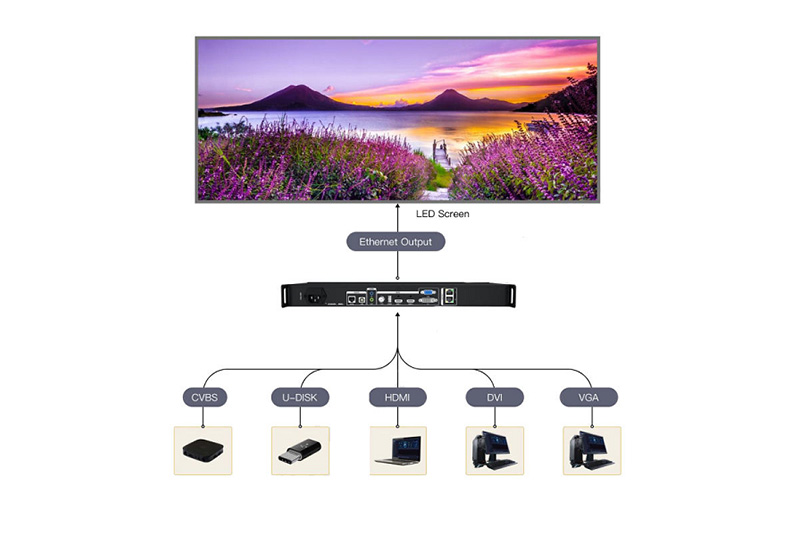
Connection
Controller
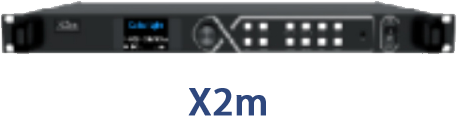
X2M
X4M
Connection
Controller
X2M
X4M

LED Screen Controller Video Processor

Model: X2M,X4M, X6 All-in-One Controller

Product introduction

Introduction

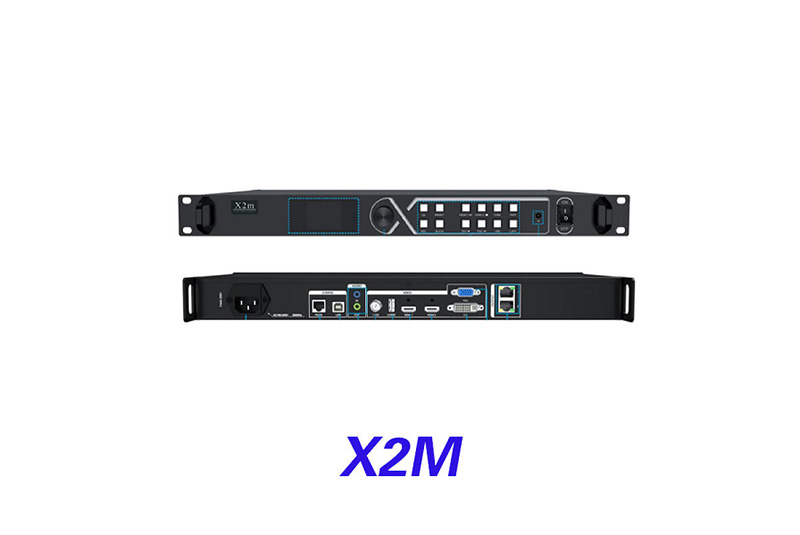
X2m is a professional LED display control device with powerful video signal sourceand processing capabilities. It can handle up to 1920×1080 HD digital signals, supports various types of HD digital interfaces, and supports arbitrary zooming andclipping of video sources. In addition, the X2m supports USB flash drive content playback. X2m has 2 gigabit network port outputs and can support maximum3840 pixels inwidth and maximum 2000 pixels in height. At the same time, X2mhas a series of practical functions, providing flexible screen control and high-quality image display, which can be perfectly applied to small LED display


Thanks to its powerful video processing and sending capabilities and other outstanding features, the VX400 can be widely used in applications such as medium and high-end rental, stage control systems and fine-pitch LED screens.

X2M


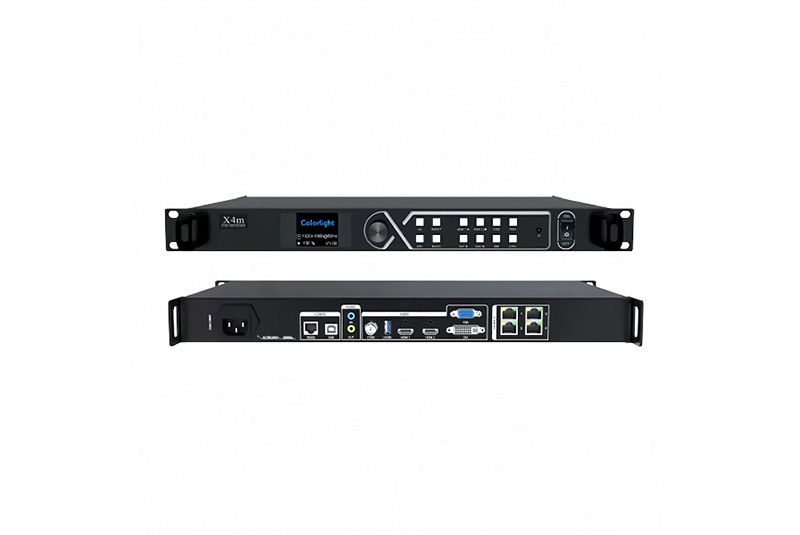
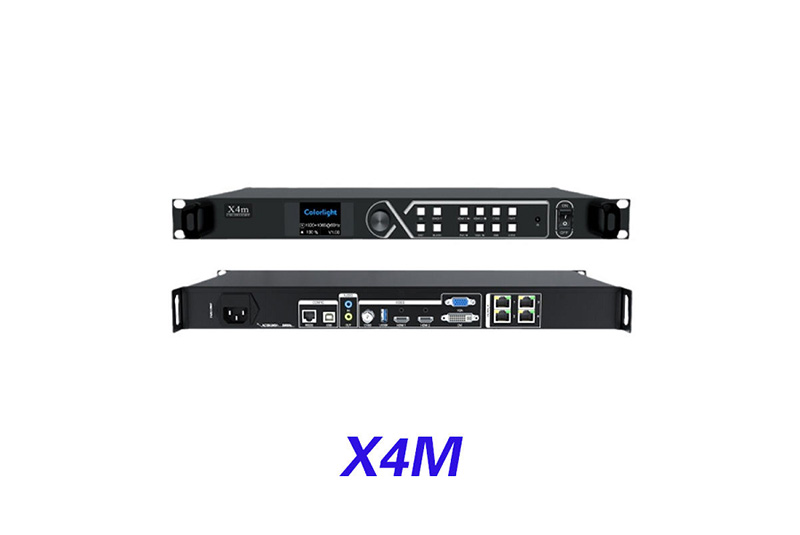
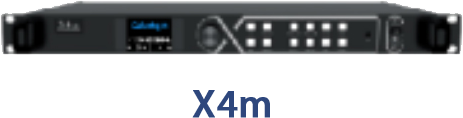
X4m is a professional LED display control device with powerful video signal sourceand processing capabilities. It can handle up to 1920×1080 HD digital signals, supports various types of HD digital interfaces, and supports arbitrary zooming andclipping of video sources. In addition, the X4m supports USB flash drive content playback. X4m has 4 gigabit network port outputs and can support maximum3840 pixels inwidth and maximum 2000 pixels in height. At the same time, X4mhas a series of practical functions, providing flexible screen control and high-quality image display, which can be perfectly applied to small LED display

X4M


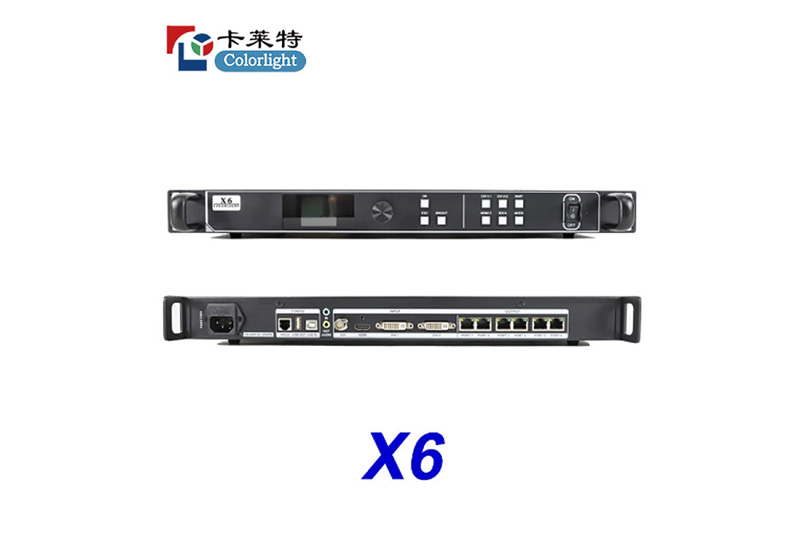
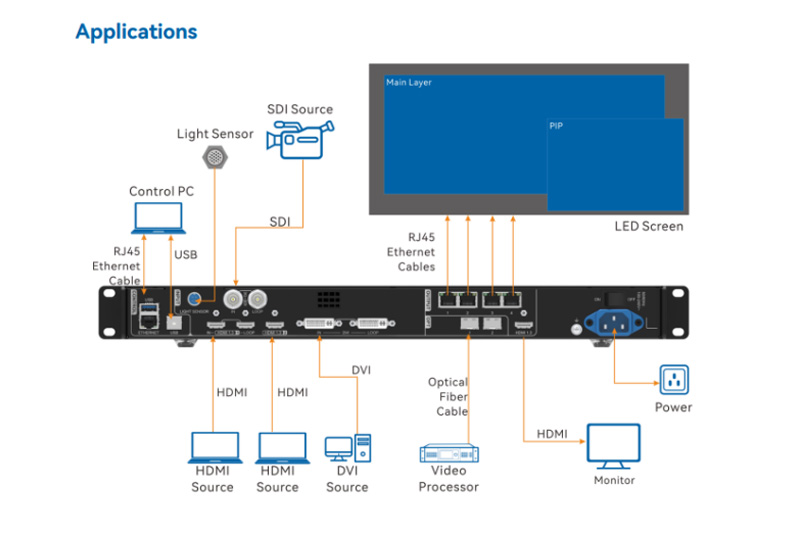
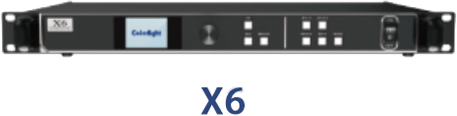
X6 is a professional control system and video processing equipment specially designed for LED engineering applications. It is shipped with various video signal interfaces, supports high-definition digital ports (DVI, HDMI, SDI) and their seamless switching, allowing broadcast quality scaling and multi-pictures display.


With 6 Gigabit Ethernet outputs, X6 supports LED display with maximum 8192 pixels in width or 4096 pixels in height. Also, used with a series of versatile functions for a flexible screen control and high-quality image display, X6 enjoys strong advantages in LED engineering applications.

LED Screen Controller Video Processor 01LED Screen Controller Video Processor 02

Product parameter list

X6-1X4mX2m
1×SDI/1×HDMI1.4/2×DVI2.6 milllon pixels
Up to 3840 pixels in width
Up to 2000 pixels in height
1 .3 million pixels
Up to 3840 pixels in width
Up to 2000 pixels in height
1920×1200@60HZ
1.4
6×1G Ethernet2×HDMI1.4,1×DVI,1×CVBS,1×VGA USB×12×HDMI1.4,1×DVI,1×CVBS,1×VGA,USB×1
3.9 million pixels1920×1080@60Hz1920×1080@60Hz
4×1G Ethernet2×1G Ethernet
USB/RS232USB/RS232
Cropping, ScalingCropping, Scaling
Cropping, Scaling, PIP, Switching11
31616
LED Screen Controller Video Processor 06
Latest Product

Check out our Product

View More
dual-service-led-cabinet

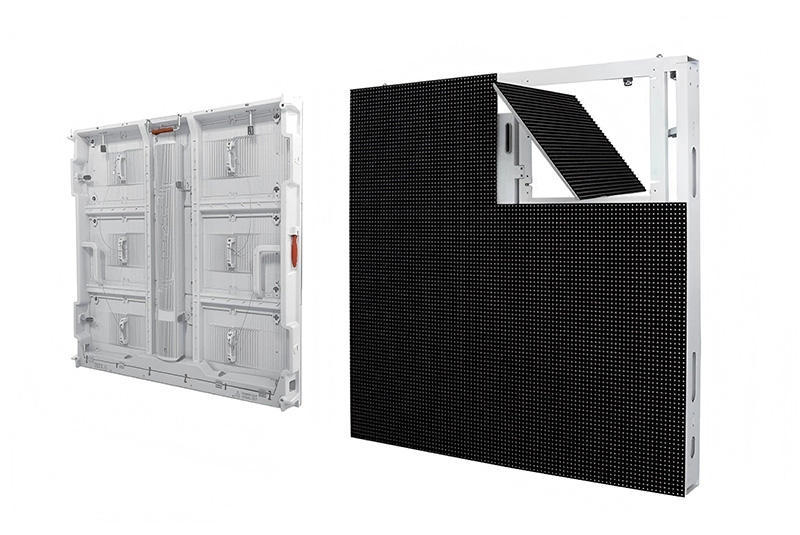
Outdoor LED energy-saving screen

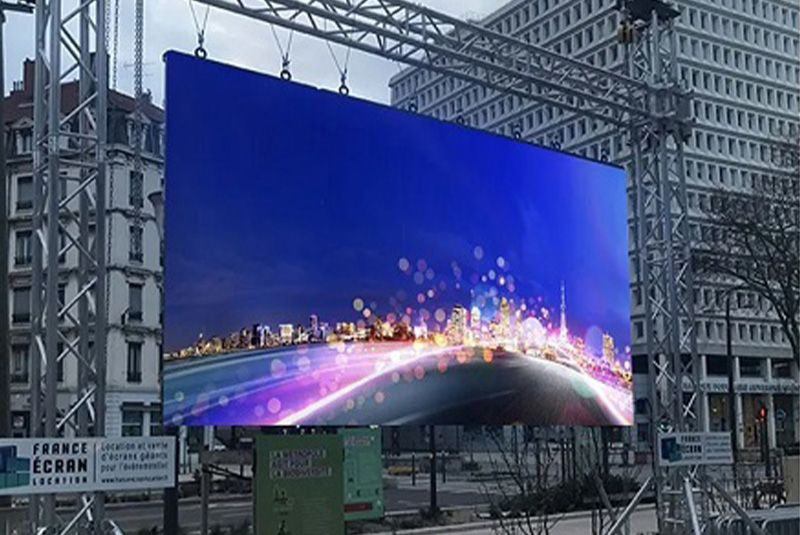
This series is a new generation of fixed outdoor LED billboards.
Read More
led1

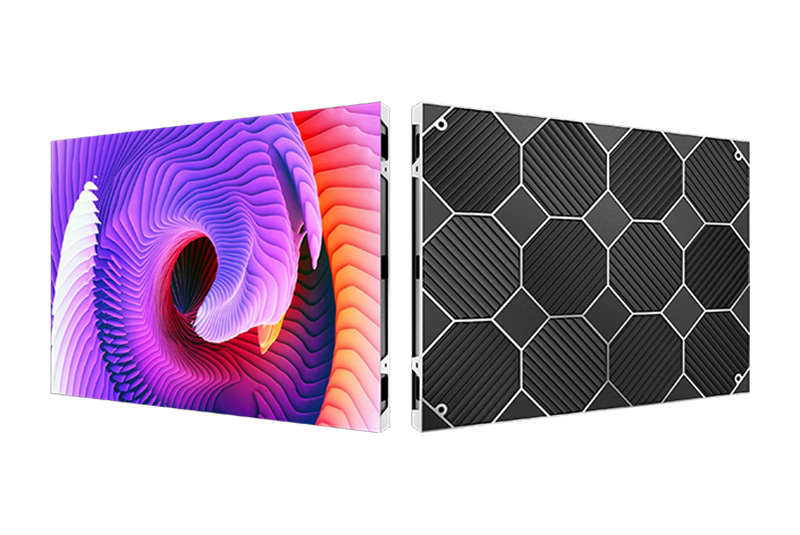
Indoor HD Small Spacing LED Screen

Pixel Pitch: P1.25, P1.53, P1.667, P1.86, P2 Refresh Rate: 1920Hz-3840Hz Brightness: 600nits-1000nits
Read More
Fixed Outdoor LED Display Billboard1

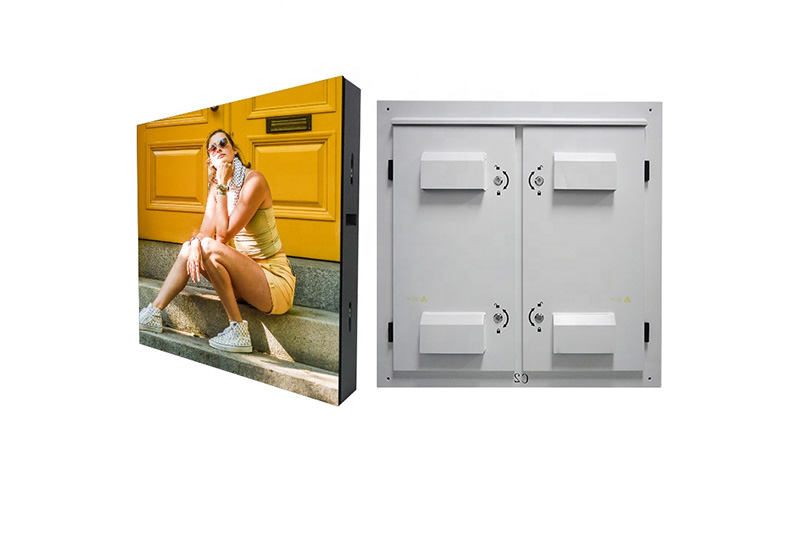
Fixed Outdoor LED Display Billboard

Pixel Pitch: P2.5, P3, P4, P6, P8, P10 Brightness: 4500nits-7500nits Refresh Rate: 1920Hz-3840Hz Cabinet type: Waterproof Iron Cabinet
Read More
Stage Rental LED Display Screen500M.2

Stage Rental LED Display Screen

Pitch Available: 2.6mm, 2.9mm, 3.91mm, 4.81mm Refresh Rate: 1920Hz~3840Hz Brightness: 600~5000nits Cabinet Material: Die casting aluminu
Read More
Latest News

Check out our blog posts

View More

26/ February

The Latest Rental LED Display Guide In 2026

Introduction Event crews and rental houses stepping into 2026 quickly realize the latest rental LED display guide in 2026 has become required reading for staying competitive. Forecasts show the market shaking off a short dip before climbing again, with growth rates holding above six percent annually through 2032 while fine-pitch panels and lower-power designs lead the charge. Fast-lock cabinets, refresh rates pushing past 3840 Hz, and tighter sustainability standards now separate the panels that stay booked from the ones that gather dust. Grasping these changes lets technicians and production managers pick equipment that runs reliably and keeps budgets in check across everything from arena concerts to boardroom activations and virtual stages.   The rental business continues leaning toward displays that go together in minutes, travel without breaking backs, and deliver clean pictures no matter the house lights or daylight. A typical corporate conference in a convention center ballroom, for example, calls for walls that assemble fast and look flawless from the front row to the back. Outdoor music festivals, on the other hand, demand cabinets tough enough for wind and rain yet bright enough to punch through afternoon sun. This overview lays out where rental LED technology stands right now in 2026 and points out the specs and approaches that actually matter on the job. Understanding User Needs and Search Intent for Rental LED Displays in 2026 Core Challenges Driving Demand in the Rental Market Rental operators and clients keep running into the same headaches year after year. Build time sits at the top of the list—load-in windows shrink every season, turning quick-lock mechanisms and light cabinets into must-haves. Power draw follows right behind, especially now that venues enforce harder limits and green requirements get stricter. One big outdoor show can burn through serious kilowatts with older inefficient panels, jacking up generator fuel bills and drawing complaints from clients watching their carbon numbers. Picture quality under real conditions adds another layer of difficulty. Corporate indoor setups need tight pixel pitches that stay clean when broadcast cameras roll, while daytime festivals push for high-nit output that fights glare without losing contrast. Reliability seals the deal—any flicker or dead module during a live event costs money and reputation fast. Those pressures explain why searches for rental LED display trends 2026 and similar phrases spike hard during pre-production. Typical Search Patterns and Intent in the Current Year Queries in 2026 split mostly between two camps. Technical leads and inventory managers hunt for deep dives into new capabilities—higher refresh performance, cleaner low-brightness greyscale, stronger corner guards for curved rigs. Buyers and producers shift toward practical decisions, checking daily rates across pitches and weighing which panels give the best return. Common searches pull in phrases such as “best pixel pitch for indoor rental 2026,” “energy efficient rental LED cabinets,” or “rental LED display features 2026.” Booking cycles still drive the rhythm. Spring trade shows and summer festivals push outdoor-rated gear, while fall and winter corporate gigs ramp up demand for fine-pitch indoor walls. Virtual production keeps adding volume as studios rent massive arrays for LED volumes, creating steady searches for low-latency, camera-friendly panels. Aligning Requirements with Available Technology Crew members focus on gear that solves problems they actually face on site. Riggers prefer cabinets under eight kilograms per square meter with built-in climb bars for ground-stack or fly jobs. Lighting teams want displays that hold color when spots and gels hit from odd angles. Camera operators refuse anything below 3840 Hz refresh to avoid scan lines in IMAG feeds. Sustainability managers push for reduced power consumption and longer diode life to meet client ESG targets. These demands point toward flexible modular systems. Rental inventories built around proven pitches—usually 1.9 to 3.9 millimeters indoors and 3.9 to 6.25 outdoors—cover the majority of jobs while keeping logistics straightforward. Latest Trends Shaping Rental LED Displays in 2026 Dominance of Fine-Pitch Technology in Indoor Applications Fine-pitch keeps gaining ground as the default choice for indoor work in 2026. Cabinets in the 1.5 to 2.5 millimeter range show up regularly at corporate theaters, live broadcasts, and upscale brand events where audiences sit close. The difference hits immediately—text stays crisp from short distances, and high-resolution video fills large surfaces without any visible grid. Rental houses note steady increases in requests for these pitches as clients walk away from coarser options that create noticeable pixelation in premium settings. Production advances have brought costs down while lifting quality. Better bin selection across batches improves color matching, cutting headaches when replacement tiles join mid-run. Refresh rates now commonly clear 3840 Hz, wiping out rolling shutter problems that used to plague camera work. Energy Efficiency and Sustainability Advances Power usage turned into a major discussion point by 2026. Updated common-cathode circuits and refined LED chips trim consumption by fifteen to twenty percent compared with earlier models at equivalent brightness. A 500-square-meter rig that used to demand 200 kilowatts now runs closer to 160 kilowatts, shrinking generator sizes, cutting fuel expenses, and easing pressure on carbon reporting. Extended diode lifespan—frequently rated over 100,000 hours—cuts replacement frequency. Modular builds that let single tiles swap out instead of scrapping whole panels strengthen the case for greener rental fleets. Modular Design and Quick-Deployment Features Locking systems have improved noticeably. Magnetic aids, precise alignment pins, and tool-free connections drop build times sharply. Seasoned teams put up 100 square meters of 2.9 millimeter wall in less than two hours, including curves for convex or concave shapes. Beefed-up corner protection and edge reinforcement lower transport damage rates, a constant issue for fleets on the road. Weight keeps dropping. Reinforced frames and slimmer modules bring many cabinets below seven kilograms per square meter, lightening rigging loads and reducing freight costs on extended tours. Emerging Applications and Market Shifts Virtual production maintains strong momentum, pulling in large orders for 1.9 and 2.3 millimeter panels with precise color and low latency. Film stages and broadcast facilities rent big volumes for LED volumes, while hybrid live-virtual events blend the same surfaces for multiple purposes. Outdoor festivals test transparent panels for integrated scenery, and experiential designers explore flexible modules for immersive curved walls. How to Choose the Best Rental LED Display in 2026   Critical Specifications for Different Applications Picking starts with linking pixel pitch to expected viewing distance. Corporate indoor work usually calls for 1.9 to 2.6 millimeter spacing for three to ten meter sightlines. Concert IMAG screens often settle near 3.9 millimeter to balance expense and detail for farther audiences. Outdoor daylight jobs require 5.9 to 8 millimeter pitches paired with at least 6000 nits to handle full sun. Refresh rates have standardized at 3840 Hz minimum for camera-heavy shows. Low-brightness greyscale performance gets careful evaluation during panel shootouts. Outdoor cabinets need IP65 sealing and verified wind-load ratings to finish the core spec list. Indoor Versus Outdoor Rental Considerations Indoor panels stress fine pitch and strong low-brightness performance. Outdoor units sacrifice some resolution for higher output and weather sealing. Hybrid models that perform acceptably in both settings gain popularity, simplifying inventory management for houses handling mixed bookings. Budget and Return-on-Investment Factors Daily rental figures in 2026 run from $45 per square meter for basic outdoor 3.9 millimeter to $400 and up for top-tier 1.5 millimeter indoor. Power savings and faster rigging often make higher-rate efficient panels pay for themselves on longer jobs. Extended contracts for corporate clients or virtual production houses regularly secure better pricing with guaranteed access to fresh stock. Actionable Solutions for Implementing Rental LED Displays in 2026 Step-by-Step Planning and Specification Process Begin with precise venue dimensions and sightline mapping to nail down resolution and distance requirements. Identify content type—will the wall handle graphics, playback, or live camera feeds? Determine brightness needs according to expected lighting and show timing. Build in spares—extra panels, processors, and fiber—to avoid single-point failures. Draft rigging drawings early. Newer cabinets support multiple hanging methods, but structural sign-off on wind and weight remains mandatory for outdoor or flown setups. Power calculations deserve the same attention—total load including processing requires generator capacity with margin. Practical Deployment and Operation Strategies Whenever feasible, pre-rig and test the complete wall in the shop. Pixel calibration and seam adjustment go smoother in a controlled space than under show pressure. Clear labeling on cables and road cases saves valuable minutes during load-in. Run crew training on the exact panel system ahead of time. Lock mechanisms differ between models, and hands-on familiarity prevents errors during tight builds. Set up direct lines between video, lighting, and rigging teams to head off power-phase clashes or control-network conflicts. Maintenance and Troubleshooting During Events Stock essential spares—power modules, receiving cards, and color-matched replacement tiles. Current diagnostic tools allow remote panel health checks that catch problems before they show on screen. Maintain proper operating temperatures—avoid wide swings that stress components, particularly in cold-weather outdoor gigs. Introducing Shenzhen Longcheng Photoelectric Technology Co., Ltd. Shenzhen Longcheng Photoelectric Technology Co., Ltd., founded in 2013 and based in Shenzhen City, Guangdong Province, China, focuses on premium LED display manufacturing with a strong emphasis on small pixel pitch solutions. The company has produced over 350 different products during more than twelve years of operation, serving more than 900 enterprises and organizations in over 120 countries and regions. All displays go through 72-hour aging and testing before leaving the facility. Energy-saving architecture, stable performance, high-definition visuals, and broad customization options form the core strengths. Certifications such as ROHS, FCC, CE, ISO9001, and CCC verify compliance with global standards. A staff of 50 to 100, including a committed research and development group, provides 24-hour technical assistance, supporting clients worldwide with dependable solutions for complex display projects. Conclusion Rental LED technology in 2026 continues raising expectations for visual quality, deployment speed, and operational efficiency. Advances in fine-pitch resolution, power consumption, and modular construction give event teams better tools to meet client demands while keeping costs manageable. Rental companies and production managers who track these developments position themselves to deliver standout results and maintain strong booking rates in a demanding market. FAQs What are the biggest rental LED display trends in 2026? Rental LED display trends in 2026 center on fine-pitch cabinets dominating indoor work, common-cathode designs reducing power use by 15-20%, and advanced quick-lock systems that cut build times significantly. Curved, flexible, and transparent panels gain traction for creative staging. Which pixel pitch works best for indoor rental LED displays in 2026? Indoor rental LED displays in 2026 most often use 1.9 to 2.9 millimeter pitch for corporate events, conferences, and concerts, providing sharp detail at standard viewing distances while keeping daily rental rates reasonable. Finer 1.5 millimeter sees heavy use in broadcast and virtual production. How much does rental LED display cost per square meter in 2026? Rental LED display rates per square meter in 2026 typically range from $45-80 for standard outdoor 3.9 millimeter cabinets to $250-400+ for premium fine-pitch indoor panels, quoted daily or weekly. Volume or long-term virtual production rentals frequently secure lower effective pricing. What refresh rate should rental LED displays have in 2026 for camera work? Rental LED displays in 2026 require at least 3840 Hz refresh, with many high-end models reaching 7680 Hz or more to remove all scan lines during IMAG feeds and broadcast camera shots. Higher rates have become standard for professional camera applications. Are energy-efficient rental LED displays worth the higher rental rate in 2026? Energy-efficient rental LED displays usually offset their premium rates through lower power and generator expenses on larger or longer events, while satisfying the stricter sustainability standards that venues and corporate clients enforce. Current rental LED display guides in 2026 consistently recommend them for festivals and touring productions.  
Read More
The Latest Rental LED Display Guide In 2026

19/ February

Energy-Efficient LED Displays for Sustainable 2026 World Cup Stadiums and Venues

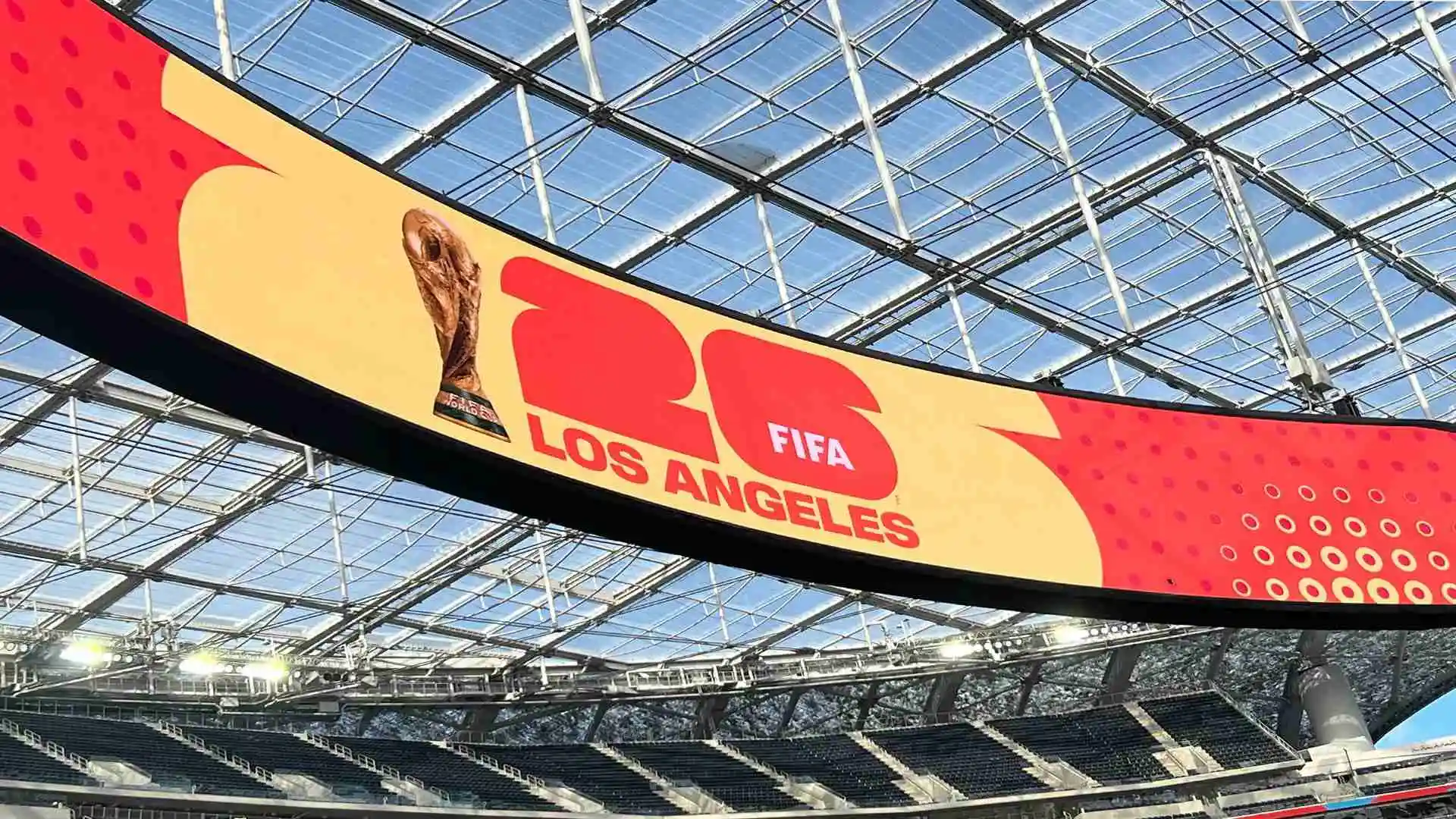
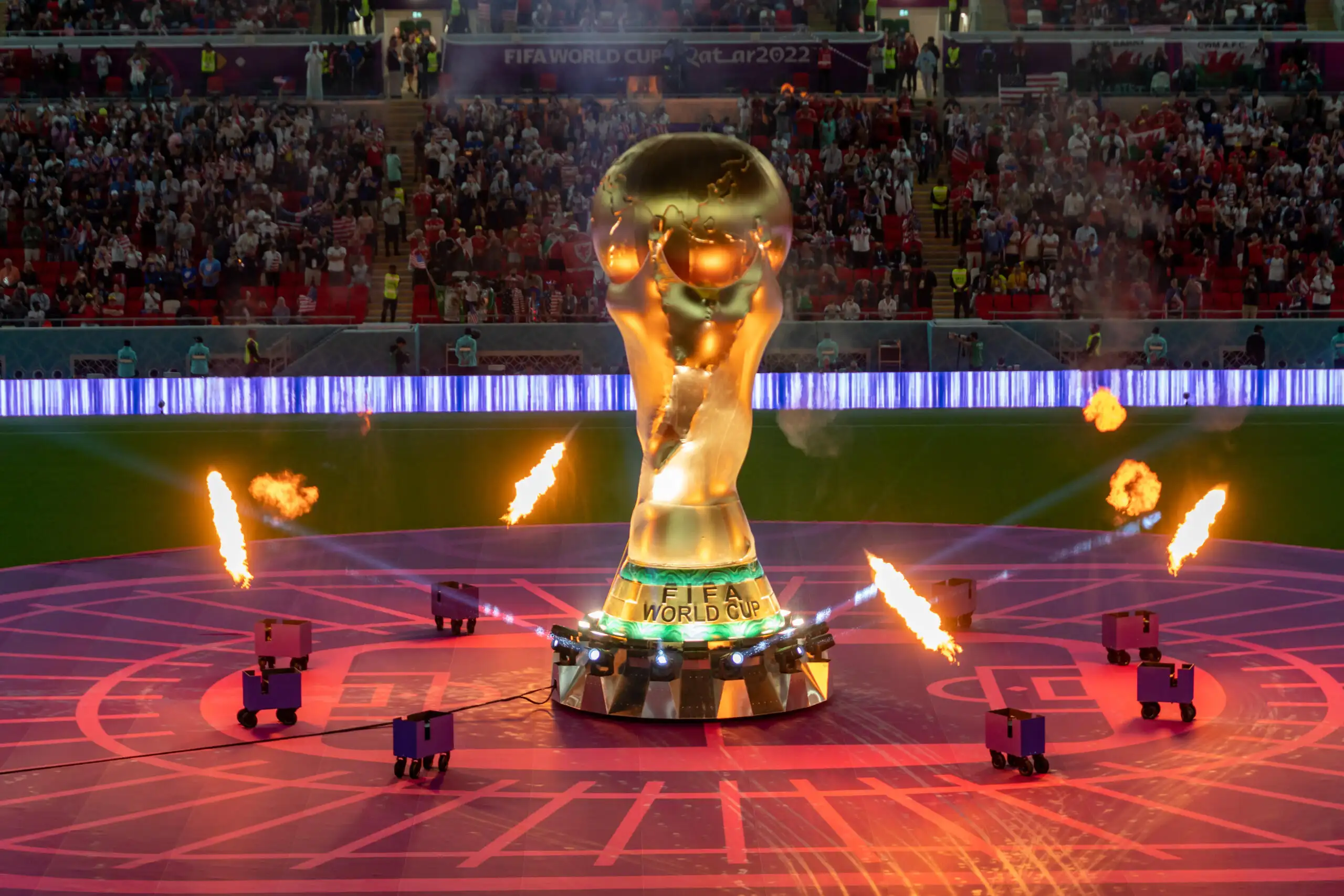
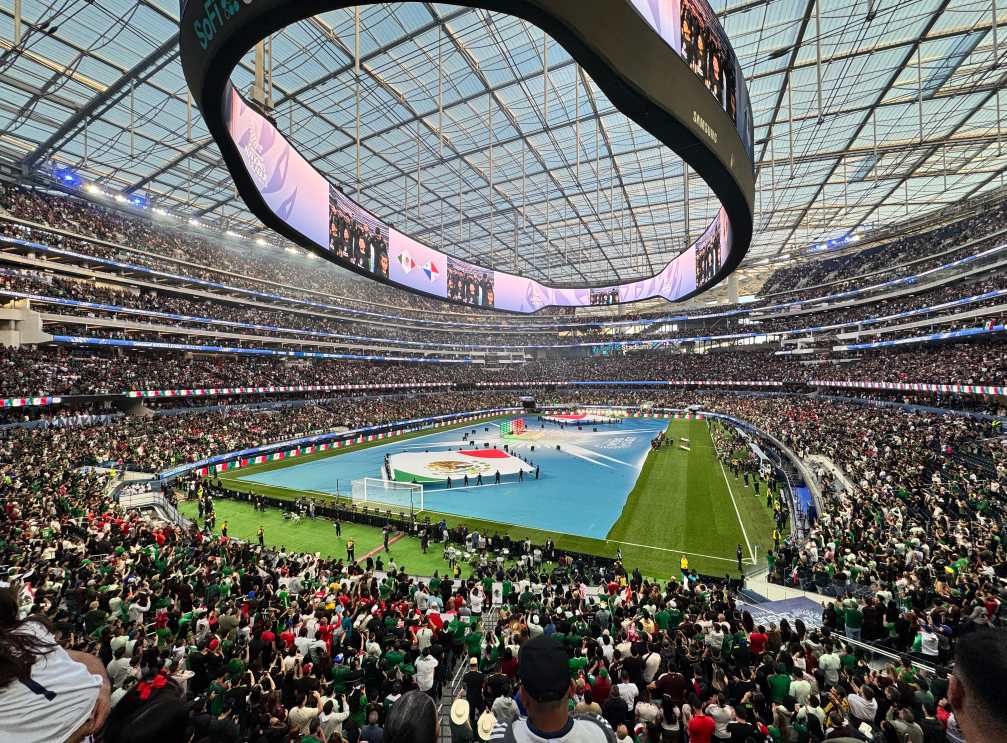
The 2026 FIFA World Cup will utilize 16 venues spread across the United States, Canada and Mexico, staging 104 matches in front of a global audience expected to surpass five billion people. FIFA sustainability strategy puts very strong emphasis on carbon neutrality, which means host cities and venue operators must deliver concrete plans focused on emissions reduction, significantly better energy efficiency, responsible use of resources and overall environmental accountability. Stadium LED displays regularly account for 25–40% of temporary power consumption during match days and event periods — that is exactly why energy-efficient LED displays have become one of the most serious technical and commercial decisions for stadiums and venues that need to satisfy FIFA requirements while still delivering the extremely bright and sharp picture quality demanded by live sports and major broadcasters.   Why Energy Efficiency Has Become Non-Negotiable for 2026 World Cup Venues FIFA environmental requirements are built upon real experience collected from previous World Cups and now demand very clear net-zero alignment from every major power consumer in the venue — lighting, broadcast systems and especially display infrastructure. Electricity prices across North American host markets show very large differences — California and New York commonly have much higher rates than Texas — which creates very direct pressure on stadium operators to control the biggest electricity loads. An 80,000-seat stadium running full-scale LED systems during peak event hours can easily reach six-figure annual energy bills. Under these conditions even seemingly small percentage improvement in power efficiency produces very meaningful money difference. Sponsors have become noticeably stricter — they now routinely expect and demand measurable environmental performance. Display solutions that can show documented lower carbon footprint and clearly reduced power consumption fit exactly into their current requirements. Because of this situation energy-efficient technology has quickly moved from “nice to have” category to must-have specification in almost every serious tender. How Much Energy Can Truly Energy-Efficient LED Displays Save in Stadium Applications? Current generation stadium LED products show very obvious technical progress compared with equipment that was considered normal during previous major sports events. Traditional common anode architecture usually applies the same relatively high voltage to all color channels — this approach creates considerable unnecessary heat and substantial wasted power. Modern common cathode + high-efficiency chip designs separate power supply to R/G/B channels with individually optimized voltage — this change brings very consistent and measurable efficiency improvement. Typical outdoor pitches (P10, P6.67, P8 etc) used to consume 600–900 W/m² when running at full brightness. Well-designed energy-saving products with good quality high-efficiency chips + advanced driver IC + intelligent control can now deliver 30–50% lower average power consumption — most real projects fall into 300–500 W/m² range while still keeping brightness 5,000–10,000 nits that is necessary for good daylight performance. Different display locations show different saving patterns: • center-hung videoboards benefit the most from ambient light tracking dimming • perimeter LED boards get very good saving from lower heat + reduced cooling requirement • ribbon displays take advantage of modular design that naturally limits idle power • fan-zone / big outdoor screens profit a lot from automatic brightness management that prevents running full power when unnecessary When the scale reaches stadiums similar to MetLife or AT&T, complete tournament period (commissioning + testing + matches + teardown) can easily save tens of thousands of kilowatt-hours — the number is large enough to create very meaningful cost difference and very real carbon reduction that matches FIFA targets. Key Technical Features That Deliver Genuine Energy Savings Without Sacrificing Visual Performance Common cathode power architecture gives the biggest and most reliable efficiency advantage in large stadium projects. Precise individual voltage supply to each color channel (normally 2.8–3.8V range instead of single high voltage) creates much lower forward voltage loss, significantly lower internal resistance and clearly less heat. Real operation temperature difference usually reaches 20–30 degrees Celsius cooler compared with common anode — this difference alone dramatically reduces air-conditioning load and greatly improves long-term component reliability. Power supplies that achieve >90% efficiency working together with modern driver ICs that support high dynamic scanning + refresh rate up to 7680Hz can keep very smooth fast motion picture while almost completely eliminating flicker problems. Ambient light sensor + automatic brightness management system is now considered standard feature — it removes large amount of unnecessary power consumption during lower light periods without creating any obvious picture quality drop. Better thermal design + improved optical efficiency (better lens + reflective surface) allow the system to produce same visible brightness with noticeably fewer watts. Lightweight modular cabinet design also indirectly helps — less steel structure weight, lower transportation energy, faster installation = less temporary power consumption on site. How to Choose Energy-Efficient LED Displays That Actually Meet 2026 World Cup Standards Serious buyers must look much deeper than marketing language. Require real average power consumption data in three different working conditions: full white, typical video content and low brightness — never accept only peak power number. Operating temperature range + derating curve must be suitable for hot North American summer outdoor environment. Look for third-party energy performance certification, redundant power/control design, front-service module structure and good long-term brightness maintenance curve (displays that lose brightness slowly don’t need to increase power later to compensate). Warning signs that usually indicate fake or exaggerated energy-saving performance: only showing very low brightness consumption number hiding full-screen white power consumption depending too much on software dimming that creates visible picture problems Practical Implementation Path — From RFP to Live Match Day FIFA venue guideline requires sustainability thinking from very early planning stage. In RFP document maximum average power density should be clearly specified, automatic dimming must be mandatory requirement, and consumption monitoring + reporting protocol should be demanded. During procurement stage ask for complete component list (LED chip type, driver IC model, power supply efficiency curve) + third-party test report. Installation phase should include permanent power monitoring system right from the beginning — this is the only way to prove real saving after the project is finished. On live match days good central control software can do real-time zone dimming, content scheduling according to crowd situation and complete power consumption logging that can be used directly in sustainability report. Shenzhen Longcheng Photoelectric Technology Co., Ltd. — Built for High-Performance, Low-Consumption Stadium Projects   Shenzhen Longcheng Photoelectric Technology Co., Ltd. was established in 2013 and is located in Shenzhen, Guangdong Province, China. The company currently manufactures more than 350 different types of LED display products and has served over 900 enterprises/institutions in more than 120 countries/regions. All products pass ROHS, FCC, CE, ISO9001, CCC and go through strict 72-hour aging test before delivery. Main product categories include small pitch indoor, fixed outdoor, poster series and sport stadium LED displays specially developed for perimeter, ribbon and venue main display applications. Energy-saving performance comes from high-efficiency lamp beads + optimized driving circuit + advanced IC + intelligent brightness management — many projects achieve up to 40% power saving while keeping very high brightness (4500–10000 nits) and refresh rate (3840–7680Hz) that stadium projects require. Full IP65–IP68 protection + front/back service modular design makes the product very suitable for fast installation/dismantling requirements of major sports events. These technical characteristics match very well with technical specification and sustainability targets expected from 2026 World Cup level projects. Conclusion Energy-efficient LED displays have become one of the most realistic and impactful ways to achieve FIFA carbon neutral target while keeping venue operation cost under control and satisfying sponsor environmental requirements at the same time. With the tournament getting closer every month, operators who seriously focus on proven power reduction, good thermal management and intelligent control capability will have clear commercial and technical advantage. High visual quality + measurable real energy saving is currently the most important combination in stadium display business. FAQs How much can energy-efficient LED displays reduce power consumption for 2026 World Cup stadiums? Real projects normally achieve 30–50% lower average consumption compared with traditional products. For high-brightness outdoor stadium applications this usually means going from 600–900 W/m² down to 300–500 W/m² range. What is the most effective technology for lowering energy use in stadium perimeter LED boards? Common cathode architecture + high-efficiency driver IC + automatic ambient light dimming is currently considered the most effective and reliable combination for perimeter applications. Do energy-saving LED screens compromise brightness or lifespan for World Cup venues? Good modern energy-saving design maintains or even increases brightness (up to 10,000 nits) and normally extends lifespan because of much lower working temperature. Serious compromise almost never happens when quality components are used. How to calculate ROI of energy-efficient LED displays for large sports venues? Basic calculation = initial extra cost ÷ (electricity saving per year + reduced maintenance cost). Most stadium projects achieve payback between 2–4 years when electricity price is normal or high. What should be included in an RFP for sustainable LED displays for FIFA 2026 events? Maximum average power density, mandatory automatic brightness adjustment, third-party energy certificate requirement, complete thermal performance data, redundancy design and full compliance with FIFA sustainability reporting standard.  
Read More
Energy-Efficient LED Displays for Sustainable 2026 World Cup Stadiums and Venues

12/ February

2026 World Cup Fan Zones How Rental LED Screens Create Immersive Public Viewing Experiences

The 2026 FIFA World Cup has pulled together 48 teams for 104 matches spread across 16 stadiums in Canada, Mexico, and the United States, with worldwide viewership expected to top five billion. Stadium tickets reach only a small portion of that audience, leaving the majority to follow the games in fan zones and public viewing areas—open city parks, plazas, and landmark spots converted into collective watch points. These zones carry live broadcasts on big screens, blend in music, food, and interactive pieces, building environments that capture much of the stadium intensity. Rental LED screens sit at the heart of these arrangements. They support rapid rollout of substantial visuals, handle changing sites, and produce clear pictures despite tough outdoor exposure.   In the host cities, fan zones have formed at places like Liberty State Park in New Jersey running a full 40 days, Lemon Hill Park in Philadelphia geared for up to 25,000 on peak days, Seattle Center with several scattered viewing spots, Fort York and The Bentway in Toronto, and various locations around the San Francisco Bay Area, including possible setups close to Levi’s Stadium. Installations like these call for displays that go up fast, stand up to sunlight, rain, and temperature changes, and stay solid through long match stretches without dropping sync on important plays or breaks. Rental LED screens manage these conditions with modular builds, strong weather resistance, and specs adjusted for crowded public settings. Why Fan Zones Have Grown Into a Key Part of World Cup Engagement Fan zones open the tournament to far more people than those inside the venues. Numbers from earlier events indicate individual sites pulling in hundreds of thousands across the tournament run, with free admission and added activities pushing counts higher. The 2026 spread across three countries directs crowds into city centers where gatherings happen naturally: open parks around Jersey City, main plazas in Mexico City, waterfront areas in Vancouver. People come for the opening whistle but linger through the day—cheers spreading across thousands, music filling halftime gaps, sponsor elements maintaining the flow. The size brings specific difficulties. Schedules tighten: build time often falls into short gaps between group games and elimination rounds. Locations vary greatly—sun-exposed fields, shaded urban squares with shifting light, coastal zones open to humidity and wind. Crowd packing creates viewing distances from five meters up front to fifty meters toward the back. Content combines live feed with layers: possession numbers, player movement maps, quick replays, sponsor switches that change cleanly. Any visible lag or blur on a critical sequence breaks the group reaction. Power comes from temporary sources—usually generators—requiring reduced consumption. Dependability weighs heaviest: a single panel failure during transmission turns shared energy into frustration. Rental LED screens confront these realities straight on. Modular cabinets connect in hours rather than days. High brightness levels cut through daylight. Weather-protected enclosures guard against typical North American summer showers. High refresh rates keep motion steady over wide areas. These traits change short-duration setups into reliable centers for public viewing, freeing organizers to handle programming instead of technical issues. Core Requirements for Rental LED Screens in Fan Zone Use Outdoor public viewing tests displays harder than fixed stadium placements. Brightness stands essential. Direct sun hits screens during afternoon group fixtures, so 5000 to 8000 nits keeps pictures readable without washout. Lower output fades in glare; higher levels burn unnecessary power. IP65 sealing or superior blocks dust and water from passing rain or bay fog. SMD patterns cut reflections from nearby lights, holding even color over 160-degree angles so viewers close in and far out see the same clear image. Refresh rates take on added weight in live sports. Field action speeds up: quick breaks or sudden stops blur at lower rates. Displays at 3840 Hz and above remove scan lines and motion flaws, matching 5G feeds for almost no delay. In fan zones, where crowds respond instantly to goals, that clean motion holds the shared feel. Timing offsets disrupt the collective response. Modularity shapes rental usefulness. Die-cast aluminum cabinets drop weight from older types, stack without issue, and link with standard fittings. Crews put up 100-square-meter walls in a few hours and take them down just as fast for moving or striking. Pixel pitches from P2.6 mm to P4.81 mm hit the working middle: sharp enough for detail at 10-20 meters, practical for longer reaches. Curved or angled builds fit odd spaces—L-shaped corners by stages or wrapping walls in plazas—without extended custom delays. Power use builds quickly over weeks of events. Automatic brightness sensors drop output in cloudy spells or night games, cutting draw by 30-50% against fixed settings. Tight driver circuits and supplies keep heat down, stretching component life through nonstop runs. These features fit sustainability aims in host cities, where energy tracking runs alongside attendance figures. Reliability finishes the picture. Full-load aging tests—72 hours—catch early weak points. Duplicate signal and power lines stop single breakdowns. Remote checks spot trouble before it appears. In public viewing with thousands present, interruptions cost beyond repair time—they weaken the group experience. Lessons from Past Events and Current 2026 Setups Previous World Cups shaped the fan zone model through real-world runs. Outdoor screens in dry settings during 2022 pointed out heat control needs: panels without good cooling dropped out in long sessions. Backup paths and monitoring lowered those problems. Earlier European public corridors showed wide-angle importance—narrow views left rear areas with weak or twisted pictures. The 2026 version adds North American elements. Liberty State Park’s long run in Jersey City needs screens that take urban crowds and changing weather. Lemon Hill in Philadelphia plans for high-attendance days, calling for expandable, fast-build walls. Seattle Center spreads zones across walkable ground, where humidity and rain challenge seals. Toronto’s Fort York mixes old grounds with new layers, suiting flexible arrangements. Bay Area placements—around San Francisco, Oakland, San Jose—deal with strong California sun balanced by coastal haze. High-brightness panels push through glare in day games, while auto adjustment covers evening changes. Experience from similar big events, like concert runs or pro league matches, backs modular builds for shorter prep times and less labor. Tested parts reduce failure chances, letting organizers keep focus on fan involvement over fixes. Solutions Provided by Shenzhen Longcheng Photoelectric Technology Co., Ltd.   Shenzhen Longcheng Photoelectric Technology Co., Ltd. builds LED display systems designed for tough temporary and outdoor work, including public events and large gatherings. Rental screens deliver refresh rates from 3840 to 7680 Hz with IP65 protection, fitting fan zone video walls under weather stress. Pixel pitches in the P2.6 to P4.81 mm range give balanced resolution and viewing distance for crowds spread through parks or plazas. High-brightness outdoor versions hit 8000 nits, keeping pictures clear under direct sun typical in North American host areas. All units go through 72-hour aging checks to confirm steady performance in long runs. Certifications including CE, ROHS, FCC, and ISO9001 match international standards. Efficient circuits and automatic brightness control lower power use in extended cases. Custom layouts handle different setups, and support helps tie into broadcast systems and event controls. For fan zone work, the priority stays on consistent output that strengthens group viewing without breaks. Explore our rental LED screens for detailed specifications and customization options suited to public viewing needs. About Shenzhen Longcheng Photoelectric Technology Co., Ltd. Shenzhen Longcheng Photoelectric Technology Co., Ltd., started in 2013 and located in Shenzhen, China, concentrates on designing and producing high-quality LED displays. The range covers small-pitch modules, indoor-outdoor panels, stadium solutions, rental products, fixed installations, and custom shapes. Shipments go to more than 120 countries and regions, serving over 900 enterprises and groups. Production focuses on high definition, high refresh rates, energy savings, and strong construction, supported by full 72-hour testing and 24-hour technical help. Approvals like CE, ROHS, FCC, ISO9001, and others verify steady quality and fit for demanding uses. Conclusion The 2026 FIFA World Cup fan zones show how rental LED screens turn public spaces into immersive parts of the tournament. From wide video walls at Liberty State Park to local gatherings at Seattle Center or Toronto’s Fort York, these displays carry live action with accuracy and reliability. Progress in brightness hold, refresh performance, modular assembly, and power efficiency meets the specific needs of temporary outdoor work. As the event moves forward, the part played by adaptable, high-output screens in connecting fans across cities stands out. These setups do more than show matches—they create lasting shared memories in common places. FAQs What pixel pitch works best for 2026 World Cup fan zone rental LED screens?  Pixel pitches from P2.6 mm to P4.81 mm fit common fan zone viewing distances of 10 to 50 meters, offering clear detail for nearby viewers while staying practical for bigger temporary walls. How do high-brightness rental LED displays handle sunlight in North American fan zones? High-brightness ratings of 5000 to 8000 nits along with anti-glare SMD patterns keep images visible under direct sun, a regular factor in daytime matches across places like California or New Jersey. Why choose modular rental LED screens for quick setup in 2026 FIFA Fan Festivals? Modular die-cast aluminum cabinets join fast, letting teams build and take down large video walls in hours to match tight event schedules and different site needs. What refresh rate ensures smooth viewing in World Cup public fan zones? Refresh rates at 3840 Hz and above clear motion blur in quick sequences, delivering fluid replays and live play that hold crowd attention without visual interruptions. How energy-efficient are rental LED screens for large-scale 2026 World Cup fan zones? Rental LED screens use automatic brightness adjustment and efficient circuits to cut power draw by 30-50%, supporting long runs on temporary sources while meeting sustainability targets.  
Read More
2026 World Cup Fan Zones How Rental LED Screens Create Immersive Public Viewing Experiences

6/ February

Why High-Brightness LED Displays Are Essential for FIFA World Cup 2026

The FIFA World Cup 2026 will cover the widest-ever spread of host cities, placing matches in 16 venues across the United States, Canada, and Mexico with 48 teams competing over a schedule that runs nearly a full month. High-brightness LED displays have turned into standard equipment for maintaining clear, stable pictures in FIFA World Cup 2026 stadiums, fan zones, and related viewing spots, dealing with long stretches of bright daylight then shifting to night under powerful lights without dropping quality or reliability.   Older setups relying on basic scoreboards or rows of ordinary TVs struggle to keep up with the size and demands of these sites. Today’s projects need screens that stay legible from far away while running live replays, stats overlays, sponsor sequences, and fan prompts around the clock. The Scale of FIFA World Cup 2026 and the Growing Dependence on Solid LED Systems Ticket projections go beyond 5.5 million for stadium entry, and official fan festivals along with public viewing areas in big cities expect daily turnouts hitting tens of thousands at peak spots. Game times put early starts in strong western sun and late endings under eastern floods, so displays have to hold steady through quick, drastic light changes. Data from past tournaments makes the pattern obvious. Qatar 2022 leaned heavily on outdoor LED setups in fan zones, and follow-up numbers showed most people outside the stadium chose big screens over phones or home sets whenever they had the option. The 2026 layout, crossing three countries and different time zones, ramps up that need considerably. Venues have locked in upgrades for perimeter boards and main video walls, and FIFA Fan Festival rules set minimum screen areas in the hundreds of square meters. Core Viewing Scenarios Where LED Displays Bring the Most Real-World Benefit Different sites throw up varied challenges on weather, crowd distance, and runtime, and the right outdoor LED display approach handles each one cleanly. Stadium Perimeter and Auxiliary Display Systems Stadium LED screens running the perimeter act as the main visual strip for ads, game info, and live content while matches play out. These stay active for long stretches without breaks, flipping between sponsor spots, replays, and stats. Anything under 6500 nits tends to fade in full sun—notes from recent confederation matches showed 5000-nit screens going blank at midday peaks. Newer specs often call for 8000–10000 nits, matched with high-contrast black LEDs and glare-reducing coatings to keep the image sharp. Nearby areas like concourses, entry zones, and press spots follow the same rules. They deal with big temperature jumps, dust, and wind in places from hot Dallas to muggy Atlanta. IP65 protection or stronger has become a must-have rather than a nice-to-have. Outdoor Fan Zones and Public Viewing Spaces   The biggest group watching happens away from the pitch. Key public spots in Mexico City plazas, Toronto downtown areas, and Los Angeles park plans will pull in huge crowds at once. A raised outdoor fan zone LED screen over 500 square meters can cover people blocks apart. Earlier events give solid reference points. Russia 2018 had standout Moscow fan zone screens around 480 m² that still left some viewers too far back. Planning for 2026 already includes calls for screens topping 800 m² in several cities. Power use stands out as a factor—older outdoor panels at top brightness can pull over 400 kW across long days. Updated energy-efficient outdoor LED display builds hit the same 7000–8000 nits level while dropping average draw by 30–40%, cutting generator needs and fitting better with temporary site green targets. Bars, Restaurants, and Sportsbook Venues Packed indoor places count on smooth, detailed pictures to hold the mood. Indoor fine pitch LED setups in P1.5–P2.5 pitches take over from TV walls, building seamless surfaces for true 4K or better. Refresh rates hitting 3840 Hz and up wipe out motion blur on fast pans and big moments, giving cleaner action than regular broadcast feeds. Angles close to 160 degrees plus tight color matching keep the view even from side seats or standing spots—vital where crowds shift and bunch up constantly. Rental and Temporary Event Setups Plenty of jobs run short term instead of fixed long haul. Rental LED display lines lead sponsor areas, hospitality setups, and quick pop-up events. Cabinets with built-in rigging let teams put up big video walls in hours. High-brightness rental models around 5000 nits work in mixed light or covered outdoor spots while holding weather resistance for surprises. Die-cast aluminum keeps cabinets light for moving, and onboard control gear makes syncing to live feeds or custom graphics straightforward. Mobile LED Trucks and Broadcast Support Vehicles Trucks with lift-up screens roll through host cities for buildup promotion and extra viewing. They need tough modules, backup power paths, and fast hydraulic lifts. Mobile LED screen units face building bounce-back and direct sun, so steady high brightness stays non-negotiable. Private and Community Viewing Arrangements Company events, campus watch parties, and neighborhood gatherings scale the tech down. A high refresh rate LED screen built into a 200-inch indoor wall or 300-inch outdoor setup brings stadium feel to smaller groups without matching infrastructure. Key Technical Specifications That Set Performance Apart in World Cup 2026 Deployments Hands-on work from recent big events points out the specs that make systems hold up. Brightness leads the list, but steady full-white output without heat-caused color pull matters just as much. At least 3840 Hz refresh clears scan lines under pro cameras, turning out smooth slow-mo and fast clips. Power draw shapes wiring plans and running costs over weeks. Newer energy-efficient LED display circuits using smart drivers reach 220–280 W/m² at high output, against 450–600 W/m² in old designs—real savings pile up during a tournament run. Uptime under constant load separates good from problematic. 72-hour burn-in before shipping, plus strong parts and double signal/power backups, cut outage chances when it counts most. Protection matches actual conditions. Front IP65 takes rain and dust head-on; rear IP54 guards the insides. Coastal spots add salt-air concerns that need extra attention. Practical Selection Points for LED Display Solutions in 2026 World Cup Projects Teams face stacks of choices, and small misses turn into big headaches later. Pixel pitch comes straight from measured viewing distances. P8 works for fan zones at 20-meter closest approach; perimeter closer to cameras usually goes P5 or P6 for tighter detail in broadcast shots. Rules change by country. North America wants ETL or UL electrical checks; CE covers most elsewhere. Paperwork gaps hold shipments for weeks at customs. Service reach affects daily life. Tall fixed mounts gain from front-access modules or walkways. Rental gear stresses fast locks and spares kept nearby. Processing backbone finishes the build. Pro processors with fiber backup switch feeds cleanly, beating simple players when juggling live, graphics, and backup signals. About Shenzhen Longcheng Photoelectric Technology Co., Ltd. Started in 2013 out of Shenzhen, Guangdong Province, the company sticks to LED display production with over twelve years of dedicated work. The plant runs the whole line from module build to full assembly, backed by ROHS, FCC, CE, ISO9001, and CCC approvals. Units go through 72-hour aging, sample checks, and final inspection before leaving. Output supports delivery to more than 120 countries and regions, covering concert stages, rental jobs, sports venues, and stadium projects. Focus stays on high-definition output, strong refresh performance, energy-saving builds, and tough construction, with custom options and ongoing support available. Complete product lineup details sit on the LOSCEN LED Display Products page. Conclusion FIFA World Cup 2026 will push live event visuals to new levels, and high-brightness LED displays form the backbone for solid, engaging experiences in stadiums, fan zones, and overflow spots. Perimeter runs in bright sun, rental quick builds, and indoor sharp playback all call for gear built to handle tough specs. Organizers, venue crews, rental outfits, and businesses getting ready for this major North American run need solutions that mix strong visuals, lower running costs, and track-proven staying power. Frequently Asked Questions What brightness level should outdoor LED displays hit for FIFA World Cup 2026 fan zones in full sunlight? Most setups aim for 7000–8000 nits minimum to stay readable during day games, with top builds going to 10000 nits against the worst glare. Are rental LED displays built to run nonstop through a full month of World Cup 2026 events? Modern rental lines with die-cast frames, 3840 Hz refresh, and backup power/signal paths handle 18–20 hour days across big tournaments when serviced right. How do high refresh rate LED displays make fast soccer action look better on big walls? Rates at 3840 Hz and above clear up blur and camera lines, giving natural replays and slow-motion that work for crowds on site and TV watchers. Which pixel pitch range fits sports bars best for World Cup 2026 viewing? P1.5 to P1.8 fine-pitch indoor panels give true 4K on 138–200 inch walls, letting close viewers see every detail without seeing pixels. What main steps matter when shipping high-brightness LED displays to North American World Cup 2026 sites? ETL/UL certification, solid export packing, and early customs prep stop holdups, while vendors knowing North American power and plugs make setup smoother.  
Read More
Why High-Brightness LED Displays Are Essential for FIFA World Cup 2026

5/ February

2026 FIFA World Cup LED Display Innovations: Trends Shaping Stadium Experiences

The 2026 FIFA World Cup, hosted jointly by Canada, Mexico, and the United States, ranks as one of the broadest international sporting events planned so far. Forty-eight teams, 104 fixtures, sixteen stadiums, and a projected worldwide audience surpassing five billion place heavy demands on visual delivery systems. LED displays have moved well past simple scorekeeping roles; they serve as core elements for pushing instant replays, sponsor sequences, and interactive overlays that hold spectator attention. This progression aligns with the rising standard at top-tier tournaments for venues that merge on-pitch action with crisp digital layers.   Outdoor perimeter boards along the field need steady high visibility through changing daylight and strong lighting. Indoor fine-pitch units manage control-room feeds and executive zones with exact detail. Rental setups enable fast assembly in fan zones and side events. These uses require steady output, lower energy draw, and smooth matching with broadcast signals. As site work ramps up, priority falls on systems built to handle long run times, adjust to varied weather patterns, and include automatic brightness shifts plus quick modular builds. Why the 2026 FIFA World Cup Represents a Major Opportunity for LED Display Technology The sheer size of the event drives precise technical needs that speed up progress in large-scale visual hardware. Stadiums including MetLife, Estadio Azteca, and similar venues will see crowds in the tens of thousands for each game. Perimeter setups cover thousands of square meters, set to deliver clear views from all seating tiers. Host-city fan zones roll out wide video walls for extra crowds, usually outdoors where heat, dampness, and quick weather turns come into play. Live data overlays count as baseline now. Viewers look for real-time figures—possession splits, player movement maps, shot velocities—shown with no noticeable lag. Broadcast crews pull from several camera sources, so displays need high refresh to avoid flicker in quick-motion clips. Ad content switches cleanly between sponsors while keeping visual steadiness over global feeds. These pressures push toward tough, high-throughput systems rated for weeks of continuous service. Power usage adds its own layer. Big installations pull heavy current, leading operators to aim for cuts that fit wider sustainability plans. Newer LED setups reach this with efficient driver designs and sensors that scale brightness to match surroundings. Setup pace matters just as much. Rental panels have to go up and come down fast to fit back-to-back events in different spots. Fixed arrays focus on extended service life with little upkeep. All these pieces together make the tournament a strong driver for field-tested improvements, where solid performance ties straight to better crowd response and smoother venue runs. Core Technological Trends in LED Displays for the 2026 World Cup Progress in LED display hardware targets several grounded areas that match the stresses of high-level sports. High-Brightness and Weather-Resistant Outdoor Displays Perimeter boards and big outdoor video walls deal with full sun, rain, and wide temperature swings. Brightness from 5000 to 8000 nits keeps images readable in peak light, paired with IP65 or better sealing against dust and water. SMD layouts cut glare from overhead floods, holding even color across wide angles. Seats far back get the same sharp picture as those up close. Standard burn-in runs stretch long enough to spot weak points early. Any short dropout mid-broadcast can ripple through the entire feed, so uptime stays non-negotiable. Fine-Pitch Indoor and Control Room Solutions Control suites and premium areas call for pixel pitches under 1 mm to hit 4K-level sharpness at short range. COB builds place chips straight on the base, forming clean panels with contrast over 5000:1. These handle detailed breakdowns, combined feeds, and graphic layers without visible structure. Power use falls sharply—often 30-50% below prior generations—through tighter circuits and supplies. Front-service design eases fitting in tight spots, cutting install holdups. High Refresh Rates and Low-Latency Performance Quick field action needs refresh at 3840 Hz and above to kill blur and scan lines. Pairing with 5G feeds keeps delay low, syncing venue screens tight with incoming video. That match-up stops the jarring shift from timing mismatches. In open viewing spots, higher rates keep motion clean through fast pans and slow-motion cuts, no matter where people stand. Energy-Efficient and Sustainable Designs Power control takes center stage. Current chips push output with less draw, and adaptive systems drop levels during quiet or low-light moments without hurting visible strength. Cabinets and modules lean more toward recyclable stock. On tournament scale, these traits deliver clear cost drops and line up with green commitments. Modular Rental and Creative Configurations Rental gear uses light aluminum frames that lock together fast. Pitches from P2.6 mm to P4.81 mm hit the sweet spot between detail and distance, suiting stages or pop-up zones. Bendable and curved options open non-standard shapes like wrapping walls or round elements in shared areas. That range fits the spread of setups across host locations. Real-World Applications and Lessons from Past Events Prior World Cups show what LED systems bring in practice. Perimeter arrays and video walls fed replays and sponsor hits in packed houses. City zones used outdoor screens to spread match access, building group watch experiences. Heat control in dry climates and uptime through drawn-out games posed real tests. Backup paths and monitoring steps cut exposure. For 2026, North American sites start with solid AV bases, but refreshes target better resolution and tighter network links. Perimeter content shifts on the fly with game turns, while indoor units open interactive features like crowd votes. Hosting across borders covers everything from humid coasts to inland warmth. Track records from pro leagues and major tours back up that modular builds and field-proven parts shrink timelines and lift reliability. Solutions Offered by Shenzhen Longcheng Photoelectric Technology Co., Ltd.   Shenzhen Longcheng Photoelectric Technology Co., Ltd. builds LED display systems shaped for tough settings, covering sports venues and big gatherings. Stadium LED displays reach 8000 nits brightness with IP65 protection, fitting perimeter work and outside video walls. Rental lines hit refresh rates from 3840 to 7680 Hz using cabinets built for quick setup in temporary roles. Fine-pitch reaches P0.9 mm for clean indoor output in ops and hospitality spots. All units pass 72-hour aging checks for steady performance, backed by CE, ROHS, FCC, and ISO9001 approvals that match international rules. Designs pull in efficient circuits and auto-brightness to trim power in long-run cases. Custom builds handle special layouts, with support geared toward clean tie-ins with broadcast setups. For projects around major events, the drive stays on reliable delivery that boosts engagement and keeps operations tight. Explore our stadium LED displays for detailed specifications and customization options. About Shenzhen Longcheng Photoelectric Technology Co., Ltd. Shenzhen Longcheng Photoelectric Technology Co., Ltd., started in 2013 and based in Shenzhen, China, concentrates on designing and making high-grade LED displays. The range covers small-pitch modules, indoor-outdoor panels, stadium solutions, rental gear, fixed installs, and custom shapes. Shipments cover more than 120 countries and regions, reaching over 900 companies and groups. Production stresses sharp definition, high refresh, energy savings, and build strength, supported by full test runs and round-the-clock tech help. Approvals like CE, ROHS, FCC, ISO9001, and others confirm steady quality and fit for hard-use cases. Conclusion The 2026 FIFA World Cup will put clear distance between current LED display performance and earlier limits. Perimeter setups lock in key plays, fan zone arrays link wider groups, and the full suite shapes reliable, absorbing settings. Gains in brightness hold, refresh speed, power trim, and build flexibility tackle the event’s special pressures. As sites lock in final plans, focus on tough, high-output gear will set results. The tournament marks a line for visuals that clear everyday marks and lay groundwork for later large-scale events. FAQs What LED display brightness is needed for outdoor stadiums during the 2026 World Cup? Outdoor perimeter boards and video walls usually need 5000-8000 nits to stay visible under direct sun or bright floods, keeping images sharp across full seating during day games. How do high refresh rates improve the fan experience at 2026 World Cup events? Refresh rates at 3840 Hz and up remove blur and scan lines in fast sequences, giving clean replays and live flow so crowds follow quick action without visual noise. What makes energy-efficient LED displays suitable for large-scale events like the World Cup? Energy-efficient units use tight chips and auto-brightness to cut draw by 30-50%, handling long schedules while meeting green goals and lowering site expenses. Why choose modular rental LED screens for 2026 World Cup fan zones? Modular rental screens come with fast-lock die-casting cabinets and flexible pitches, allowing rapid rollout at different spots and sizes while pushing high-res visuals to big groups. How does fine-pitch LED technology benefit control rooms in World Cup stadiums? Fine-pitch below 1 mm pixel pitch delivers crisp, gap-free pictures at close range, supporting exact multi-source tracking, tactical layers, and feed control in ops areas.  
Read More
2026 FIFA World Cup LED Display Innovations Trends Shaping Stadium Experiences

30/ January

P2.5 LED Screen Price Guide 2026: Indoor Buying Tips, Cost Breakdown & TCO Calculator

The fine-pitch indoor LED sector holds steady ground in 2026. Market analyses place overall fine-pitch indoor display value around USD 2.28 billion this year, with P2.1–P2.5 pitches continuing to command a substantial portion of mid-range video wall deployments across commercial, corporate, and institutional projects. Pricing for indoor units generally sits between $650 and $1,300 per square meter, influenced by ongoing refinements in supply chains, driver IC efficiency gains, and broader adoption of energy-conscious components. Quotations still vary widely—sometimes dipping toward $500 per square meter on basic builds, stretching past $1,500 on premium specs. Too many decisions overlook downstream realities: structural accessories, certified installation labor, cumulative electricity draw across five years, spare parts inventory, and periodic calibration or module swaps. Mismatched choices frequently lead to visible moiré patterns under camera, accelerated color drift, or unexpected lamp failures that erode projected returns. This overview moves past isolated price sheets. It lays out methods to derive accurate landed costs for 2026 deployments, pinpoints configuration decisions that matter most, and demonstrates TCO frameworks that separate worthwhile investments from short-term bargains. Core coverage includes P2.5 LED screen price 2026, P2.5 indoor LED cost per sqm, P2.5 buying guide, indoor fine-pitch LED TCO, and related decision points.   2026 P2.5 LED Market Reality & Why It Remains a Smart Choice Fine-pitch indoor applications have consolidated around practical viewing distances. P2.5 delivers crisp performance from roughly 2 to 5 meters—precisely where most conference suites, retail showrooms, hotel reception areas, and worship spaces position audiences. Finer pitches below P2.0 command premiums that rarely justify incremental gains in standard corporate or hospitality settings, while P3 and coarser options start showing pixel structure at closer ranges. Supply-chain stabilization has moderated raw material swings, though upward pressure persists from higher-refresh driver demands and low-power IC adoption. Outdoor P2.5 remains niche; brightness thresholds and IP-rated enclosures push costs considerably higher than indoor equivalents. SMD packages hold the majority share, supplemented by growing use of protective surface treatments and flip-chip architectures that cut dead-pixel incidence and slow luminance decay. Procurement teams increasingly evaluate five-year horizons rather than initial capital outlay alone. Power and service typically dominate 55–65% of lifetime expense on fixed installations running extended hours. Field experience reinforces the logic: one mid-tier conference facility swapped legacy P3 arrays for modern P2.5 panels. Resulting gains included sharper edge definition on presentation content, reduced ambient-light washout, and measured 18–22% drop in annual energy draw from updated driver efficiency. Transitions of this nature explain sustained preference for P2.5 in balanced-performance scenarios. Current P2.5 LED Screen Prices in 2026: Realistic Breakdown Indoor P2.5 quotations cluster into recognizable tiers based on component pedigree and build quality. Entry-level configurations—standard SMD lamps paired with steel cabinets—range $600–$850 per square meter. Mid-tier builds featuring established lamp suppliers, die-cast aluminum framing, and 3840 Hz refresh fall $850–$1,100 per square meter. Top-spec variants—7680 Hz capability, advanced protective layers, high-efficiency drivers, and five-year coverage—push $1,100–$1,400+ per square meter. Individual 320×160 mm modules generally trade $25–$45 depending on lamp binning consistency and encapsulation level. Key cost drivers include lamp brand longevity and uniformity, refresh thresholds that eliminate flicker in broadcast or smartphone-captured footage, cabinet construction affecting weight and seam precision, indoor-optimized brightness (600–1,000 nits to balance visibility and consumption), and control topology (synchronous for centralized feed or asynchronous for networked standalone loops). Five-year TCO modeling exposes differences sharply. Lower upfront tiers often accumulate elevated replacement and technician visits. Mid-range assemblies frequently yield the flattest curve when electricity runs 180–220 W per square meter across typical 10–12 hour daily cycles at commercial rates around $0.14–$0.18 per kWh. Premium builds offset added expense via extended MTBF figures and minimized downtime. P2.5 Buying Guide 2026: Step-by-Step Decision Framework Structured evaluation prevents downstream rework. Step 1: Define Viewing Geometry  Apply the industry benchmark: minimum comfortable distance in meters ≈ pixel pitch × 800–1200. P2.5 therefore suits 2–3 meter minimums effectively, extending comfortably to 5 meters in typical meeting or lobby layouts. Control-room or broadcast-grade needs may dictate sub-P2.0. Step 2: Size and Resolution Mapping Pixel density hits 160,000 per square meter. Derive required area from venue layout and content resolution targets. Native 4K playback demands sufficient physical width—often 8–12 meters—to avoid aggressive scaling artifacts. Step 3: Construct Budget via TCO Lens Core equation: TCO = acquisition cost + [power density (W/sqm) × daily runtime hours × annual operating days × lifespan years × local kWh rate] + projected maintenance allocation. Example: 100 sqm array at 200 W/sqm, 10 hours daily, 300 days yearly, five years, $0.15/kWh yields roughly $9,000–$13,500 in electricity alone before spares or service. Step 4: Lock Down Specification Priorities Target ≥3840 Hz refresh for motion clarity, 16-bit processing depth for gradient smoothness, brightness uniformity exceeding 95% across modules, and front-service access wherever rear clearance proves restrictive. Step 5: Scrutinize Supplier Credentials Move beyond headline pricing. Demand documented field failure statistics, regional service footprint, spare module pricing transparency, and calibration traceability records. Step 6: Execute Rigorous Field Validation Insist on live demonstrations measuring real-world luminance, Delta E color deviation under venue lighting, thermal stability after multi-hour runs, and mechanical seam alignment under load.   Real Project Budget Examples & ROI Cases A 50 sqm corporate boardroom installation using mid-range P2.5 typically lands hardware between $45,000 and $55,000. At 200 W/sqm average draw, five-year electricity approximates $3,500–$4,500 assuming standard commercial tariffs. Maintenance remains contained with quality bin consistency. Aggregated ownership cost positions favorably against coarser or finer alternatives. Retail atrium deployments leverage high-refresh P2.5 to heighten promotional impact. Measured increases in dwell time and conversion lift frequently recover capital within 18–30 months through traffic-driven revenue. Lobby upgrades replacing P3 with P2.5 consistently register stronger brand perception from tighter pixel structure. Concurrent 15–25% power reduction compounds annual savings on extended-operation cycles. Additional context emerges from broader industry patterns. Recent market data indicates fine-pitch shipments growing modestly year-over-year, with P2.1–P2.5 retaining mainstream traction amid rising emphasis on modular, lightweight designs and integrated energy management. Procurement increasingly incorporates adaptive brightness controls that dynamically scale output to ambient conditions, trimming unnecessary consumption during off-peak periods. About Shenzhen Longcheng Photoelectric Technology Co., Ltd. Established in 2013 and headquartered in Bao’an District, Shenzhen, Shenzhen Longcheng Photoelectric Technology Co., Ltd. concentrates on fine-pitch indoor LED solutions tailored for conference environments, auditoriums, education facilities, and similar fixed installations. Manufacturing emphasizes rigorous process control, including 72-hour burn-in validation for stability assurance. The portfolio supports customization across pixel pitches, backed by ROHS, FCC, CE, ISO9001, and additional compliance credentials. Exports reach more than 120 countries and regions, reflecting consistent delivery of durable, high-refresh, energy-aware systems paired with responsive technical partnership. Conclusion P2.5 maintains its standing in 2026 as the pragmatic high-definition indoor choice where budgets require meaningful clarity without disproportionate expenditure. Long-term viability rests on comprehensive TCO assessment rather than isolated purchase pricing. Deliberate specification alignment and supplier vetting secure dependable multi-year operation. Organizations preparing 2026 deployments benefit from applying the outlined calculation methods to internal requirements before engaging specialized manufacturers for current quotations and project-specific engineering. FAQs What is the typical P2.5 LED screen price per sqm for indoor applications in 2026? Indoor P2.5 pricing generally spans $600–$1,400 per square meter in 2026. Entry configurations start near $600–$850, mid-tier builds with reliable components and 3840 Hz refresh range $850–$1,100, and high-spec variants with protective treatments and extended coverage reach $1,100–$1,400+. How do you calculate the full TCO for a P2.5 indoor LED display in 2026? Combine initial hardware and installation expense with projected electricity—using power density (typically 180–220 W/sqm) multiplied by daily hours, operating days, years, and local kWh cost—plus realistic maintenance reserves. This approach surfaces true five-year ownership figures beyond headline quotes. Why does P2.5 remain preferred over P1.8 or P3 for many indoor projects in 2026? P2.5 aligns optimally with 2–5 meter viewing distances prevalent in conference, retail, and lobby settings. Finer pitches add cost without proportional benefit in standard use cases, while P3 risks visible pixelation at closer ranges. Which specifications carry the most weight when selecting a P2.5 LED screen in 2026? Refresh rates of 3840 Hz or higher minimize motion artifacts, 16-bit grayscale supports smooth tonal transitions, high uniformity prevents visible patches, and front-access design simplifies wall-mounted service. How much do energy-efficient features reduce TCO on P2.5 indoor LED displays? Advanced drivers and adaptive controls cut draw by 15–25% versus legacy designs. On extended runtime installations, the difference translates to thousands in electricity savings over five years, shifting overall value decisively toward efficient builds.  
Read More
P2.5 LED Screen Price Guide 2026 Indoor Buying Tips, Cost Breakdown & TCO Calculator

Our Brand

Colorlight logo
G-ENERGY
kinglight
Mean well
nationstar
Nova
Rayshine
Home
WhatsApp
Email
Contacts