
Nullam dignissim, ante scelerisque the is euismod fermentum odio sem semper the is erat, a feugiat leo urna eget eros. Duis Aenean a imperdiet risus.
Loading
Nullam dignissim, ante scelerisque the is euismod fermentum odio sem semper the is erat, a feugiat leo urna eget eros. Duis Aenean a imperdiet risus.
 author
 Why COB LED screens are better for indoor advertising stands out as a key question for retailers, mall operators, and brand managers navigating 2026’s digital signage landscape. The fine-pitch indoor LED display market reached around $2.28 billion this year, with COB packaging now integrated into roughly 57% of high-end systems according to recent industry analyses. This shift reflects real-world demands in shopping centers, luxury flagship stores, and high-traffic lobbies where close viewing distances demand flawless visuals without visible pixel structure or distracting seams.
Traditional approaches often fall short in these environments. Screens installed a few years back frequently show graininess up close, uneven color across panels, or unexpected downtime from impacts in crowded areas. Energy costs creep up over time in 24/7 operations, and maintenance interrupts prime advertising windows. COB technology addresses these issues head-on by mounting LED chips directly onto the board and encapsulating them in a protective layer. The result is a surface light source that delivers consistent, high-contrast imagery suited to dynamic retail content.
This guide examines the specific reasons COB outperforms alternatives in indoor advertising contexts. Drawing from patterns in recent mall and retail deployments, it highlights measurable benefits in visual impact, operational reliability, and long-term economics. Retail decision-makers who align selections with these factors typically see stronger brand presentation and better returns on their digital investments.
Installations completed in shopping malls and retail chains over the past couple of years reveal clear directional changes that favor COB in 2026.
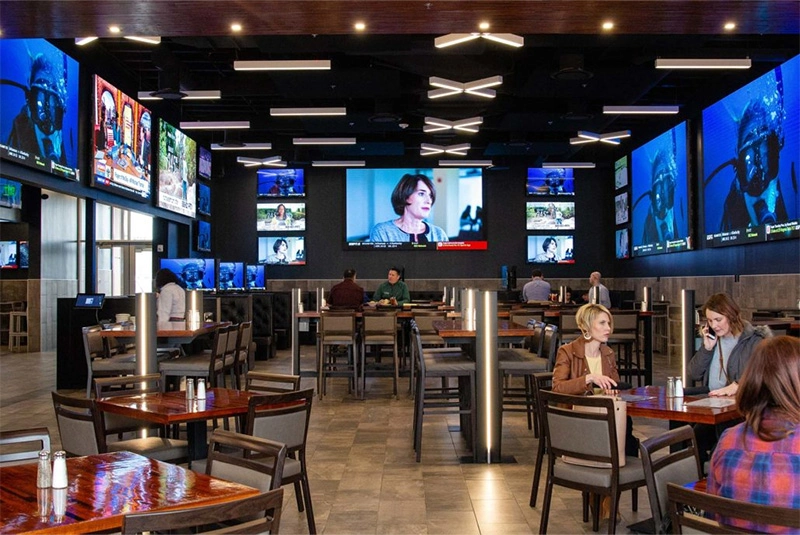
Close-proximity viewing has become the norm in premium retail spaces. Customers in flagship stores or department mall corridors often stand within 1 to 3 meters of displays. Traditional surface-mounted approaches struggle here with perceptible pixel gaps that break immersion and make luxury product imagery look less refined. COB supports pixel pitches down to P0.9 mm or finer, creating seamless surfaces where details in jewelry, cosmetics, or apparel pop without grain.
High-traffic durability matters more than ever. Busy mall intersections, elevator banks, and promotional zones expose screens to accidental bumps, dust accumulation, and occasional cleaning mishaps. Encapsulated COB designs provide inherent protection—often achieving IP levels that resist these elements far better than exposed lamp configurations. Field replacements drop significantly, keeping advertising uptime high during peak seasons.
Energy considerations weigh heavier under rising utility rates and sustainability reporting requirements. Shopping centers run displays extended hours, and power draw directly affects operating margins. COB structures improve thermal paths, reducing consumption by 30 to 50% in comparable brightness setups. Automatic ambient light adjustment, now common in new deployments, further trims usage when natural or store lighting varies.
Contrast and black levels directly influence perceived brand quality. Luxury retailers need deep blacks to make products stand out against dark backgrounds—think watches on velvet or cosmetics in dramatic lighting. COB achieves ratios exceeding 5000:1 in many cases, delivering punchier visuals that hold attention longer and support higher engagement metrics.
Rapid deployment and minimal disruption appeal to mall management. Renovations or seasonal campaigns often require quick turnarounds with limited store closures. COB modules, particularly those with front-access magnetic designs, install and service faster, reducing labor and downtime costs in live retail environments.
These observations come from actual rollouts: a multi-level mall upgrading atrium displays, a luxury brand refreshing window promotions, or a supermarket chain enhancing aisle-end signage. Each case underscores COB’s alignment with 2026’s priorities in indoor advertising.
COB technology brings distinct strengths to mall and retail advertising scenarios.
Pixel pitches below P1.5 mm become practical with COB, eliminating visible dots even at arm’s length. In luxury boutiques or cosmetics counters where shoppers examine details, this seamless quality enhances perceived value. Retailers report longer dwell times and stronger product focus when switching from coarser pitches.
The uniform surface and high contrast ratios create vivid imagery with true blacks. Dark-background ads for fashion or electronics gain dramatic impact, drawing eyes in brightly lit mall settings. Brands note improved visual hierarchy—key messages and calls-to-action read clearly without washout.
The protective encapsulation shields against bumps from carts, bags, or crowds. In elevator lobbies or narrow corridors, failure rates drop compared to exposed alternatives. Maintenance teams see fewer emergency calls, preserving advertising continuity during holidays or sales events.
Lower power draw stems from efficient heat distribution and optional auto-dimming. A typical mall installation running 16 hours daily can realize substantial reductions over five years. Operators calculate these savings against electricity tariffs and factor them into ROI projections for digital campaigns.
No grid lines or bezels disrupt large-format compositions. Curved or video-wall setups in atriums maintain consistent color and brightness across sections. This cohesion strengthens brand storytelling in multi-screen promotions.
Viewers in walkways or escalators see balanced colors from off-center positions. Glare control keeps images readable under varied store lighting, supporting broader audience reach in open mall layouts.
Magnetic modules allow single-person swaps from the front. Mall retrofits complete in shorter windows, avoiding extended closures. Service access without rear clearance suits recessed or wall-integrated placements common in retail.
Stable temperatures extend lifespan in enclosed mall environments. Displays handle 24/7 schedules with less thermal stress, reducing color shift over time and maintaining ad quality through long campaigns.
Consider a mid-tier shopping center that replaced aging displays in main corridors. Post-upgrade with fine-pitch COB, footfall analytics showed 25–35% longer average viewing durations on promotional content. Guest conversion rates for featured promotions rose noticeably, with staff attributing gains to clearer, more immersive visuals that encouraged closer inspection.
A luxury brand flagship in a high-end mall adopted COB for window and interior walls. The deep blacks and uniform surface elevated product photography, aligning with brand aesthetics. Sales associates reported increased inquiries on highlighted items, linking the change to better visual appeal that mirrored online catalog quality.
In a supermarket chain’s fresh-produce section, COB screens updated daily specials. Energy monitoring indicated lower monthly bills despite extended run times. Reduced service interventions kept content fresh without interruptions, supporting consistent promotional messaging.
These examples illustrate tangible returns: extended engagement, stronger sales lift, and controlled costs.
Start by mapping viewer distances in your space. Corridors under 3 meters favor P1.2 mm or finer; broader areas can use P1.5–P1.9 mm for balanced cost and clarity. Calculate total cost of ownership early: add initial investment to projected energy use (watts per square meter times hours times local rates) plus anticipated service over five years. COB options often show advantages here.
Request on-site demos to verify contrast, uniformity, and impact resistance. Compare side-by-side with existing setups under actual store lighting. Confirm front-maintenance capability and local support response times—critical for minimizing ad downtime.
Avoid decisions based solely on lowest quote. Verify real brightness output, protective ratings, and calibration stability. Factor in scalability for future expansions or content upgrades.
Shenzhen Longcheng Photoelectric Technology Co., Ltd., founded in 2013 and located in Shenzhen’s Bao’an District, concentrates on designing and manufacturing reliable LED display systems. The company offers indoor and outdoor solutions, including fine-pitch options suited to professional environments like retail spaces and advertising applications. Products undergo rigorous 72-hour testing, hold certifications including ISO9001, CE, ROHS, and FCC, and reach clients in over 120 countries through a network serving more than 900 organizations. Longcheng prioritizes stable performance, energy-conscious designs, and customization to meet diverse project needs.
Indoor advertising in 2026 rewards displays that combine sharp close-up clarity, robust durability, and efficient operation. COB LED screens address core challenges in malls and retail settings—grainy visuals up close, frequent repairs in busy zones, rising energy demands, and the need for premium brand presentation. By focusing on total ownership economics, proven field performance, and alignment with viewer behavior, procurement teams position their campaigns for stronger impact and sustained returns. Matching technology to specific space constraints, traffic patterns, and content goals yields signage that works reliably day after day.
COB provides seamless fine-pitch visuals at close distances common in malls, along with better impact resistance and lower long-term energy use. These factors reduce visible flaws, minimize downtime, and support higher engagement in high-traffic retail environments.
The uniform surface and high contrast ratios create deeper blacks and vibrant highlights. Products against dark backgrounds stand out more effectively in store lighting, helping draw attention to promotions and enhancing perceived quality.
Direct chip mounting with protective encapsulation resists bumps, dust, and moisture better than exposed alternatives. In crowded mall areas, this cuts failure rates and keeps advertising running without frequent interventions.
When factoring energy savings, reduced maintenance, and improved viewer dwell time leading to higher conversions, COB often delivers stronger returns over five years compared to setups prone to higher operating costs and interruptions.
Measure primary viewing distances: under 3 meters calls for P1.2 mm or finer to avoid pixel visibility; 3–6 meters allows P1.5 mm for cost-effective clarity. Test under actual store conditions to confirm the balance.










Leave a comments