
Nullam dignissim, ante scelerisque the is euismod fermentum odio sem semper the is erat, a feugiat leo urna eget eros. Duis Aenean a imperdiet risus.
Loading
Nullam dignissim, ante scelerisque the is euismod fermentum odio sem semper the is erat, a feugiat leo urna eget eros. Duis Aenean a imperdiet risus.
 author
 The LED video wall sector keeps moving forward in 2026. Recent market figures put the global value close to USD 8.1 billion, with indoor fine-pitch installations accounting for a growing slice of deployments in corporate boardrooms, education spaces, control centers, and auditoriums. Fine-pitch LED video wall technology has matured into a practical choice for environments that require sharp, large-format visuals without the frame interruptions common in LCD arrays.
Projects still run into familiar hurdles. Pixel pitches keep shrinking, COB packaging spreads faster than expected, and all-in-one units simplify setup for many buyers. Yet decisions often skip over how these changes play out over time—color shift after thousands of hours, power consumption during long daily runs, or service interruptions from mismatched components. The wrong selection shows up quickly as uneven seams, motion blur under cameras, or higher-than-anticipated electricity costs.
This overview digs deeper than basic explanations. It walks through current component realities, key 2026 developments, specification priorities that actually matter in the field, and straightforward methods to estimate total cost of ownership. Teams responsible for AV specifications or facility upgrades will find practical guidance tailored to typical indoor fixed installations.
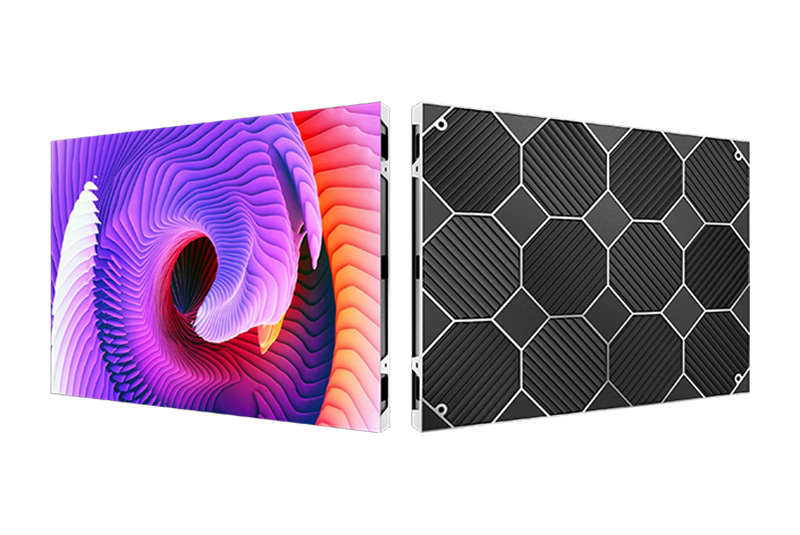
An LED video wall assembles multiple LED modules into a continuous display surface. Individual modules pack dense arrays of RGB LEDs that emit light directly, allowing high brightness and true black levels since unlit pixels stay completely dark.
LCD video walls rely on backlights and liquid crystals, which create visible bezels even in narrow-bezel designs and limit contrast in bright ambient conditions. LED panels avoid those limitations entirely. By 2026 all-in-one configurations have taken a firm hold in standard indoor projects. These units integrate processing hardware, built-in speakers, and mounting hardware into single large panels, most often sized 135 to 163 inches with the classic 16:9 ratio that matches most source content.
Foldable cabinet designs now appear regularly in shipments, reducing transport damage and cutting installation time on site. Field experience shows these changes drop overall project costs noticeably for fixed setups under 200 square meters.
Comparison data from recent deployments makes the differences clear. All-in-one walls frequently finish installation 40 to 60 percent faster than traditional modular builds while delivering equivalent or better pixel control across the surface.
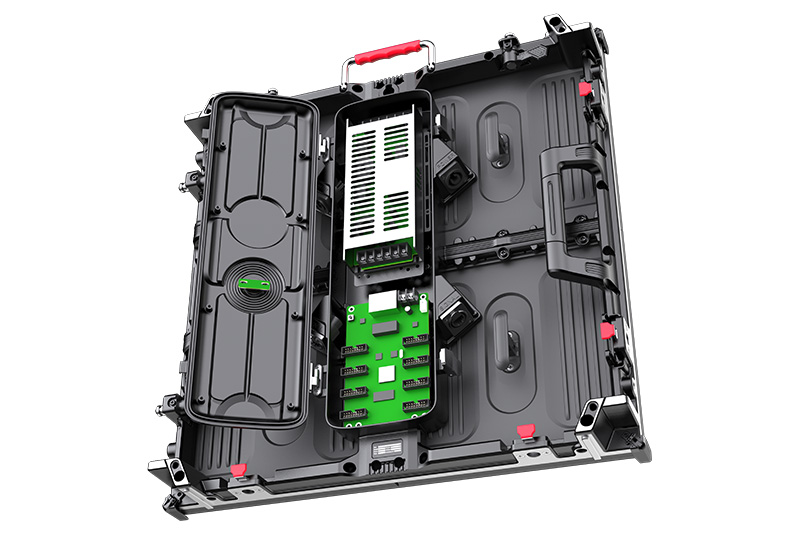
Content flows from a media player or external processor into the system. The processor handles scaling and signal distribution, sending data via a sending card to receiving cards embedded in each cabinet.
LED modules then activate pixels according to the incoming data. Indoor units in 2026 predominantly use SMD or COB packaging. SMD mounts discrete LEDs on the module surface; COB bonds chips directly to the board and applies a protective encapsulation layer that improves viewing angles and reduces dust sensitivity.
Driver integrated circuits regulate current to maintain precise brightness and color output. Refresh rates at 3840 Hz and above eliminate visible flicker in video-conference feeds or when captured by smartphones. Power supplies step down input voltage efficiently, keeping average draw in the 180–250 W per square meter range for controlled indoor environments.
Adaptive brightness controls, now standard in mid-to-high-tier models, adjust output dynamically to match room lighting, trimming unnecessary consumption during off-peak hours. Controllers also support 8K input pipelines, handling higher data throughput without introducing compression artifacts.
Signal-path diagrams illustrate the process clearly: source content enters the media player, gets processed, then distributes synchronously across modules for uniform image refresh.
COB packaging continues its rapid adoption in the fine-pitch indoor segment. Market share in premium indoor displays sits around 25 to 30 percent, driven by better color uniformity, wider effective viewing angles, and lower risk of single-pixel failures over extended operation.
Mini LED implementations, often delivered through COB architecture, dominate shipments in the P0.9 to P1.5 range. Pixel densities above 160,000 per square meter become routine, supporting crisp detail at viewing distances as close as 1.5 meters.
All-in-one LED displays solidify their position as the default choice for many corporate and education projects. Standard 135-inch 2K P1.5 models handle most boardroom requirements with minimal on-site configuration.
Energy-conscious designs gain ground. Low-power driver ICs combined with dynamic dimming keep consumption noticeably below older generations, a critical factor for facilities operating displays ten hours or more per day.
Micro LED and transparent LED variants remain in early commercial stages, primarily for high-end retail or architectural applications where premium pricing is acceptable. Across the board, procurement decisions now weigh five-to-seven-year ownership costs far more heavily than initial capital outlay alone.
Industry projections indicate Mini LED video wall shipments could reach USD 2.194 billion by 2029, reflecting continued investment in finer indoor pitches.
Pixel pitch selection starts with viewing distance. Industry guidelines suggest minimum comfortable distance in meters equals pitch multiplied by roughly 800 to 1200. In typical conference rooms with audiences at 2 to 5 meters, P1.5 to P2.5 strikes the right balance between sharpness and cost.
Refresh rate directly affects motion clarity. Rates of 3840 Hz or higher prevent artifacts during dynamic content or camera recording. Sixteen-bit grayscale depth or better handles subtle gradients in charts, logos, and video smoothly.
Brightness uniformity exceeding 95 percent across the entire surface eliminates visible patches or hot spots. Indoor brightness levels of 600 to 1,000 nits prove sufficient under most controlled lighting.
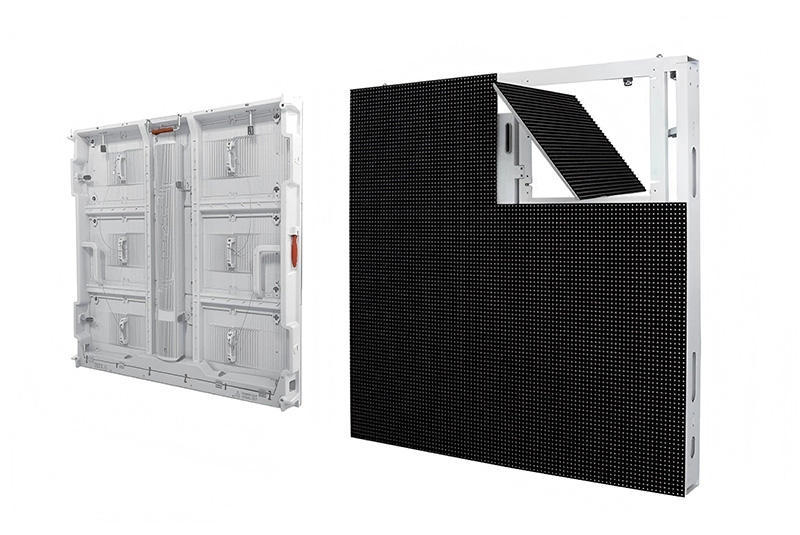
Front-access maintenance becomes non-negotiable for wall-mounted installations where rear clearance does not exist. COB packaging adds mechanical durability through better impact resistance.
Practical configurations for 2026 include P1.5 to P2.5 COB or all-in-one units for standard meeting spaces, prioritizing high refresh and efficient drivers. Larger auditoriums often settle on P2.0 to P2.5 to cover greater areas economically while maintaining detail.
Reference tables simplify the choice: P1.2 works reliably from 1.5 to 4 meters, P1.8 covers 2 to 6 meters with comfortable margin.
Ownership costs extend well beyond the invoice for panels. The practical equation combines acquisition and installation expenses with ongoing items: TCO equals initial outlay plus power consumption over time plus maintenance reserves plus spare-part provisioning.
For a representative 100 square meter indoor fine-pitch installation running at 200 W per square meter, ten hours daily, three hundred days per year, over five years, and a commercial electricity rate of $0.15 per kWh, electricity expenses alone fall in the $9,000 to $13,000 range. Service and spares typically add another 5 to 8 percent of hardware value annually for quality builds.
Indoor fine-pitch pricing in 2026 generally sits between $800 and $2,500 per square meter, varying by pitch, packaging technology, and feature set. All-in-one configurations often produce lower overall TCO through reduced labor hours and integrated control systems.
Side-by-side modeling shows all-in-one approaches undercutting traditional modular builds by 15 to 25 percent over five years in many documented cases.
Apply the same calculation framework to specific project parameters—runtime, local utility rates, anticipated service intervals—for accurate forecasting.
Indoor installations focus on fine pitch, moderate brightness, and low power draw. Conference rooms, classrooms, and auditoriums perform best with P1.2 to P2.5 pitches at 600 to 1,000 nits and refresh rates that support clear video conferencing.
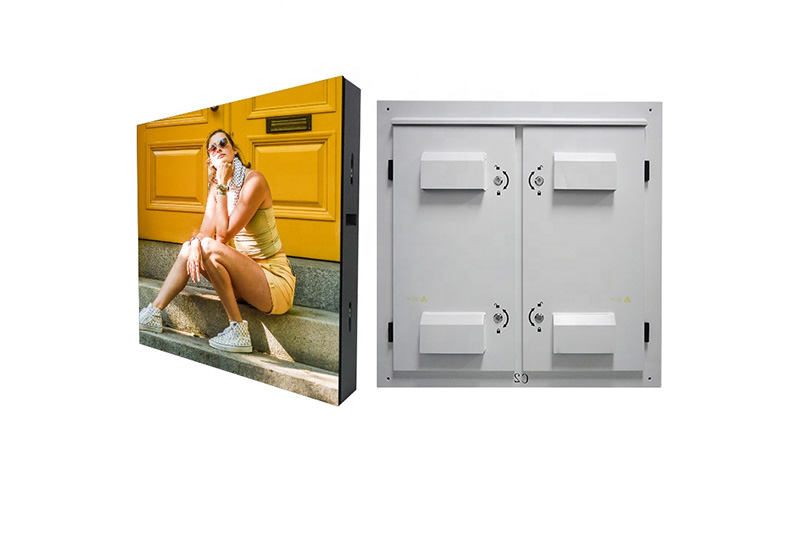
Outdoor deployments demand significantly higher brightness levels (5,000 nits and above), full IP65 or greater protection, and reinforced cabinets built to withstand wind, rain, and temperature swings. Pixel pitches start coarser, typically P4 to P10, to accommodate longer viewing distances.
The decision path remains straightforward: evaluate the environment first. Controlled indoor spaces reward fine-pitch technology with superior detail and lower running costs. Exposed locations require purpose-built outdoor-rated systems.
Boardrooms increasingly standardize on P1.5 to P2.5 all-in-one walls for hybrid collaboration. Wide viewing angles and high grayscale improve legibility of shared documents and video feeds from multiple participants.
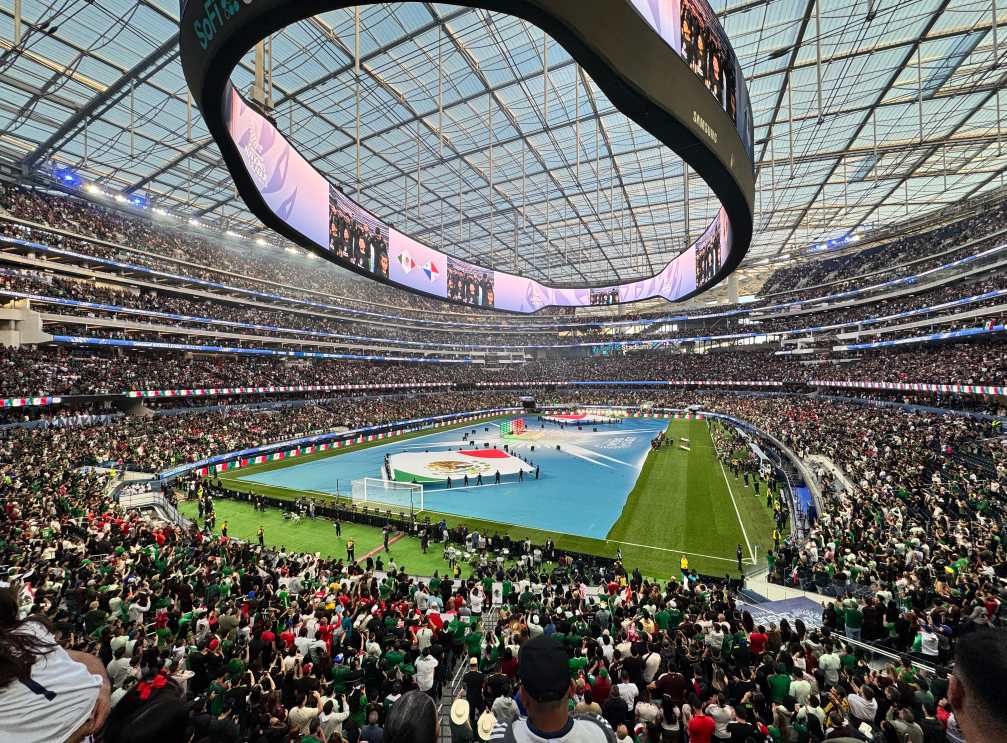
Education venues deploy comparable pitches in lecture halls and auditoriums. Uniform brightness ensures front-row clarity for detailed slides and back-row visibility for overall content.
Control centers depend on high-refresh seamless arrays to monitor live feeds without perceptible lag or flicker. Long-term reliability reduces unplanned downtime during critical operations.
Field upgrades provide concrete insight. One mid-sized auditorium replaced an aging system with P2.0 COB panels, recording noticeably sharper text and graphics alongside an approximate 20 percent reduction in annual electricity consumption.
Start with physical measurements: determine room dimensions, calculate required display area for desired resolution, and apply pitch-to-distance guidelines.
Build a preliminary budget using TCO estimates that include hardware, installation, projected power, and service over the planned lifespan.
Rank specifications by priority: refresh rate, grayscale depth, uniformity, front maintenance access.
Evaluate suppliers carefully: request documented field failure rates, regional support availability, warranty scope, and transparent pricing for replacement modules.
Conduct on-site validation: measure actual brightness, color deviation, seam alignment, and thermal stability during extended operation.
Engage qualified manufacturers once requirements solidify for precise proposals and engineering support.
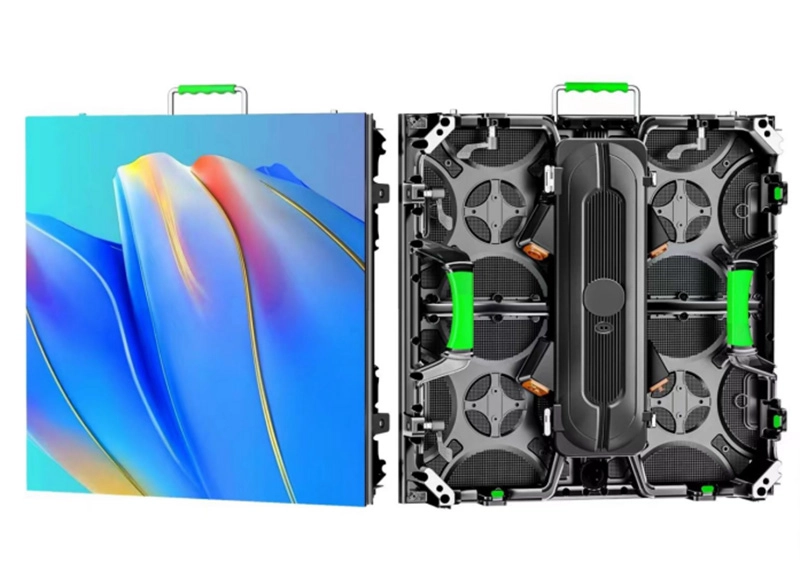
Established in 2013 and located in Bao’an District, Shenzhen, Shenzhen Longcheng Photoelectric Technology Co., Ltd. concentrates on high-quality LED display manufacturing with particular focus on small pixel pitch modules and indoor applications. The company supplies conference rooms, auditoriums, education facilities, and comparable venues through customizable solutions that emphasize high definition, elevated refresh rates, energy-efficient operation, and consistent long-term performance. Every display undergoes rigorous 72-hour aging validation prior to shipment. Compliance certifications cover ROHS, FCC, CE, ISO9001, and additional standards. Products reach more than 120 countries and regions, backed by dedicated technical support and a track record of reliable delivery.
LED video wall technology in 2026 delivers proven value for professional indoor environments when specifications align closely with actual operating conditions. Fine-pitch indoor solutions stand out for their combination of visual clarity, energy efficiency, and durability over extended service life. Thorough evaluation of total ownership costs, careful configuration matching, and selection of experienced partners remain the decisive factors.
Facilities planning deployments benefit from applying the outlined methods to define requirements precisely before contacting manufacturers for up-to-date 2026 proposals and project-specific guidance.
LED video wall technology in 2026 focuses on modular and all-in-one indoor displays using fine pitches from P0.9 to P2.5, COB or SMD packaging, high refresh rates, and low-power drivers to produce seamless, high-contrast images suited to conference, education, and control-room environments.
LED video walls eliminate bezels entirely, achieve higher brightness and contrast through direct emission, and maintain uniform performance across large surfaces, outperforming LCD in most indoor fixed large-format applications.
Conference rooms with typical 2–5 meter viewing distances perform best with P1.5 to P2.5 pixel pitch; P1.2 becomes preferable for closer setups requiring maximum resolution clarity.
TCO combines initial hardware and installation costs with electricity usage (calculated as W/sqm × daily hours × annual days × years × local kWh rate), plus projected maintenance and spare-part expenses over the expected service period.
All-in-one LED displays frequently show lower five-year TCO through quicker installation, integrated processing, and simplified logistics, making them a strong choice for standard indoor fixed installations such as boardrooms and classrooms.










Leave a comments