
Nullam dignissim, ante scelerisque the is euismod fermentum odio sem semper the is erat, a feugiat leo urna eget eros. Duis Aenean a imperdiet risus.
Loading
Nullam dignissim, ante scelerisque the is euismod fermentum odio sem semper the is erat, a feugiat leo urna eget eros. Duis Aenean a imperdiet risus.
 author
 In 2026, the cost of an LED screen generally spans $400 to $5,000 per square meter, dictated by pixel pitch selections, indoor versus outdoor designations, rental or fixed installation approaches, targeted brightness thresholds, refresh rate specifications, and embedded energy-saving mechanisms. Procurement groups managing event setups, signage infrastructures, boardroom integrations, or stadium perimeter projects often navigate these disparities since specific uses set the priorities—fine-pitch precision for near-range observation in monitoring hubs stands apart from robust luminance needed for highway displays or venue exteriors. The details outlined here pull from active manufacturing workflows and market insights, delivering practical anchors for supplier assessments and financial projections.
The outlined ranges capture factory-direct valuations for typical 2026 assemblies, separate from site-based mounting efforts, overseas transport, tariff impositions, and custom framework adaptations.
For immediate context, compact indoor layouts of 1–5 square meters in P2–P3 pitch ordinarily sum to $800–$6,000 for essential components. Intermediate video walls covering 5–20 square meters with P1.5–P4 pitch settle in the $5,000–$40,000 spectrum. Extensive outdoor arrays beyond 20 square meters at P5–P10 pitch regularly climb to $15,000–$150,000 with inclusion of anchoring systems and electrical provisioning. Rental setups, routine in performance venues, exhibitions, and short-term campaigns, typically levy $30–$120 per square meter daily, calibrated to project timeline and ancillary service needs.
Such overviews act as preliminary guides; definitive amounts surface through comprehensive spec evaluations.
Pricing builds from a set of linked considerations, where underestimating one can inflate totals unexpectedly.
Closer pitches integrate denser diode arrangements per panel, amplifying input costs and fabrication demands yet facilitating crisp detail at minimized observer distances. Builds in the P1.2–P1.5 category align with oversight stations or media production areas hosting close-proximity users. Looser spacings like P6–P10 support remote visibility on civic structures or athletic grounds with moderated per-unit spending. Transitioning below P2.5 to P1.5 routinely escalates expenses twofold via expanded part counts and precision requirements.
Indoor types function at 600–1,500 nits, stressing chromatic accuracy and dynamic range. Outdoor equivalents call for 5,000–10,000 nits, sealed IP65 barriers, and refined heat dissipation channels, elevating figures by 20–50%. Rental-focused variants employ featherweight, snap-locking housings tailored for durability in transit and expedited rigging, warranting heightened costs amid cyclic operational strains.
Bulk procurement yields savings: square-meter rates fall markedly in voluminous undertakings. A limited 10-square-meter fine-pitch indoor configuration bears steeper proportional charges than a 100-square-meter outdoor signage array constructed from repeatable elements.
Rates surpassing 3840Hz mitigate strobing effects in recorded feeds. Common cathode implementations slash energy intake by 30–50%, curbing utility burdens through prolonged runs. Enhancements such as frontal maintenance access, adaptable bending, or COB encapsulation impose added fees but diminish service halts.
Operations adhering to ROHS, CE, FCC, ISO9001, and CCC protocols ensure steady functionality and backup reliability, upholding fair pricing by averting early breakdowns.
Fundamental hardware establishes the entry threshold. Supplementary aspects—fixturing scaffolds, specialized processors, wiring networks, and power grid enhancements—append 10–30% further. Enduring factors involve standard draws of 300–800 watts per square meter coupled with scheduled upkeep spanning 5–10 years.
Observed factory benchmarks for 2026 setups are detailed below:
Projections rely on traditional die-cast aluminum chassis, superior-refresh SMD diodes, and foundational control apparatus. Augmentations for intensity or efficiency nudge toward elevated tiers.
A standard 4m × 3m (12 m²) P2.5 placement in a lodging vestibule or management chamber amounts to $6,000–$15,000 for core panels. Systems provide 800–1,000 nits and 7680Hz refresh for uninterrupted sequence delivery. Securing hardware and input handling tack on $2,000–$5,000.
A 5m × 4m (20 m²) P3.9 outdoor rental formation for celebrations or stage productions totals $8,000–$20,000 outright, or $1,500–$4,000 per occasion day with conveyance and field personnel. Housings lighter than 8 kg per square meter featuring IP65 defenses tolerate successive mobilizations.
A 6m × 4m (24 m²) P6 permanent curbside unit ordinarily reaches $15,000–$40,000, factoring in foundational bracing. Output at 6,000+ nits alongside common cathode optimization holds consumption close to 400–600 watts per square meter.
Broad perimeter stretches over 20 m² in P8–P10 pitch for sporting sites extend to $20,000–$80,000+, equipped with 7,000–10,000 nits, diode longevity past 100,000 hours, and variable intensity adjustment.
Rental accommodates episodic or targeted engagements, bypassing asset immobilization and warehousing while encompassing mobility and erection. Acquisition favors persistent implementations, with total cost of ownership gaining from ongoing power economies and infrequent interventions. Various builds attain equilibrium inside 2–3 years amid regular activation.
Core bids enclose LED panels, enclosures, voltage converters, primary signal receivers, linkage wires, and conventional 2–3 year safeguards. Distinct allocations address fieldwork assembly, refined command units, cross-border haulage, duty assessments, and individualized support engineering.
Proliferation of common cathode frameworks and sustainable substrates persists in diminishing power profiles. Rampant fabrication growth eases entry to tighter pitches, as heightened calls for virtual production and augmented-reality integrations propel evolution in minimal-delay, elevated-contrast offerings.
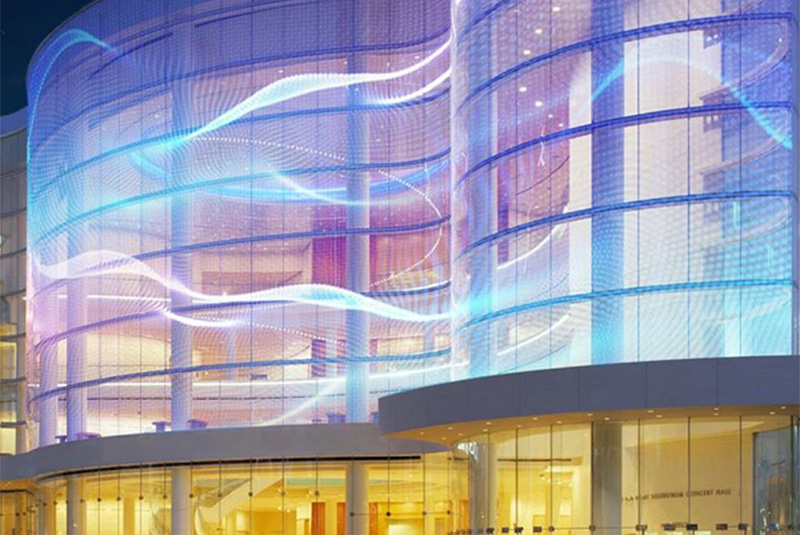
Initiated in 2013 and sited in Bao’an District, Shenzhen, China, Shenzhen Longcheng Photoelectric Technology Co., Ltd. dedicates efforts to crafting solid LED displays. The assortment includes small-pitch indoor units, stationary outdoor screens, rental enclosures, poster variants, and arena-tailored systems. Displays highlight sharp imagery, refresh capacities to 7680Hz, power-thrifty operations (regularly yielding 15–50% reductions via common cathode and refined circuitry), and unwavering performance validated through 72-hour pre-dispatch evaluations. Possessing ROHS, FCC, CE, ISO9001, CCC, and allied accreditations, the entity has furnished over 900 organizations and bodies in excess of 120 nations and territories. Priority lies in bespoke designs, sturdy engineering aid, and continuous specialist backing to foster efficient, enduring deployments.
Establishing LED screen costs in 2026 centers on syncing attributes with usage scenarios—static business locales, conspicuous external promotions, or malleable occasion hires. Concentration on total cost of ownership, propelled by power-thrifty builds and durable functionality, routinely surpasses choices fixated purely on preliminary expenditures. Partnering straight with seasoned producers often unveils concrete edges in part uniformity and scenario-tuned counsel.
Direct-from-factory projections in 2026 usually cover $400–$2,500 per square meter, situating indoor fine-pitch types at $700–$2,500 and outdoor fixed versions at $400–$1,200, based on pixel pitch, luminance necessities, and built-in elements.
Rental frameworks apply $30–$120 per square meter daily for occasion deployments, including transfer and configuration, whereas acquisition initiates at $500–$1,500 per square meter but builds reduced aggregate outlays via power thrift and lasting resilience in iterative contexts.
Commence with square-meter component costing, designate 10–30% toward mounting, controllers, connections, and shipment, subsequently blend anticipated energy rates (300–800 W/m²) and upkeep demands across five years for thorough TCO computation.
Finer pitches from P1.2–P2.5 mandate compacted diode layouts, intricate control electronics, and rigorous production norms, heightening resource and procedural outlays while guaranteeing refined definition at contracted observation spans.
Rental curbs starting capital and operational overhead for intermittent corporate assemblies or singular initiatives. Acquisition proves more viable for ongoing usages like reception areas, executive suites, or periodic summits, wherein amassed power economies and bypassed rental repetitions neutralize the entry commitment over successive rounds.










Leave a comments