
Nullam dignissim, ante scelerisque the is euismod fermentum odio sem semper the is erat, a feugiat leo urna eget eros. Duis Aenean a imperdiet risus.
Nullam dignissim, ante scelerisque the is euismod fermentum odio sem semper the is erat, a feugiat leo urna eget eros. Duis Aenean a imperdiet risus.
 author
Professional buyers evaluating an outdoor digital signage billboard must begin with one critical factor — viewing distance. The correct viewing distance determines how clearly the audience perceives an image and directly influences which pixel pitch is most suitable. Selecting the wrong pixel pitch can dramatically increase project costs while simultaneously diminishing advertising effectiveness. This guide provides a comprehensive technical framework covering screen specifications, installation conditions, operating expenses, ROI evaluation, and practical case studies across multiple environments.
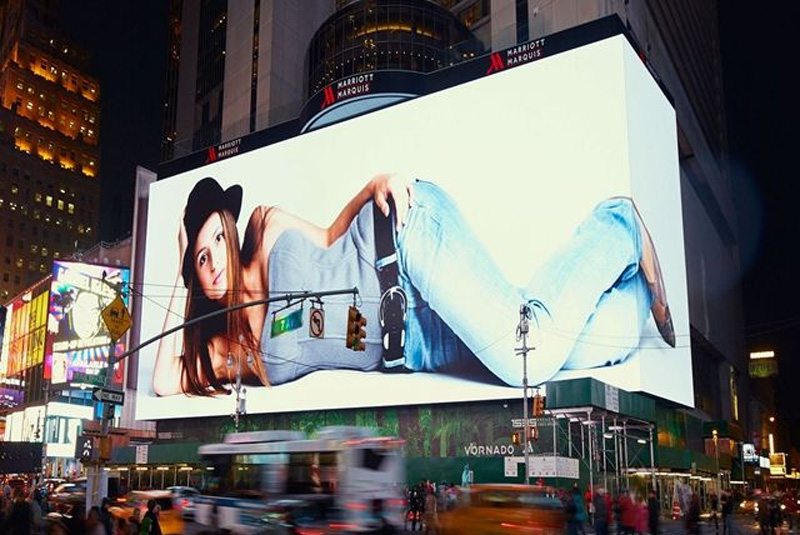
As a general industry guideline, each millimeter of pixel pitch roughly corresponds to about one meter of minimum viewing distance. For example, a P5 LED display is typically suitable for viewing from around 5 meters or farther. Smaller pixel pitches provide finer image detail, while larger pixel pitches are usually more cost-effective for long-distance outdoor viewing.
| Pixel Pitch | Recommended Viewing Distance | Best Application Scenarios |
|---|
| P3 | 3–8 m | Premium retail entrances, close-up commercial displays, pedestrian streets |
| P4 | 4–10 m | Shopping centers, retail streets, commercial plazas |
| P5 | 5–15 m | Storefront advertising, shopping malls, transportation hubs |
| P6 | 6–25 m | Building facades, city-road billboards, public information screens |
| P8 | 8–40 m | Outdoor advertising billboards, stadium screens, roadside displays |
| P10 | 10–50 m+ | Highway billboards, expressway advertising, long-distance outdoor displays |
Most of the buyers of outdoor LED billboards pay a lot of attention to the resolution of the billboard, but they do not pay enough attention to the other crucial factor – the distance from which people will be viewing the display. The human eye cannot see individual pixels when it is too far away. So a display that looks great at 30 meters from the face of the screen does not require the same resolution as a display that people will be viewing from 5 meters. Buying a display with the right pixel pitch for the intended viewing distance is cost effective and provides the best possible display for the application.
Pixel pitch is the distance between the center of 2 adjacent pixels on an LED display module, typically expressed in millimeters, such as P4, P5, P6 and so on. Lower pixel pitch increases the pixel density and detail of the images, but increases the difficulty of the manufacturing process and costs. Longcheng LED displays Pixel Pitch: P3,P4,P5,P6,P8,P10 Brightness: 4500-10000CD Process classification:SMD/DIP Resistance to heavy rain, high humidity, high temperature, low temperature and salt spray Flexible and convenient advertising large screen. In summary, different pixel pitches have their own applications depending on the basis of the distance between the audience and the screen.
For situations where the viewer is close to the screen, the human eye is not able to see very fine details beyond a certain resolution. Thus, for example for the shopping street or commercial plaza, very fine detail is not required and thus smaller pixel pitches such as P4 or P5 are adequate. On the other hand, for example on highways where the viewer is tens of meters away from the screen, much larger pixel pitches such as P8 or P10 are sufficient.
There is a minimum viewing distance for LED displays that is typically estimated by a simple ratio of one meter of viewing distance per millimeter of pixel pitch. For example, a P5 display will typically perform best at 5 meters or more from the screen. These minimum distances are often set by manufacturers and by designers who try to balance the required resolution for good image quality with cost-efficiency for advertisers who are trying to get the most return on their investment. Using established practices for setting minimum viewing distances can help ensure that display systems are set up to deliver the best possible ROI for advertisers.
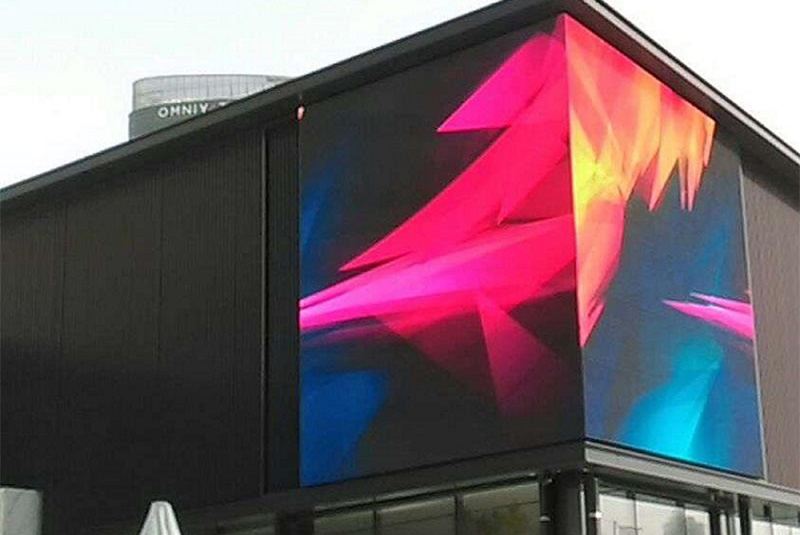
Outdoor installations are affected by the behavior of the audience and environmental conditions and therefore differ from installations such as billboards along highways, mall facades and stadium displays. By analyzing the differences between these types of projects the most cost-effective configuration can be determined.
Highway billboards are typically viewed from distances greater than 30 meters and from the perspective of a fast moving vehicle traveling at 80-120 km/h. Hence, a coarse pixel pitch of P8 to P10 would be suitable as closer pixel pitches would not add value but increase cost. As per “Fixed LED display carries some features that make it highly suitable for outdoor areas It can work in different brightness level and outdoor circumstances.” The display can be seen in various brightness levels and can function in different outdoor circumstances. This means that the image can be clearly viewed during the day while shining with great luminance even under direct sunlight. In addition, the fixed LED display is durable and can withstand harsh weather conditions.
For medium-distance installation on building facades so-called P6/P8 screen sizes are used. These installations have to be readable from the distance of a street for passers-by and at the same time be flexible enough to be integrated into the respective building structure. Important for advertising visibility are not the high pixel density as it is the case for near distance, but the brightness uniformity and the contrast ratio.
For viewing from a close proximity of 5 – 15m, high definition screen pitches such as P4 and P5 are ideal for creating an engaging experience by displaying high quality product images and text based promotions in great detail. “High Gray Scale – Better Picture… High refresh rate and gray scale ensures the picture quality remains seamless.” This feature creates an ideal canvas for retailers to promote their brand in retail environments where color reproduction is key.
For use in a number of venues including stadiums, where viewers can be anywhere from 20m to 200m away, a mid level pixel pitch such as P6 or P8 combined with a high refresh rate of greater than 3840Hz will guarantee smooth live playback without flicker during recording of the live broadcast.
Public transportation locations, such as airports, railway stations and bus terminals, require long-lasting displays which can operate continuously under changing lighting conditions. Our displays with pixel pitches of P5 to P8 and up to 10,000 cd/m² are readable even in skylight-dominated environments and can be energy-efficient through an automatic dimming function.
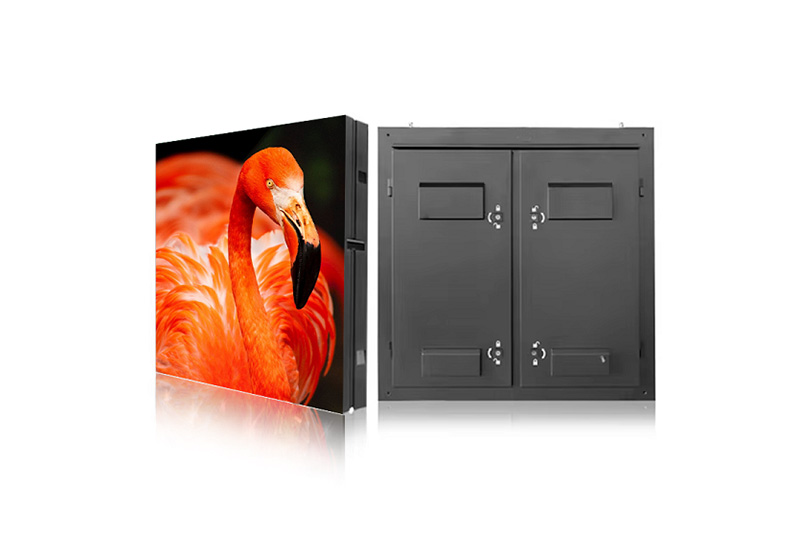
Pixel pitch affects the financial aspects of LED billboards: investment and maintenance.
Smaller pitches contain more LEDs per square meter; hence production costs rise proportionally. Cabinet materials must also handle higher heat output due to denser components.
To counterbalance the higher weight density of Fine-pitch Displays, panels require a sturdier structural support. Also the installation of such small-pitch modules turns into a more complex process, mainly due to increased requirements for the alignment.
Higher brightness levels consume more electricity; however, modern designs integrate energy-saving technologies that dynamically adjust luminance based on ambient light levels to reduce operational expenses.
When using robust components with a high IP rating of IP65/IP66, that protect against dust and water ingress, less time is lost with frequent module replacements. High IP Rating IP65 – Safe and Reliable… Special guard protects it from environment dangers. This protects against environment-related degradation that could result in system downtime.
There are many configurations of projectors in use, ranging from P4 up to P8 and even P10. As the pitch is reduced the cost of the projector increases in an almost exponential fashion. The P4 will provide a higher level of detail at closer viewing distances, but has much higher power consumption and is more demanding for maintenance than the typical highway specification P10 which is designed for visibility at long distances.
Outdoor LED screens operate in an environment that is constantly changing and subject to various environmental stressors such as rain, UV radiation, wind load, changes in humidity and temperature.
The displays with IP rating IP65/IP66 are completely protected against water jets and dust in the air. The display is encased in a cabinet which is sealed and made of corrosion-resistant materials such as galvanized iron. These cabinets are described in “Simple iron box/fully enclosed iron box”.
Efficient heat dissipation solutions ensure that outdoor installations do not overheat in summer by creating air flow or by using an aluminum backplate to improve heat transfer away from the LED driver.
Coatings are used in coastal locations subject to salt spray corrosion to extend the service life of products by protecting the metal components from oxidation – a design feature that is covered in Longcheng’s description of its product with “resists heavy rain, high humidity, salt spray…”.
Low-temperature startup circuits enable continued trouble free operation of your advertising signs even in freezing temperatures.
Beyond pixel pitch there are a number of other parameters that will affect the level of visual fidelity of a display.
These attributes are more important than simply a product’s looks; they define long-term reliability.
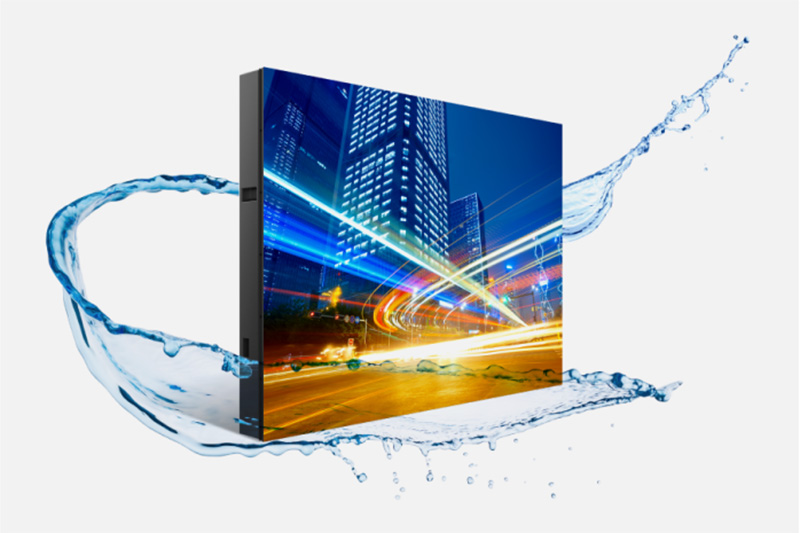
The typical mistakes made when purchasing display solutions are choosing a too small pixel pitch in order to save money, just comparing the “buy price” and not the total cost of ownership, not designing the solution for accessibility of maintenance, and not choosing the right materials for the climate in which the solution will be installed in order to prevent premature failure.
A ROI analysis is a combination of the income a facility generates through advertising and the expenses at the facility for energy and for maintenance.
A comprehensive checklist includes:
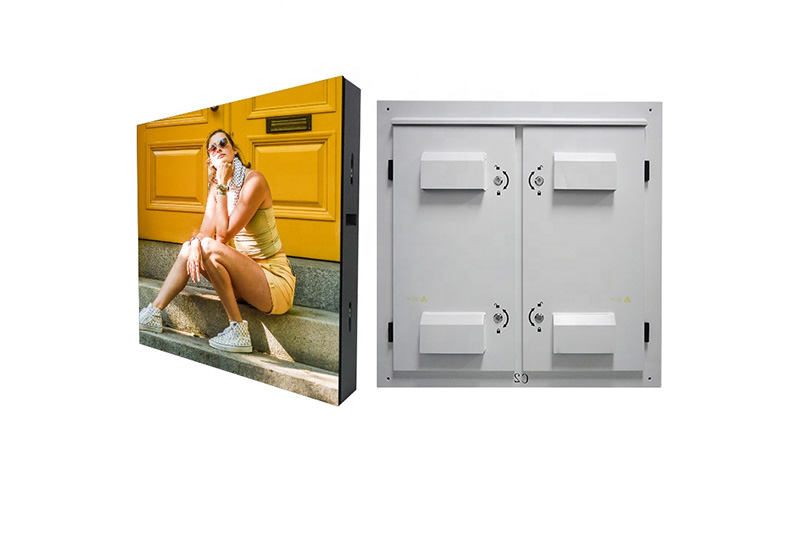
Shenzhen Longcheng Photoelectric Technology Co., Ltd is an outdoor LED display manufacturer of solutions for Highway LED displays, Building LED displays, Retail Advertising Displays, Sport Venue Displays, Airport & Train Station Displays and Public Information Displays etc. The company designs and manufactures fixed type outdoor displays such as the P5 Outdoor Digital Signage Billboard LED Screen. The outdoor display has IP65 rating for water proof. Longcheng Photoelectric has advanced production lines which are certified by CE, ROHS, FCC, KC, UL etc. The company also provides OEM/ODM service and one stop engineering consulting service. Longcheng can give the best advice on pixel point, viewing distance and cost effective solution for customer’s projects.
When selecting an outdoor LED billboard, the initial key factor to consider is the viewing distance from the billboard. The pixel pitch of a billboard must be matched with the viewing distance of the audience to get the best results and prevent unnecessary cost. When matched with the correct levels of brightness, a weather proof design such as an IP65 rated cabinet, along with cost effective energy operation methods, and back up from a quality manufacturer such as Shenzhen Longcheng Photoelectric Technology Co., Ltd., investors can realize the greatest return on investment and advertising impact over the longest period of time in a variety of weather conditions.
The recommended pixel pitch is related to the viewing distance. For close-up viewing, displays with fine pixel pitch are preferable. For areas with roadside or highway viewing, a larger pixel pitch is more cost effective.
Typically, most outdoor LED billboards are set to around 5,000 to 10,000 nits, depending on the site of installation, the level of sunlight the board will receive and local bylaws.
No. Smaller pixel pitches increase equipment and installation costs. If viewers are located far from the display, the additional resolution usually provides little practical benefit.
With a proper installation and routine maintenance high-quality outdoor LED displays can reach 80,000 – 100,000 hours of operation.
Ambient temperature, relative humidity, rain, dust, UV exposure and salt spray are key factors that determine the long-term reliability of displays. Displays with the correct level of protection, in conjunction with suitable cabinet construction, will result in longer service life.
Outline all details such as the installation location, the viewing distance, the screen size, the mounting option, the local climate, the number of hours of operation, the power supply and desired maintenance. The supplier can then recommend the optimal solution for you.












Leave a comments