
Nullam dignissim, ante scelerisque the is euismod fermentum odio sem semper the is erat, a feugiat leo urna eget eros. Duis Aenean a imperdiet risus.
Nullam dignissim, ante scelerisque the is euismod fermentum odio sem semper the is erat, a feugiat leo urna eget eros. Duis Aenean a imperdiet risus.
 author
An indoor LED advertising screen should make a message visible and readable at the places where customers actually walk, pause or wait. A bright wall in the wrong position can be less useful than a smaller display aligned with a natural sightline. Retail stores and corporate lobbies also have different content schedules and maintenance constraints. This guide explains how to choose screen location, pixel pitch, cabinet layout and operating workflow before requesting a quotation.
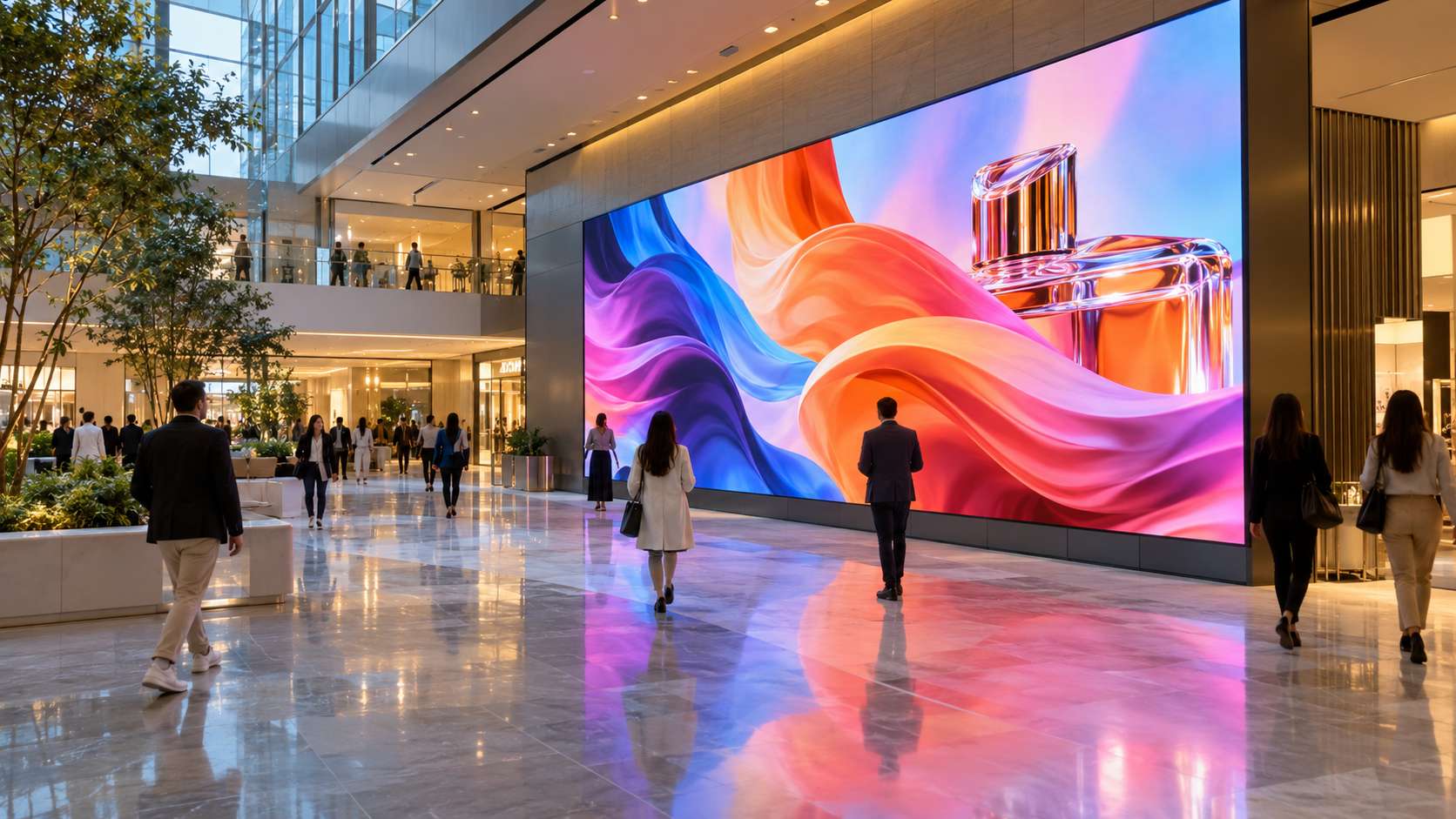
Begin with the audience journey rather than the maximum available wall area. Walk the space and record where people first notice the display, where they stop and how long they are likely to look.
At a store entrance, customers may see the screen from the corridor, from inside the shop or through glass. Each position changes the viewing angle and ambient light. A screen that faces inward may be effective for product storytelling but weak for attracting passing foot traffic. Place sample content at the proposed location before purchase. Check whether the headline and product image are recognizable in a few seconds, and avoid relying on small text to carry the main message.
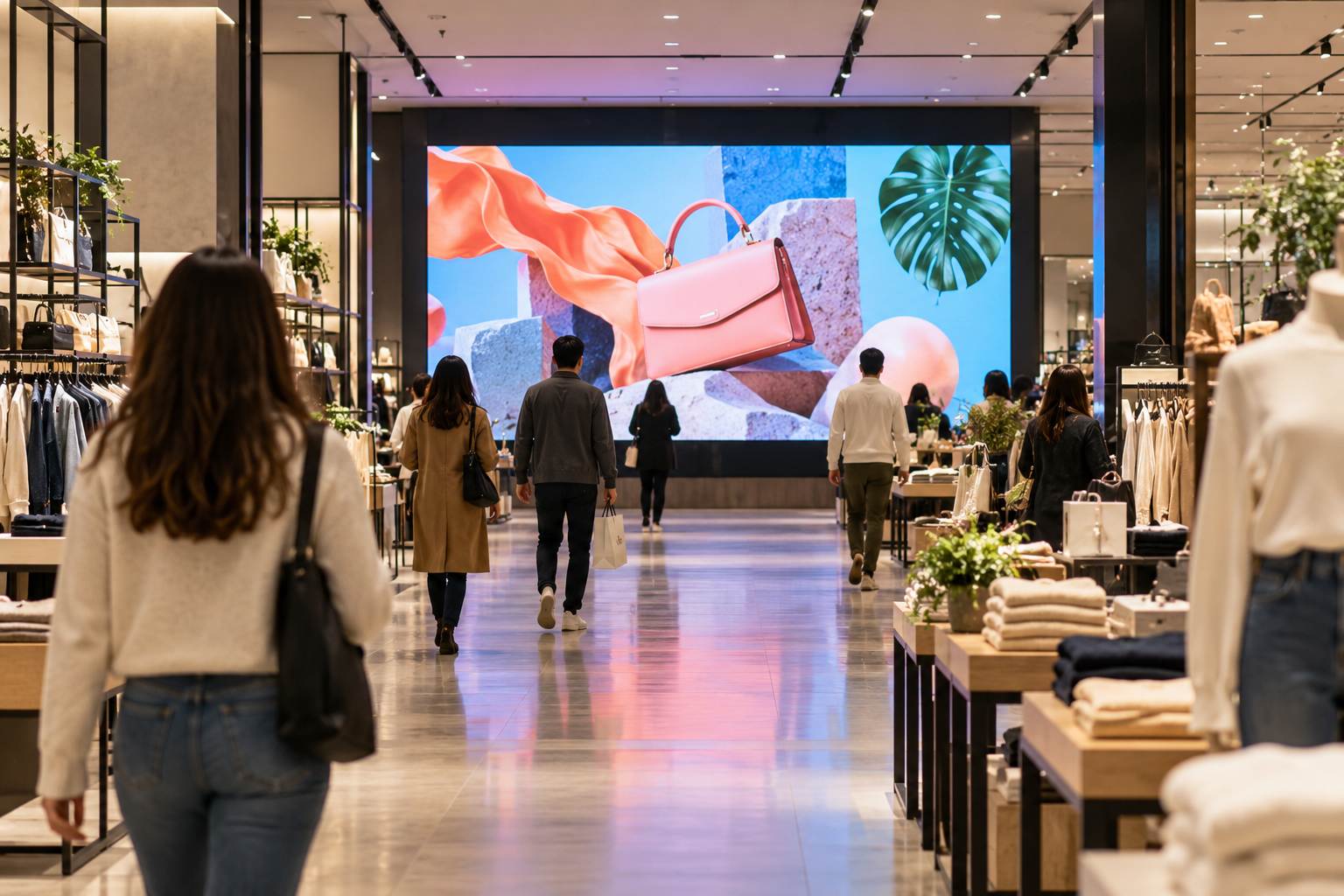
In a corporate lobby, the display may welcome visitors, show brand films and provide wayfinding or event information. The wall should fit reception circulation and remain visible without blocking signs or architectural features. Note the nearest regular viewing position as well as the farthest useful sightline. These measurements will guide pixel pitch and content design more reliably than a generic recommendation for every lobby.
Pixel pitch, cabinet size and final screen dimensions should be chosen together. A smaller pitch gives more pixels in a given area, but the project only benefits when the audience and content need that detail.
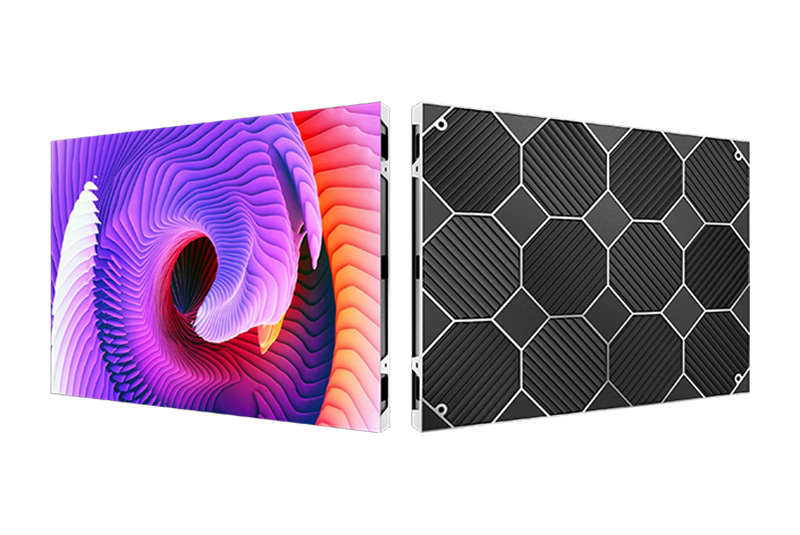
If customers stand close to a retail feature wall, test the smallest text, product labels and graphics planned for the campaign. For a screen mainly seen across a lobby, large imagery and short messages may be more important than very fine text. The P2.5 indoor fixed LED display page lists a 2.5 mm pitch and a stated best viewing range of 3 m to 20 m. Treat that range as a product reference, then validate the specific content from the actual viewing positions.
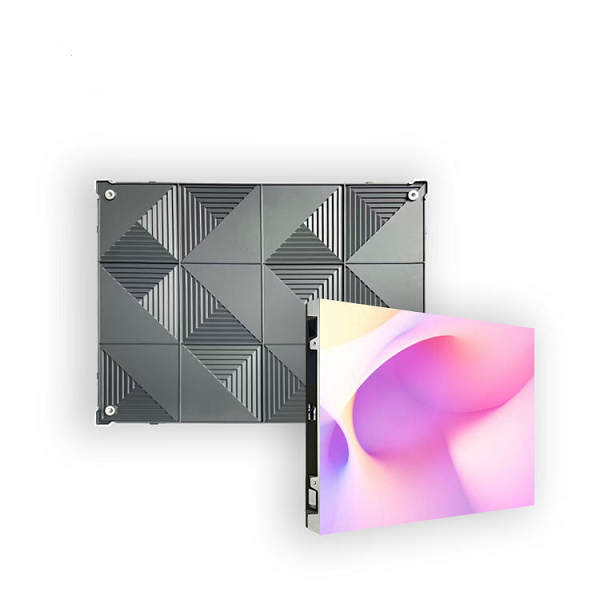
The same P2.5 product page lists a 320 mm by 160 mm module and a 640 mm by 640 mm cabinet. A proposed wall should use complete cabinets, with room for its structure and service access. For example, four cabinets across and three high would create a nominal active area of 2.56 m by 1.92 m before trim. The image file and playback system should be prepared for the selected pixel dimensions, not merely stretched from a standard television layout. Confirm the final cabinet map and resolution with the supplier.
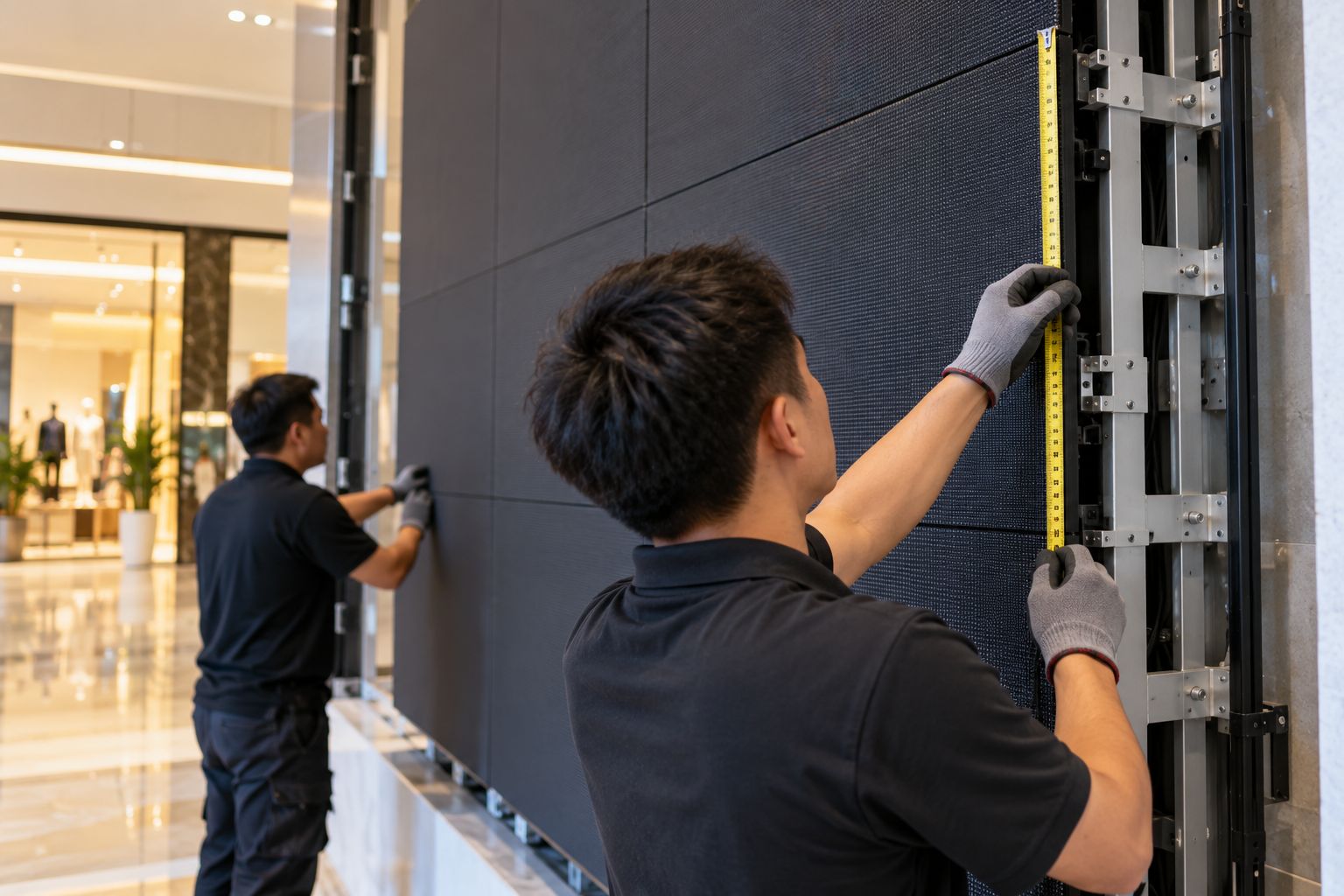
Even an indoor screen must be planned around light, electrical supply, mounting and maintenance. These conditions affect both the opening experience and the operating budget.
Visit the site at different times of day. A retail window facing strong daylight may need a different placement or display specification from a shaded interior wall. For a lobby, review how the screen interacts with feature lighting and nearby glass. Ask for a site demonstration or a measurable brightness specification for the exact product proposed. Avoid using an outdoor brightness target for a controlled indoor space without checking comfort and content appearance.
Confirm the available circuit, route for power and data cables, mounting structure and ventilation. The P2.5 page publishes average consumption below 320 W/m² and maximum consumption below 780 W/m². For a 4.92 m² example wall, multiplying area by the listed maximum gives an early reference below 3.84 kW; an electrician must still size the real circuit from the final configuration and applicable rules. Leave an accessible method for replacing a module, power supply or signal component.
Hardware selection is incomplete until the owner knows who will update campaigns and how the messages will be checked after launch.
Use one primary message per scene and make important text large enough to read from the measured position. A passing shopper may see only a few seconds of the loop, while a visitor waiting at reception may have time for more detailed information. Test the content on the finished pixel canvas. Confirm that colors, motion and transitions remain comfortable under the venue’s lighting conditions.
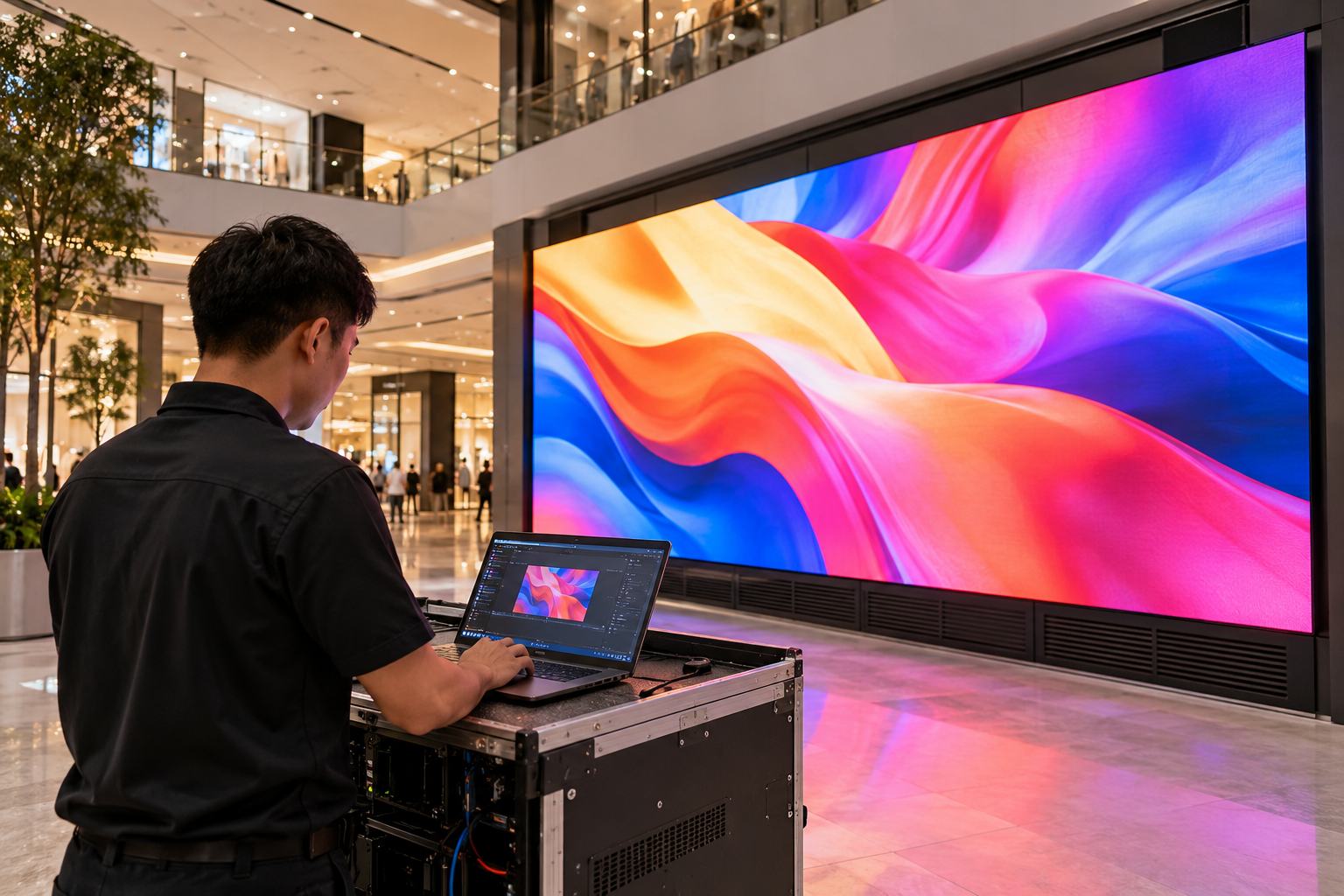
Decide who approves creative, uploads files, checks playback and responds when a cabinet goes dark. Keep a record of the content schedule, control settings, cabinet map and spare parts. Clean access and a clear escalation path reduce disruption during promotions. A monthly visual inspection can identify color variation, blocked ventilation or loose trim before customers notice a larger problem.
Longcheng Optoelectronics lists indoor LED displays and engineering implementation in its company information. Its P2.5 product page provides a concrete starting point for discussing pixel pitch, cabinet layout, viewing distance and power. Ask for an updated specification and installation drawing tailored to the chosen retail or lobby site before placing an order.
The best indoor LED advertising screen is the one that makes the intended content easy to see at the real viewing points and practical to operate after installation. Measure the audience route, test sample creative, build the cabinet grid and confirm electrical and service needs. An itemized quotation should then reflect the whole system rather than only the LED panels.
No. Suitability depends on the closest audience position, content detail, screen size and site lighting. Use the supplier’s viewing guidance and test actual creative in the proposed location.
Request the LED cabinets, controller, cables, mounting structure, electrical work, installation, commissioning, spares and maintenance terms as separate items.
Check playback when each campaign changes and inspect the screen routinely for image errors, color differences, blocked airflow and damaged modules. The exact schedule should follow the venue’s operating hours.











Leave a comments