
Nullam dignissim, ante scelerisque the is euismod fermentum odio sem semper the is erat, a feugiat leo urna eget eros. Duis Aenean a imperdiet risus.
Nullam dignissim, ante scelerisque the is euismod fermentum odio sem semper the is erat, a feugiat leo urna eget eros. Duis Aenean a imperdiet risus.
 author
A three-folding LED poster solves a practical event problem: a large advertising surface can be moved between venues without shipping it at its full expanded width. Folding, however, creates new failure points at hinges, panel edges, wheels, and cable transitions. A buyer evaluating this format should look beyond how compactly the unit packs and ask how the screen behaves after repeated loading, unloading, unfolding, and storage. The goal is to keep the display visually consistent while reducing transport damage and setup time.
The highest-risk points are not necessarily the LED chips themselves. Doorways, loading ramps, and narrow exhibition aisles expose the folded unit to impacts at its corners and frame. Rolling over uneven ground puts stress on the casters and lower chassis, while poor packaging allows the panels to rub against each other.
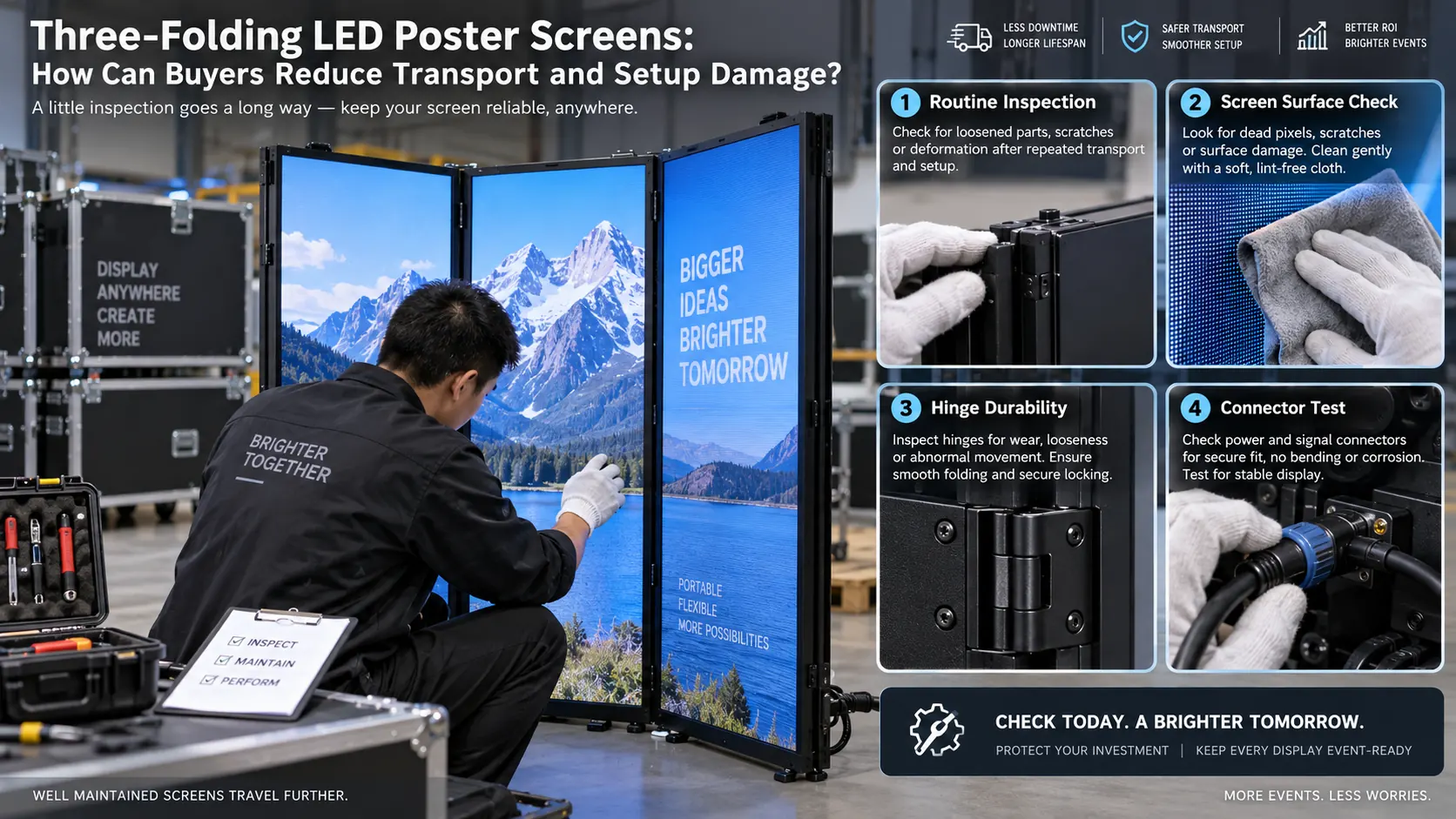
Ask how the three sections lock in the folded and expanded positions. Inspect hinge play, mechanical stops, cable clearances, and edge protection. Repeated folding should not pinch power or data wiring. Before approving a sample, fold and unfold the unit according to the supplier’s instructions several times, then check for loose fasteners, a changing panel gap, or pixels that fail only when the hinge moves.
A wheel that catches on a loading ramp can tip the entire screen. Check caster capacity, brake function, movement over the actual venue thresholds, and the location of handles used to control the unit. The transport procedure should state whether the screen can be rolled on exterior paving or must be placed on a trolley. Do not assume mobility in a showroom proves suitability for a rough loading dock.
A successful case protects the unit in its folded position while allowing crews to move it without pressing against the display surface. Packing material should support the structural frame rather than applying concentrated pressure to the LED face. The case must also protect the power inlet, data ports, hinges, and rolling base.
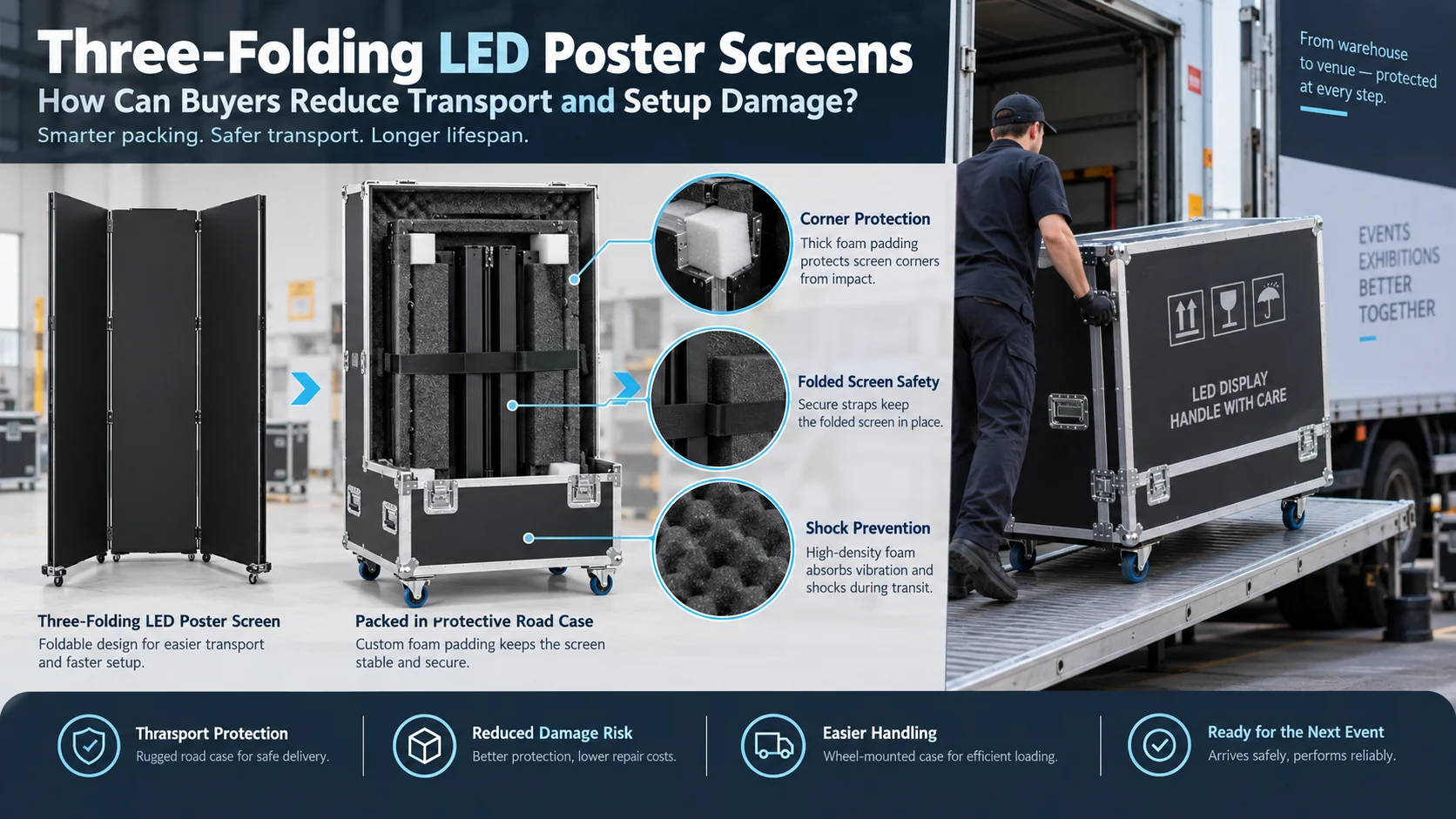
Request the unit’s transport orientation, tie-down points, center of gravity, and any tested packing method. Keep heavy accessories from moving inside the same compartment. A practical receiving inspection after delivery should look for bent corners, case dents, displaced foam, loose connectors, and signs that the unit traveled in an unsupported position. Do not publish a claimed drop rating unless a test report identifies the actual packed configuration.
Longcheng’s three-folding indoor LED poster screen listing describes an expanded size of 1280 × 2070 mm and folded size of 640 × 2070 mm, along with wheels, double-sided display capability, and GOB-protected panels. These listed dimensions illustrate why transport planning changes between the open and closed states. Confirm the exact unit and crate dimensions on the purchase drawing; accessories and protective packaging may add width and weight.
A predictable setup procedure prevents a damaged panel from being discovered only after the audience arrives. Assign a defined path from the loading area to the final location, agree on a level standing surface, and keep the hinge movement zone clear of other equipment.
Park the unit, engage brakes or stabilizers as specified, release transport locks, then expand the sections using the approved handles. Inspect the seam before energizing the screen. Power and data connections should be routed where they cannot be snagged by passersby. The display should not be moved while powered if the product instructions prohibit it.
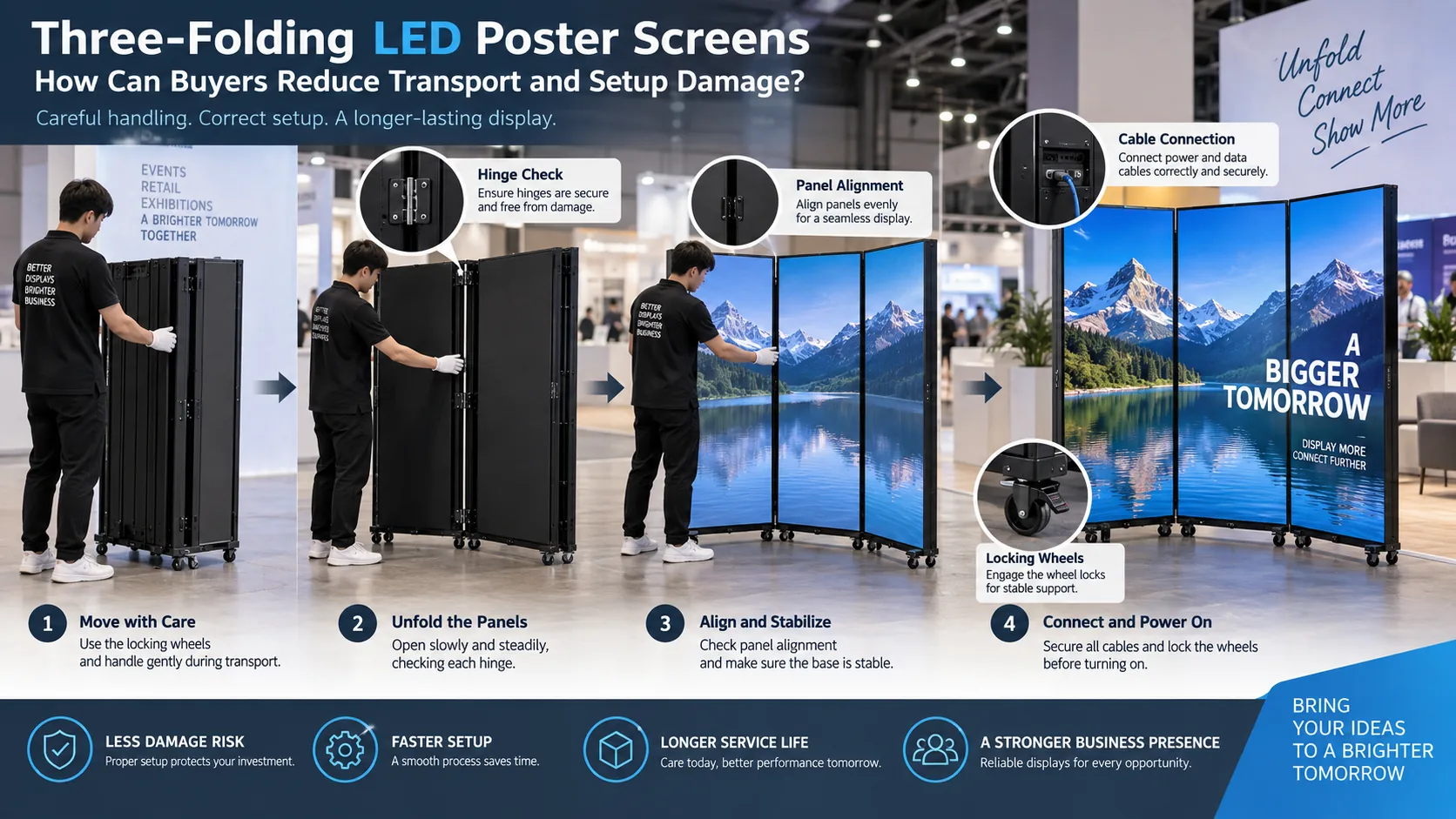
Use a short acceptance sequence with full-white, low-gray, red, green, blue, and normal video content. Record a photograph at a consistent camera position after each deployment. If an intermittent line appears only near a folding joint, examine the approved cable and connector path before replacing unrelated modules. Store the correct screen configuration file with the inventory record.
A protective surface can reduce some incidental contact damage, but it does not protect the entire moving assembly. Hinge mechanisms, connectors, wheel brackets, and cabinet joints still need scheduled inspection. The repair process also depends on whether the quoted panel can be serviced at module level or requires a larger replacement assembly.
Track surface marks, corner chips, drifting seam gaps, locking resistance, caster damage, and cable strain. Record the number of deployments and the last inspection date for each numbered unit. An issue that returns after every trip may indicate packaging or handling rather than a production defect.
Compare a complete transport package: protective case, setup crew, freight volume, spare connectors, maintenance labor, and downtime when one poster cannot be used. A smaller folded footprint may save space, but those savings should be measured against the costs of protecting and servicing the mechanism. The related LED display service process describes parts replacement options, not an assurance that all folding damage is covered.
Request an unfolded and folded drawing, complete packed dimensions, screen weight, tested hinge and wheel specifications, packing instructions, approved service method, and a repeatable factory inspection checklist. A pilot involving several full transport and setup cycles is more useful than a single showroom unfolding demonstration.
Longcheng publishes the folding format within its creative LED display range. Use the product listing to shortlist the screen, then approve the exact quotation against a signed transport and setup test. For future changes to the LED face, compatible replacement parts should be recorded before the first shipment.
Transport damage is best reduced through a complete handling system, not one extra layer of foam. Verify hinge movement, edge and connector protection, caster behavior, proper case support, and a repeatable setup test. When the same checks are recorded after every venue move, buyers can distinguish wear from isolated defects and protect the useful life of the folding poster.
Only if the supplier approves another tested transport method. The folded panels and connectors still need protection against pressure, movement, and impact.
No. Surface protection does not replace inspection of hinges, locking parts, cable transitions, and the moving base.
Inspect the mechanical joints and connectors, then run a brief image test using solid colors, low gray, and the intended campaign content before opening the venue.













Leave a comments